
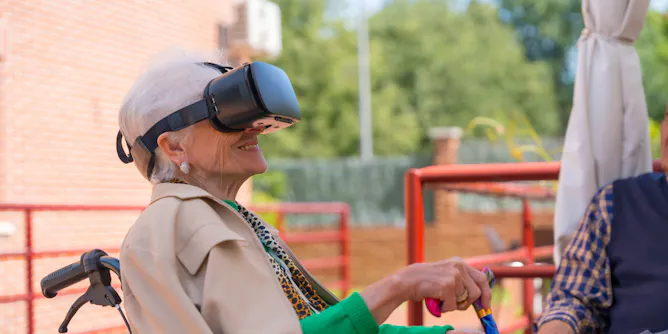
One person said they wanted a VR experience that allowed them to explore Paris again.
Articles on Palliative care
Displaying 21 - 40 of 102 articles

All of us face loss and the reality of our own mortality. Whether through in-person discussion or over social media, let’s build communities that support people navigating death and dying.

Over 20% of people diagnosed with brain cancer survive longer than five years. But the NDIS may not recognise their need for support to live, work, learn and play.

An accurate prediction of survival can enable earlier conversations about preferences and wishes at the end of life, and earlier introduction of palliative care.

Palliative care is often seen as a ‘last resort’ rather than a service that empowers terminally ill people to live as well as possible for as long as possible.
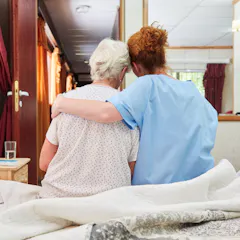
Bill C-7 has created ethical tensions between MAID providers and palliative care, between transparency and patient privacy, and between offering a dignified death rather than a dignified life.
The challenging realities surrounding end-of-life care are especially difficult for older people experiencing homelessness, who have more barriers to accessing hospice care.
Gaps between health systems can mean NDIS participants at the end of their lives don’t have the support of their regular NDIS support workers.
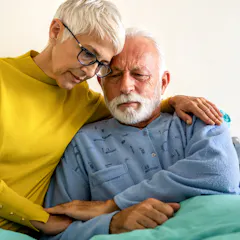
For people to access medical assistance in dying (MAID) requires health-care professionals willing to provide the service. The reasons health-care providers choose not to participate are important.

Avoiding talk of death won’t make it disappear.

Palliative care, often misunderstood, is not synonymous with hospice care.
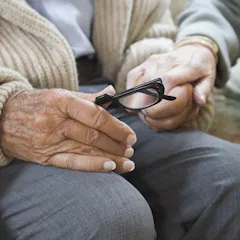
When you prepare to talk about end-of-life decisions and the legacy you want to leave behind, try thinking about them as gifts you bestow to family and friends.

Palliative care is about living well and meeting patients’ goals, but referral can be more complex than access to medical assistance in dying (MAID). Palliative care should be as accessible as MAID.
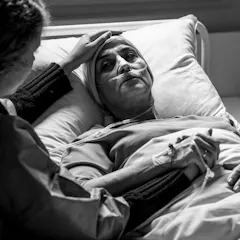
Evidence suggests messages the patient thought to be crystal clear often appear unclear to doctors and family.

Despite the disproportionate numbers of Aboriginal people in prisons, there are near to no cultural protocols in place, and chronic illness is often not addressed.
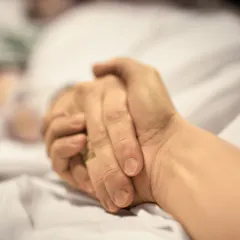
The case for letting people go gentle into that good night.

Death-friendly communities that welcome mortality might help us live better lives and provide better care for people at the end of their lives.
Many Australians come to the end of their life while living in aged care. But damningly, the aged care royal commission found many residents have worse palliative care options than those living elsewhere.
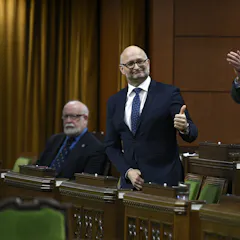
Expanding access to medical assistance in dying (MAID) to those not terminally ill puts vulnerable people at risk of feeling pressured into MAID, and doctors at risk of being forced to facilitate it.
Preventing people from dying alone in a pandemic takes ingenuity and money, but it’s the right thing to do.
Top contributors
-

Distinguished Professor, Professor of End-of-Life Law and Regulation, Australian Centre for Health Law Research, Queensland University of Technology
-
Professor of Law, Australian Centre for Health Law Research, Queensland University of Technology
-
Matthew Flinders Professor and Director of the Research Centre for Palliative Care, Death and Dying, Flinders University
-
Consultant Neonatologist and Professor of Ethics, University of Oxford
-
Associate Professor of Medicine, Deakin University
-
Assistant Professor of Palliative Medicine, Aga Khan University
-
Senior Lecturer in Palliative Care, Flinders University
-
Honorary Enterprise Professor, School of Population and Global Health, and Department of General Practice and Primary Care, The University of Melbourne
-
NIHR Clinician Scientist and Honorary Consultant in Palliative Medicine, King's College London
-
Research Associate, Palliative and Supportive Services, Flinders University
-
Associate professor, Australian Catholic University
-
Research Fellow, Department of Medicine, The University of Melbourne
-
Palliative Medicine Physician, Senior Research Fellow, The University of Melbourne
-
Professor, VCCC Chair of Palliative Medicine, The University of Melbourne
-
Professor of Medical Sociology, University of Glasgow