
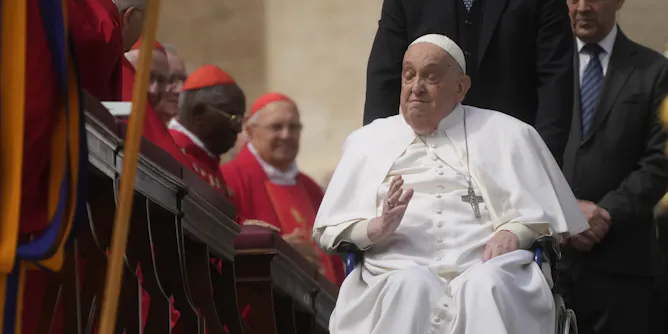
Some patients with a terminal illness seem to be able to ‘hold on’ until after an anticipated holiday or event. This might be less about staying positive and more about being supported in your goals.
Articles on Death and dying
Displaying 1 - 20 of 45 articles

COVID-19 highlighted the need to plan for medical emergencies, but most people still avoid the issue.
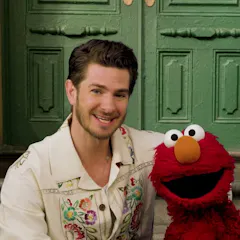
Spiderman actor Andrew Garfield spoke to Elmo about grief on Sesame Street. Their chat was a great model for communicating about grief and loss.

The trend is proof that not everything should be turned into content.

All of us face loss and the reality of our own mortality. Whether through in-person discussion or over social media, let’s build communities that support people navigating death and dying.

Palliative care is often seen as a ‘last resort’ rather than a service that empowers terminally ill people to live as well as possible for as long as possible.
Reflection Rooms support people making sense of experiences related to dying and death. They provide an immersive space to read stories written by others and write and share their own stories.
When you prepare to talk about end-of-life decisions and the legacy you want to leave behind, try thinking about them as gifts you bestow to family and friends.
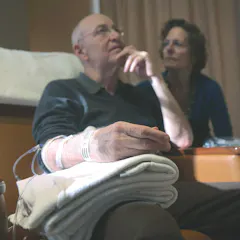
Terminally ill patients in nine states and Washington, DC can use telemedicine to get a doctor’s approval to hasten their end of life. But family members must mix the lethal drug cocktail themselves.

There are many conversations these days around ‘successful dying.’ Two African American scholars argue why these conversations need to include race and how it impacts life span.

The dying person may face an inner struggle. They may want to be involved in activities but may not have the physical and emotional capacity to deal with the heightened stress and stimulation.

Few people like to talk about death, but research is suggesting that people should talk with loved ones about their wishes for their final days. You may be surprised which family member is most supportive.

The main arguments used by those who voted against assisted dying – including that the bill has insufficient safeguards – in Victoria’s upper house, deserve further scrutiny.

A palliative care doctor discusses his interactions with his patients: “I wouldn’t know what I would want were I in their shoes,” he says.

Our study found people held narrow, often inaccurate and outdated understandings of palliative care.
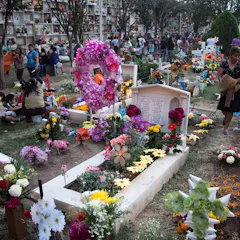
Many in the Western world lack the explicit mourning rituals that help people deal with loss. On Day of the Dead, two scholars describe ancient mourning practices.

Here are some tips if you are looking after someone who is nearing the end of their life.

Dying in America 200 years ago was a simply family affair, devoid of pomp. The US Civil War and Abraham Lincoln’s embrace of embalming changed everything.

The pain of grief is part of human existence. Daoist and Confucian philosophy can help find meaning in grief.

For medieval cultures, the dying process and death itself was a ‘transition,’ not a rupture.
Top contributors
-

Research Fellow, Department of Medicine, The University of Melbourne
-
Professor Emeritus of Death Studies, University of Bath
-
Palliative Medicine Physician, Senior Research Fellow, The University of Melbourne
-
Chancellor's Professor of Medicine, Liberal Arts, and Philanthropy, Indiana University
-
Professor of Law, Australian Centre for Health Law Research, Queensland University of Technology
-
Distinguished Professor, Professor of End-of-Life Law and Regulation, Australian Centre for Health Law Research, Queensland University of Technology
-
Assistant Professor of Communications, Elon University
-
Professor, University of Stirling
-
NIHR Clinician Scientist and Honorary Consultant in Palliative Medicine, King's College London
-
Professor of Medicine, University of Florida
-
Palliative Care Physician, Barwon Health
-
Professor, English and Folklore Studies, University of Oregon
-
Senior Specialist in Intensive Care and Head of Clinical Unit in Ethics and Health Law, University of Newcastle
-
Fellow of Exeter College, Oxford, University of Oxford
-
Professor of Law, Wake Forest University