
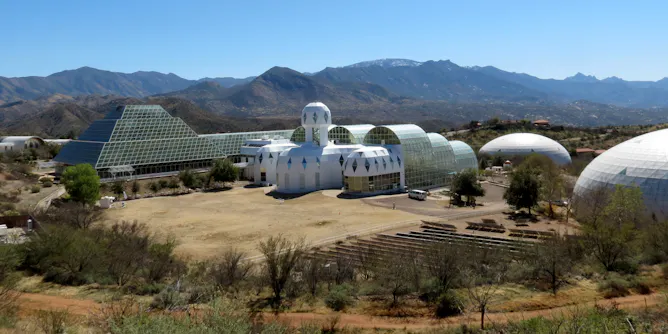
Biosphere 2 isn’t just the site of a famous human experiment. Today, scientists there work to understand how life emerges in barren environments.
Articles on Origins of Life
Displaying 1 - 20 of 58 articles
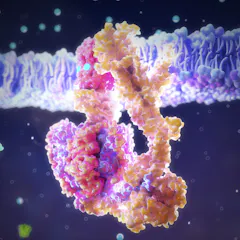
A protein historian and evolutionary biochemist found that a protein sequence present across all known life didn’t form as researchers previously thought it did.
They could one day turn purple.

The question of whether viruses are alive or dead is a controversial one in science.
A study has found rocks at the bottom of the ocean can make oxygen.
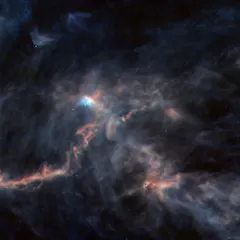
Life showed up really early on Earth – it needed complex carbon molecules to do so. A new discovery hints that these molecules can survive the harsh conditions when stars are born.
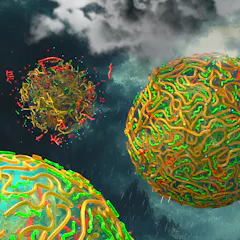
The earliest cells likely didn’t have membranes to separate and protect their components and chemistry away from a harsh surrounding environment. But they may have made do with rain.
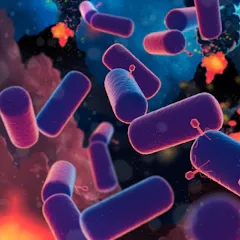
The organism from which all modern life is descended is called the last universal common ancestor - and scientists are still trying to figure out what it was like.

Ever been made to feel small? Here’s why being petite is no bad thing.

The origin of life on Earth is one of the biggest mysteries in science.
Perhaps life is more common in the universe that we think.
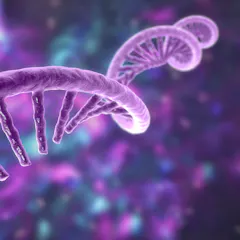
Scientists have known about the ‘formose reaction’ for 160 years. New research shows how it could have played a key role in the creation of life.
‘Assembly theory’ aims to explain evolution without biology. Is it a dazzling breakthrough or an attempt to answer questions nobody asked?

Life seems to just mysteriously ‘emerge’ from non-living parts, such as elementary particles.
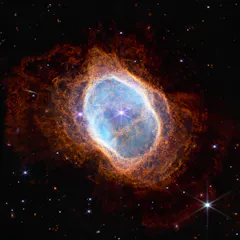
Evolutionary geneticist Jenny Graves loves classical choral music, but grew tired of its biblical themes. So she set out to write an alternative based in science.
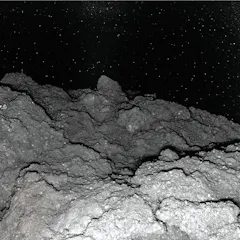
The discovery of a key component of RNA in samples from asteroid Ryugu adds weight to the theory that basic organic molecules may have arrived on Earth from outer space.
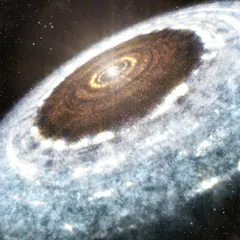
Astronomers have long known where water is first formed in the universe and how it ends up on planets, asteroids and comets. A recent discovery has finally answered what happens in between.
Some physicists think we live in a multiverse, surrounded by universes not quite like our own. What does that mean for life?
In the deep, dark ocean, sunlight-deprived bacteria turn to different sources of energy: dissolved hydrogen and carbon monoxide.

Ancient rocks from Western Australia may not contain the world’s oldest fossils – but they do preserve organic compounds that may have formed the raw materials for the first living cells.
Top contributors
-

Professor of Planetary and Space Sciences, The Open University
-
Director of the Centre for Bacterial Cell Biology, Newcastle University
-
Associate professor, Australian National University
-
Scientist, Max Planck Institute for Solar System Research
-
Associate Professor in Chemistry, Dublin City University
-
University Distinguished Professor of Astronomy, University of Arizona
-
Postdoctoral research associate, University of Oxford
-
Professor of Evolutionary Palaeobiology at the Milner Centre for Evolution, University of Bath
-
PhD Candidate in Prebiotic Chemistry, UNSW
-
Postdoctoral Researcher of Evolutionary Biology, University of Pennsylvania
-
PhD Candidate in Biology, University of Bath
-
Postdoctoral Scholar in Chemical Engineering, University of Chicago
-
Honorary Senior Lecturer, School of Physics, UNSW
-
Lecturer in Bioinformatics, University of Nottingham
-
PhD Student in Astrobiology, Dublin City University