
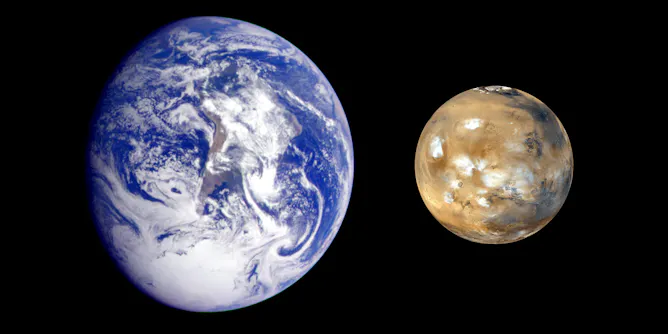
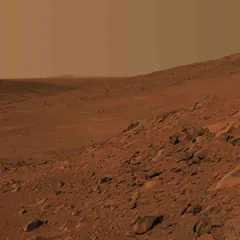
Mars may have been hospitable to life early in its history.
Articles on Early life
Displaying all articles
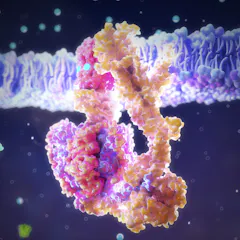
A protein historian and evolutionary biochemist found that a protein sequence present across all known life didn’t form as researchers previously thought it did.
Life showed up really early on Earth – it needed complex carbon molecules to do so. A new discovery hints that these molecules can survive the harsh conditions when stars are born.
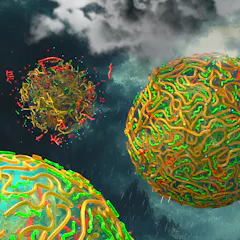
The earliest cells likely didn’t have membranes to separate and protect their components and chemistry away from a harsh surrounding environment. But they may have made do with rain.

School photos are more than mere keepsakes. These images betray much about our younger selves.

Children are bearing the brunt of austerity. From obesity to infant mortality, child health is affected by sustained under-investment. What can be done to reverse the decline?
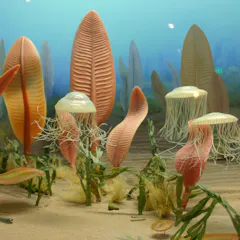
Fossil traces of the oldest complex ecosystems are found in precious few locations worldwide, including Australia. Newly dated fossils from Wales now join the ranks.
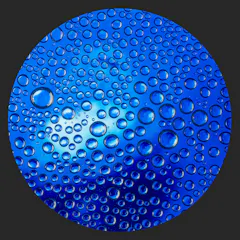
The chemical reaction that forms essential biomolecules like proteins and DNA normally doesn’t occur in the presence of water. Microdroplets provide a unique environment that make it possible.

The impact of early childhood trauma on lifelong physical and mental health makes it urgent to invest in programs to support healthy pregnancies and stable, caring very early childhoods.
One 11-year old girl told us she knows once rent is paid, there is almost nothing left over. So she never takes school excursion notes home, in case the cost is too much.
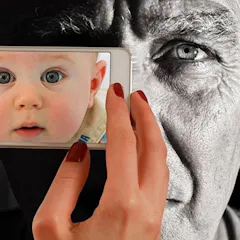
Childhood adversity doesn’t just affect our choices – according to new research, it also weakens the body’s fundamental ability to stay healthy in old age.
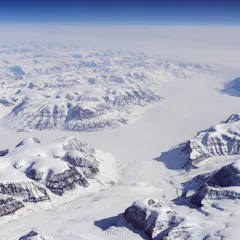
Scientists say they’ve found fossils showing life existed on Earth 3.7 billion years ago. How good is the evidence? And what does it mean for the search for life elsewhere in our solar system?
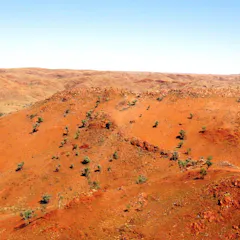
The debate has raged for years on the origin of life-like structure in an ancient rocky find in Western Australia. But is it evidence of early life?
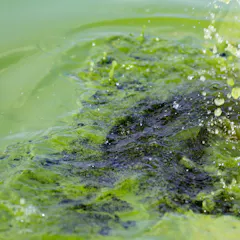
Evolution of life on Earth began about 3.5 billion years ago but it has not been a constant or continuous process. During the middle years of Earth’s history (1.8 billion to 800 million years ago), evolution…
The Observer has published what it regards as the top 20 questions in Science. Number one on the list is the question of what the universe is made of. Specifically the 95% of the universe that we cannot…
Top contributors
-

PhD Candidate in Chemistry, Purdue University
-
Researcher in Social Epidemiology, University of York
-
Associate Professor in Electron Microscopy, The University of Western Australia
-
Distinguished Professor of Geology, University of Tasmania
-
Professor in Earth Sciences, Nanyang Technological University, Singapore, and Emeritus Professor of Mineral Physics, University of Cambridge
-
Planetary Scientist, Queensland University of Technology
-
Australian Research Council Future Fellow, The University of Western Australia
-
Associate Professor, Department of Psychology, University of British Columbia
-
Associate Professor in Chemistry, Dublin City University
-
Professor of Geochronology, Curtin University
-
Professor Emeritus in Clinical and Health Psychology, University of British Columbia
-
Sharon Bessell is a Friend of The Conversation.
Professor of Public Policy, Crawford School of Public Policy, Australian National University
-
Research Fellow, School of Earth and Planetary Sciences, Curtin University
-
Professor of Statistics and Health Data Science, UCL
-
Associate Professor Visual Communication, University of Technology Sydney