

As content is clipped, reposted and reframed, audiences encounter fragments rather than the original message.
Articles on Online communication
Displaying 1 - 20 of 35 articles
Social media platforms are shaping how we collectively think about mental health, a new study shows.
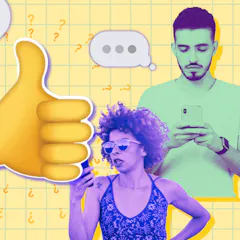
Do you love using the laughing-crying emoji? If so, you’re probably a Millennial.

Reddit’s AITA content has found an afterlife on nearly every other social platform – giving life to a thriving content mill.
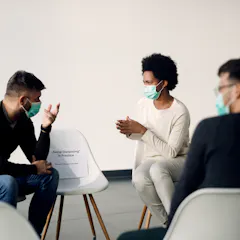
Community-engaged research was disrupted by COVID-19 restrictions, meaning researchers faced serious challenges when their results were most needed: during a public health crisis.

Generational faultlines are made visible by the way we use punctuation and text formatting in online communication. Tone of voice is a tricky thing to convey.
The digital public sphere is constantly evolving, so we need a regulatory framework that helps to structure public discussion, and in turn guide our own public contributions as citizens.

Discord was initially a service to let gamers voice and text chat while playing. Most of its current users build and maintain online communities, though not always very big ones.
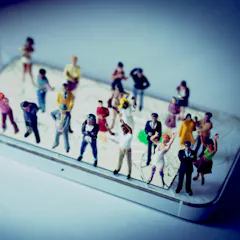
Deplatformed groups can all too easily flock to alternative platforms to coordinate.

As social distancing continues, we’ve increasingly incorporated online and digital communications into our social life. But these technologies can’t compensate for body language or touch.

There is heavy social media use among both the most lonely and least lonely people. So what exactly is the relationship between social media use and loneliness?
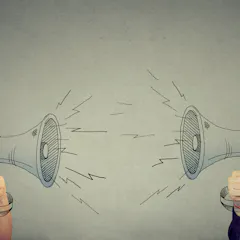
The way people use social media – and the algorithms inside those systems – increases passions, and drives people to polarizing extremes.

Online memorial services mean more can mourn.
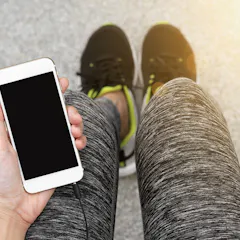
Apps and wearable devices promise greater participation and empowerment in health care. But what are we risking when we take part in this new era of participatory health?
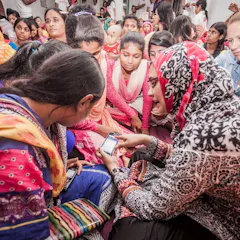
Global media systems cannot effectively contribute to social progress until opportunities not just for access, but also for active participation, are more widely shared.

Banning encryption won’t help, and probably isn’t possible anyway.

Peeple is getting called the Yelp of rating people. The cofounders say it will be a positive place that turns character into currency. But does it make sense to rate people as we rate restaurants?

Arts activism isn’t new, but online activist movements are changing the way it gets done. In this anonymous virtual landscape, does activism democratise social relations, or nurture inequality?

Shakespeare didn’t ‘lol,’ but he did ‘ha, ha, he.’

This year saw the 43rd anniversary of email. Compared to a human working life, email has after more than four decades on the job now reached retirement age. Is it time for email to step aside to allow…
Top contributors
-

Professor of Formal Philosophy / Director of Center for Information and Bubble Studies, University of Copenhagen
-
Director, Office of Scholarly Communication and Publishing, University of Pittsburgh
-
Senior Lecturer in Forensic Linguistics, Lancaster University
-
Professor of Psychology, Lancaster University
-
Associate Professor of Communication Studies, Northeastern University
-
Professor of Information and Knowledge Management, Loughborough University
-
University of Groningen
-
Professor of Journalism, USC Annenberg School for Communication and Journalism
-
Associate professor, University of Nottingham
-
Professor and Associate Dean, Research & Innovation, RMIT University
-
Professor of Media Studies, Temple University
-
PhD student at Centre for Death and Society (CDAS), University of Bath
-
Research Associate, Durham University
-
Research Chair in Science Education and Public Engagement, University of Calgary
-
Professor of Media, Communications and Social Theory, London School of Economics and Political Science