
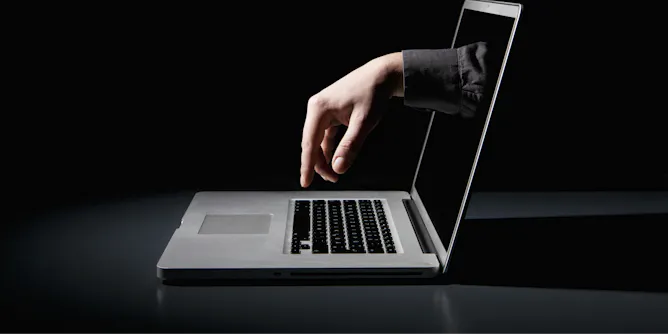
Email is as much about performing competence as actually communicating information. What happens if humans leave the system?
Articles on Email
Displaying 1 - 20 of 72 articles
End-of-life planning today includes making sure your loved ones have access to digital photos, email archives and social media accounts.

It’s time to retire the email signature and take a hard look at improving our communication efficiency.

Boundaries exist for a reason.
We are never going back to the days when landlines had pride of place in offices and hallways. But voice calls still play an important role in effective communication.

In taxpayer-funded email messages to constituents, Republicans prefer visual elements and strategic timing, and Democrats prefer more text-heavy missives.
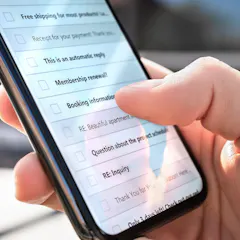
Managing our electronic records is a big task. But using a few simple tips to turn your inbox into a to-do list can save a lot of problems down the line.

Researchers are interested in whether who you’re communicating with and how you’re interacting affect how likely you are to lie.

This Labour weekend we celebrate the eight-hour workday. But with technology blurring the line between job and home, we need to ask why our workplace law hasn’t kept pace with other countries.
One of the first ‘spam’ messages on record was sent in 1854.

Generational faultlines are made visible by the way we use punctuation and text formatting in online communication. Tone of voice is a tricky thing to convey.
Digital activities, like sending emails, contribute marginally to the annual carbon footprint of information and communication technology users.

With online use ever-increasing, so is the rise of ghosting – when friends decide to disappear into the social ether.

A research team reports on its one-year project to improve the email habits of a large UK charity.

Weirdness is a clue about fraudulent email messages. But it takes more than a sense that something’s wrong to get people to investigate.

How we read messages is as important as what we write when it comes to happy workplace relations – especially in lockdowns or when working from home.

The creep of digital communications into our entire lives is not as harmless as we think.

Analysis of 46 studies indicates that there’s still a lot of uncertainty about the long-term impacts of digital device use on cognition.
Commercial software is vital to all of our cybersecurity. What should governments do if they find it has weaknesses?

Every day, the internet fills up with more and more dead people while our ability to reanimate them grows. The dead are more robust and more vulnerable — and we’re not ready for any of this.
Top contributors
-

Senior Lecturer in Occupational Psychology, University of Sussex Business School, University of Sussex
-
Professor of Information and Knowledge Management, Loughborough University
-
Professor of law and ethics, Georgia State University
-
Professor of Organisational Psychology and Health, University of Manchester
-
University at Buffalo
-
Professor and Director, Communication and Media Research Institute, University of Westminster
-
Postdoctoral research fellow, School of Psychology, Australian Catholic University
-
Professor of Psychology, Lancaster University
-
Director, Office of Scholarly Communication and Publishing, University of Pittsburgh
-
Lecturer in Communication Management, The University of Queensland
-
Research historian, Australian Research Council for Urban Ecology, The University of Melbourne
-
Professor of Communication & Director of the School of Communication, The Ohio State University
-
Senior Lecturer in Environmental Management, University of Tasmania
-
Senior Lecturer and Researcher in Innovation and Digital Leadership, University of Brighton
-
Senior Lecturer, Loughborough University