
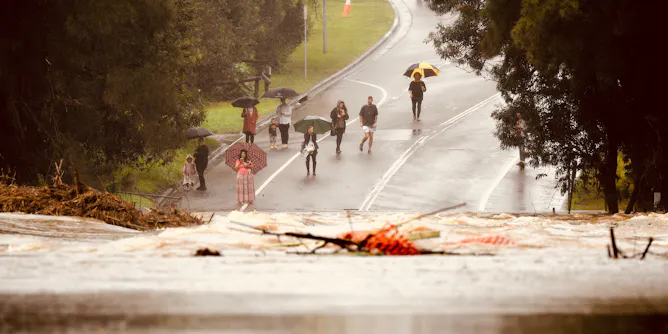
Catchments are full. Dams are at capacity, soils are saturated and rivers are high. In some cases, there’s nowhere for the rains to go except over land.
Articles on nsw floods
Displaying 21 - 40 of 48 articles

University of Canberra Professorial Fellow Michelle Grattan and Assistant Professor Caroline Fisher discuss the week in politics
Word from The Hill: People’s pockets hit again, with rate rise and floods set to boost veggie prices
Michelle Grattan discusses politics with Peter Browne from the politics + society team

Again, thousands of residents in Western Sydney face a life-threatening flood disaster. Obviously, nature is a major culprit – but other drivers are also at play.
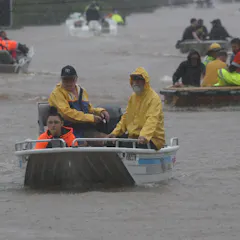
We can’t let communities face climate change alone. We must get better at adapting to the new climate, and do it before disasters not during.
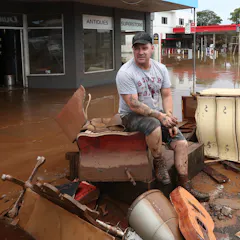
Disaster victims in Australia can wait months or years for insurance payouts – or can’t afford the premiums at all. As climate change worsens, we need a radical rethink.
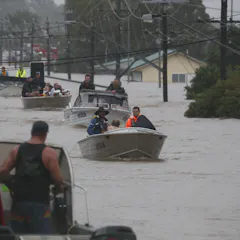
It is unreasonable to expect people to cope with all disasters – but it is reasonable to expect people to manage a certain level of risk.
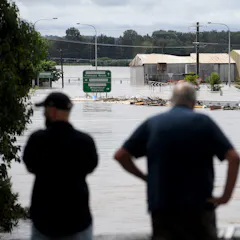
There is a huge amount of legislation talking about ‘shared responsibility’ but it isn’t clear what this means or who needs to do what and when.
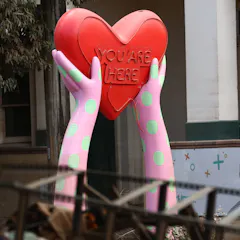
Residents and businesses are considering leaving Lismore for good. The town is now on the brink.
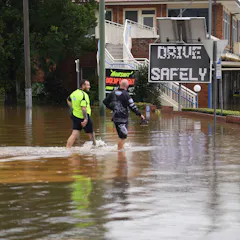
Parts of southeast Australia are inundated yet again. Clearly, short-term weather forecasts are not enough to protect communities in times like these.

The urge to create, or donate to, crowdfunding campaigns in a crisis is understandable. But it’s worth asking: who can succeed in crowdfunding, and who gets left behind?
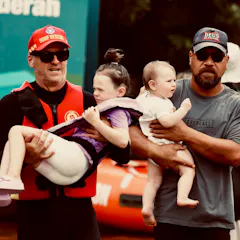
Disasters are becoming more frequent and severe as the climate heats up – but Australia is badly under-prepared.

By following moisture from the oceans to the land, researchers worked out exactly how three oceans conspire to deliver deluges of rain to eastern Australia.
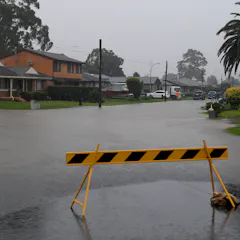
The rain isn’t letting up for Australia’s east. Remarkably, the low-pressure band that drenched Brisbane is now spawning not one but two east coast lows for Sydney – more typically seen in winter.

The latest IPCC Report lacked Aboriginal and Torres Strait Islander lead authors. This is a severe limitation to understanding and responding to climate change in this country.
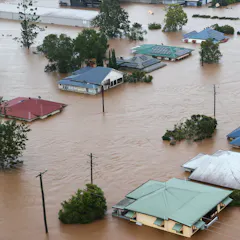
Improved warnings are unlikely to protect houses, but it means people can prepare – they can move possessions, reach vulnerable loved ones and evacuate in a timely manner.
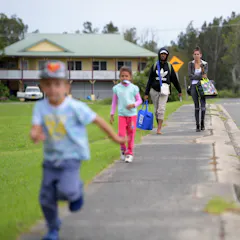
Australia’s east coast flooding is forcing people to confront challenges such as evacuations and loss of property. However, Aboriginal people are being left to find their own way through this crisis.

As someone who lost pretty much everything in the 2011 Brisbane floods and then led a study on community responses to those floods, I have some insights on what helps – and what doesn’t.
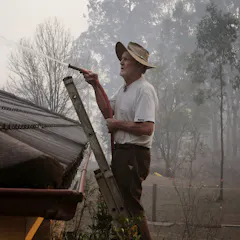
New research also identified steps people wished they’d taken to prepare for disaster, such as protecting sentimental items, planning a meeting place and better managing stress.
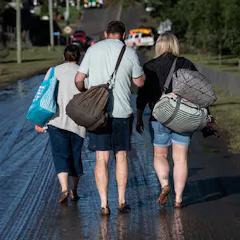
Many flood-ravaged homes have not been repaired, while others are infested with mould. Farmers are dealing with financial stress and the memories of livestock killed in traumatic circumstances.
Top contributors
-

Associate Professor, Macquarie University
-
Principal Research Scientist in Extreme Weather, The University of Melbourne
-
Lecturer, Monash University
-
Lead - Pilot Deployments Program (AIMS); Professor (Queensland University of Technology; Adjunct), Queensland University of Technology
-
Principal Research Fellow, School of Engineering, RMIT University
-
ARC Future Fellow and Associate Professor in Climate Science, ARC Centre of Excellence for 21st Century Weather, The University of Melbourne
-
Deputy Head of School, School of Architecture and Built Environment, University of Newcastle
-
Professorial Fellow, University of Canberra
-
Associate Professor, School of Architecture and Built Environment, University of Newcastle
-
Adjunct Senior Lecturer, School of Architecture and Built Environment, University of Newcastle
-
Lecturer, RMIT University
-
Professor of Physical Geography, University of New England
-
Climate scientist, Australian Bureau of Meteorology
-
Professor in Gender History and the History of Sexuality, The University of Queensland
-
Professor, School of Mathematical And Physical Sciences, University of Technology Sydney