
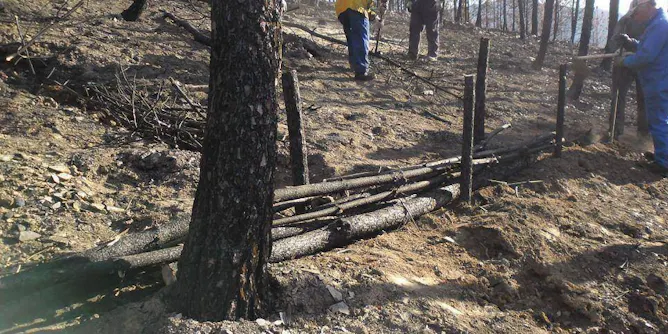
As storms, wildfires, and floods strike in ever-closer succession, an architect with disaster risk science expertise explains why resilience is built between hazards, not during them.
Articles on Heavy rainfall
Displaying 1 - 20 of 37 articles
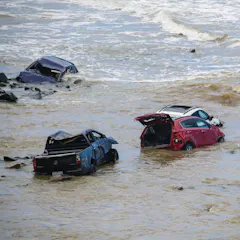
Australia’s weather extremes are increasingly arriving back-to-back in a ‘weather whiplash’.

Even though annual precipitation is rising nationally, the landscape is drying out more rapidly. That’s changing the water cycle.

Moss can absorb pollution caused by traffic and grow in thin soil.
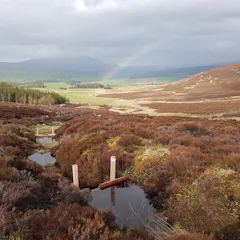
Capturing floodwater in the winter could help avoid summer droughts, research suggests.
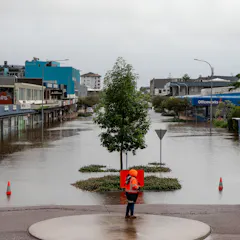
Flooding in eastern NSW shows just how vulnerable rural catchments and regional communities are to extreme and extended rainfall events.

In some areas of NSW, more than 200 mm of rain has fallen in 24 hours. At the same time, dry conditions have gripped much of the continent.

From dried-up rivers to flooded crops and cities, rising temperatures in 2024 wreaked havoc with water, creating life-threatening challenges for people and nature alike. Explore this interactive map.
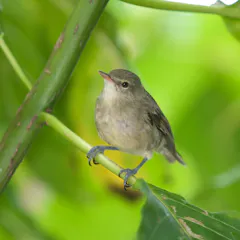
New research examines the link between extreme weather and divorce in a small monogamous tropical songbird, the Seychelles warbler. Concerningly, extreme rain and dry spells increased divorce rates.
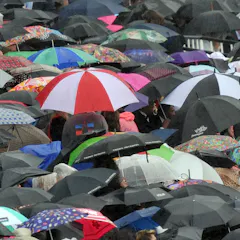
Mounting evidence shows rainfall is becoming increasingly variable, making the dry times drier and the wet much wetter. New findings confirm research into rainfall variability in Australia.

To date, the effects of climate change on global rainfall has been uncertain. New research overcomes this uncertainty – with alarming results.

There’s a rule of thumb that rainfall intensity increases by about 7% per degree Celsius as temperatures rise. But the increase is much higher in the mountains, scientists found.

Parts of New York’s Hudson Valley were hit with 10 inches of rain, and the mountains of Vermont – where runoff can quickly turn deadly – saw some its worst flooding since Hurricane Irene.

Some were quick to point the finger at climate change when floods hit eastern Australia in February and March 2022, in the lead up to the federal election. But it’s not that simple, scientists say.
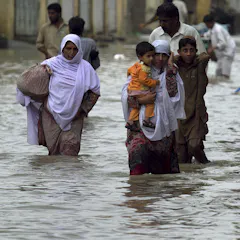
Globally, the air is getting hotter and drier, which means flash droughts and risky fire conditions are developing faster and more frequently.

The Met Office has predicted that England is to be affected by flooding this February.
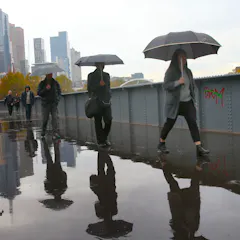
The report synthesises the latest science about Australia’s climate – and paints a worrying picture.

The growing threat of flash flooding as a result of more intense rapid rain bursts means the city needs to update its flood defences.

Processes like La Niña set the scene for the sort of extreme weather that has hit eastern Australia. But what decides which towns and suburbs are hit hardest, and which ones are spared?

Catchments are full. Dams are at capacity, soils are saturated and rivers are high. In some cases, there’s nowhere for the rains to go except over land.
Top contributors
-

Professor of Climate Science, UMass Lowell
-
ARC Future Fellow and Associate Professor in Climate Science, ARC Centre of Excellence for 21st Century Weather, The University of Melbourne
-
Professor, Water and Landscape Dynamics, Fenner School of Environment & Society, Australian National University
-
Climate Scientist, Australian Bureau of Meteorology
-
Professor of Atmospheric Sciences, Climate Change Research Centre, UNSW
-
Professor, UNSW
-
PhD Candidate, School of Geography, Earth and Atmospheric Sciences, The University of Melbourne
-
CEO, Natural Hazards Research Australia, Adjunct Fellow, Macquarie University
-
Assistant Professor of Ecology, Evolution and Organismal Biology, Iowa State University
-
Senior Climatologist, Australian Bureau of Meteorology
-
Professor, Climate Change Research Centre, UNSW
-
Adjunct Professor (Practice) in the School of Earth, Atmosphere and Environment, Monash University
-
Senior Climatologist, Australian Bureau of Meteorology
-
Associate Professor and Water Management Expert, University of South Africa
-
Postdoctoral Research Fellow in Atmospheric Sciences, The University of Melbourne