

Listen to The Conversation Weekly as we delve into the achievements behind three of the latest Nobel prizes.
Articles on Nobel Prize 2021
Displaying all articles
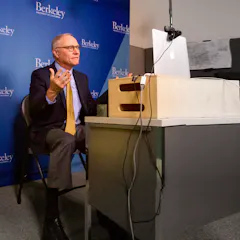
Before Card, it had been widely accepted that boosting the minimum wage would cost jobs.
David Card, Josh Angrist and Guido Imbens pushed economics closer to the traditional sciences with experiments that mimicked the randomised trials in drug tests.
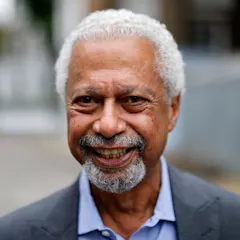
Abdulrazak Gurnah’s stories suggest that it is important to see others in relation to ourselves, to perceive their right of abode even if they cannot claim national belonging.
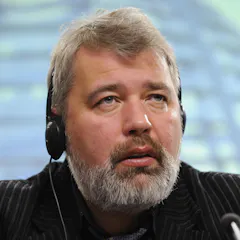
Muratov’s Nobel will be a boon to Russian investigative journalism.

How Maria Ressa grew a Facebook page into the Philippines’ most credible independent news services in the face of government intimidation.
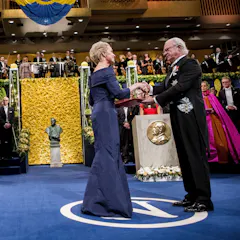
Science fields are improving at being more inclusive. But explicit and implicit barriers still hold women back from advancing in the same numbers as men to the upper reaches of STEM academia.
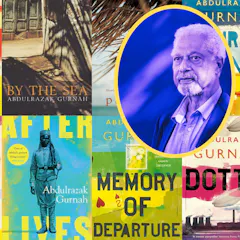
Gurnah won the prize for his “uncompromising and compassionate” look at the “effects of colonialism and the fate of the refugees”.
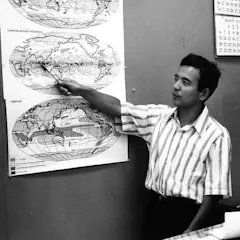
A 1967 study by Nobel-winner Syukuro Manabe changed climate science forever

Part of the 2021 Nobel Prize in Physics was awarded for work modeling Earth’s climate using its chaotic, complex weather. To scientists, chaos lies in the gray zone between randomness and predictability.
Dave MacMillon and Ben List both developed simple catalysts that make precise chemical reactions much faster and more efficient.
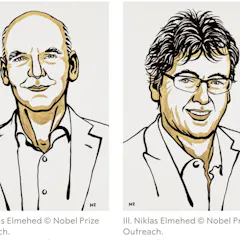
The discovery has boosted the pharmaceutical industry and made research greener and cheaper.

Nobel prizewinning research has revealed the various molecules that help us sense temperature, touch, pain, and even the positioning of our body parts.
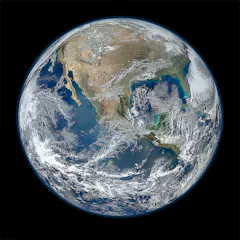
Modern climate and weather models can predict what the weather will be next week and what the climate may be in 100 years. They would not exist without Syukuro Manabe, Klaus Hasselmann and Giorgio Parisi.

The joint award recognizes the long road to deciphering the biology behind the brain’s ability to sense its surroundings – work that paves the way for a number of medical and biological breakthroughs.
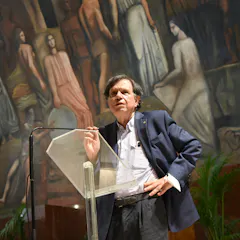
The work of Italian physicist Giorgio Parisi has helped predict the unpredictable, from changes in the climate to the movements of flocks of starlings.
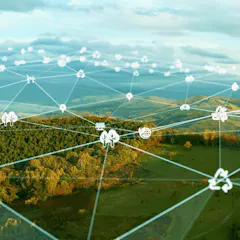
Syukuro Manabe and Klaus Hasselmann have won the Nobel prize in physics for their climate modelling research.
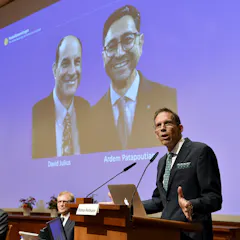
These discoveries could help us treat a variety of conditions in the future – including chronic pain.
Top contributors
-

Associate Professor in Physiology, UNSW
-
Associate Professor of Chemistry, The Ohio State University
-
Professor Emerita Queen Mary College, School of English and Drama, Founder Wasafiri Magazine, Queen Mary University of London
-
Assistant Professor in Climate Change and Data Science, University of Hertfordshire
-
Professor in the English Department, Stellenbosch University
-
Lecturer, Department of Computer Science, UCL
-
Assistant Professor in English, Trinity College Dublin
-
Professor of Pharmacology and Therapeutics, University of Florida
-
Professor and Lincoln Professor of Ethics in Public Affairs, Arizona State University
-
Professor of Economics, University of St Andrews
-
Lecturer in Journalism and Digital Media, Department of Journalism Studies, University of Sheffield
-
Professor of Physical Climate Change; Director of the Priestley Centre for Climate Futures, University of Leeds
-
Professor in Neuroscience, Liverpool John Moores University
-
Senior lecturer, Canberra School of Government, University of Canberra
-
Research Assistant Professor of Biology, University of New Mexico