
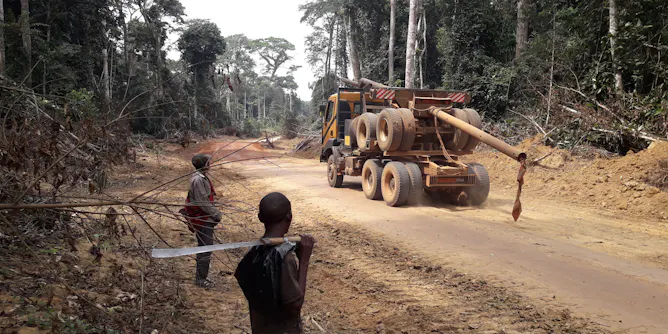
The Baka people of Bemba village, Cameroon, show how sharing is a viable forest management and conservation technique.
Articles on Natural world
Displaying 81 - 100 of 153 articles
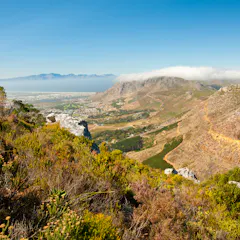
Hundreds of ancient fynbos species could regrow and restore a former pine plantation on Cape Town’s Table Mountain, but only if the remaining pine trees are removed.
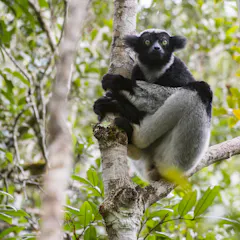
Lemurs show traits associated with resilience to living in a disaster-prone environment.

Maintaining current elephant numbers, let alone reversing declines, requires new thinking and conservation innovation.
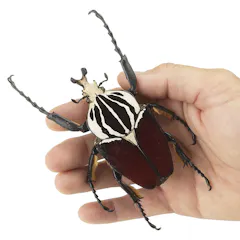
Two Goliath beetle species are in grave danger because cocoa farming has wiped out their forests and they’re being sold on the international dry insect market.
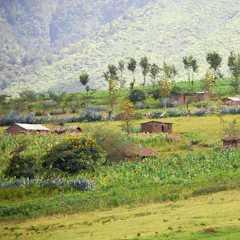
Kenya plans to plant 15 billion trees to combat climate change.
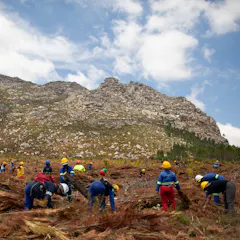
Burning invasive plants on site creates scars and prevents natural vegetation from growing back quickly.

Kumasi was once considered among west Africa’s greenest cities.
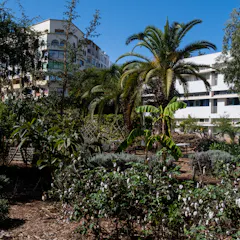
Using nature to solve environmental damage caused by humans can work on a local level, but can nature-based solutions be scaled up enough to address climate change?
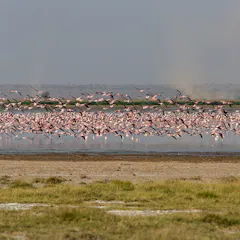
Burkina Faso’s little-known nature reserves need protection. They are a key stopover point for the 2.1 billion birds that migrate from Europe to Africa every year.

Environmental scientists have compiled the first list of wetlands in the park. This will be useful to measure the effects of climate change.
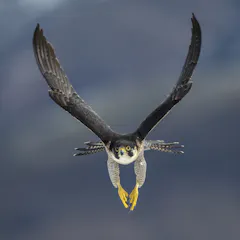
Peregrine falcons have dark stripes under their eyes, thought to reduce sun glare. But in other falcon species these markings are unrelated to sunlight.

Over 1 million of South Africa’s rare succulents have been illegally harvested since 2019.

Looking for a pet? Please don’t buy a ferret. They’re not fully domesticated, often escape, and wreak havoc on the environment once they establish feral populations.
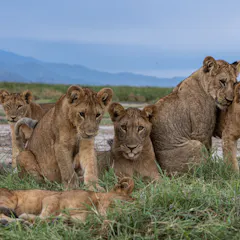
A monitoring approach led by wildlife rangers could make for better counting of lions in many parts of their African range.

South Africa urgently needs to adopt a streamlined and interconnected approach to wildlife trade law at the provincial, national and international levels.
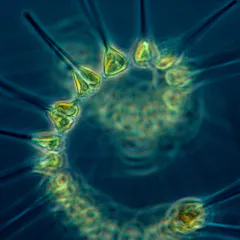
When tiny marine plants are exposed to mineral enriched dust blown into the sea from the land, they bloom over thousands of kilometres, potentially cooling the planet.
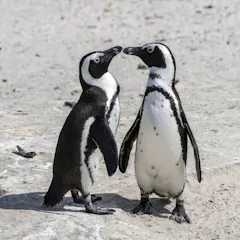
The African penguin has been declared critically endangered and could become extinct in the wild by 2035 unless commercial fishing in its breeding areas is limited.
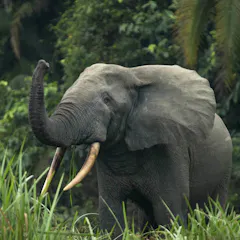
Nigeria has only a few hundred elephants left. They are worth saving, for several reasons.
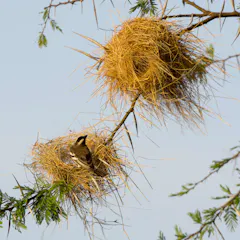
Birds’ building behaviour and the shape of the structures might be the result of social interactions.
Top contributors
-

Visiting Research Fellow, Manchester Metropolitan University
-
Visiting Research Fellow, Manchester Metropolitan University
-
Senior Researcher and Statistician, University of Hohenheim
-
Senior research scientist, Stellenbosch University
-
Scientist, South African National Biodiversity Institute
-
Research Associate, Department of Conservation Management, Nelson Mandela University
-
Assistant Professor, University of Greifswald
-
Research Associate, African Centre for Coastal Palaeoscience, Nelson Mandela University
-
PhD Zoology, University of Pretoria
-
Research associate, Stellenbosch University
-
Baobab Ecologist, University of the Witwatersrand
-
Senior scientist, South African National Biodiversity Institute
-
Professor and Chair, Southwestern Environmental Science and Policy, Northern Arizona University
-
Research Fellow at the Centre for Planetary Health and Resilient Conservation Group, Griffith University
-
Postdoctoral associate, Centre national de la recherche scientifique (CNRS); University of the Witwatersrand