

More than 700 million hectares of land in Africa has been degraded by human activity. Everyone can get involved in restoring the ecology.
Articles on Natural world
Displaying 121 - 140 of 153 articles
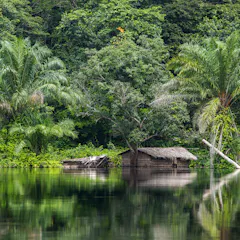
The carbon stored by forests can be bought by polluting companies to offset their emissions. This can displace communities who depend on natural forests for their livelihoods.
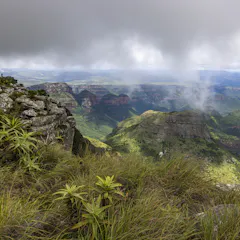
A massive new nature reserve has just been declared in South Africa’s Drakensberg mountain range. It’s good news for communities, landowners, the land and local wildlife.

Giraffes show remarkable genetic differences between populations.
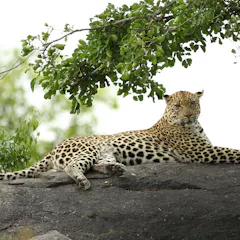
Research exploring how leopards evolved has found that South African leopards are descended from an ice age a million years ago.
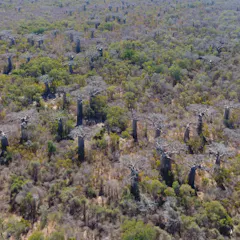
In Madagascar, communities and scientists are growing tens of thousands of baobab seedlings to restore the 1,000-year-old forests.
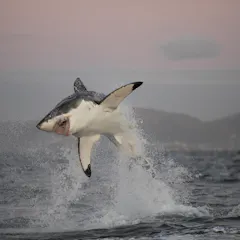
The majestic white shark that once drew many tourists to South Africa’s western and southern Cape regions has all but disappeared. The only explanation can be a sharp decline in the population.
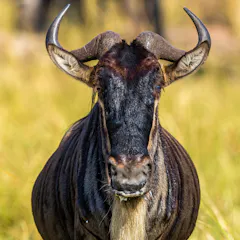
Africa’s great wildebeest migrations are being disrupted by roads, cities and agriculture.
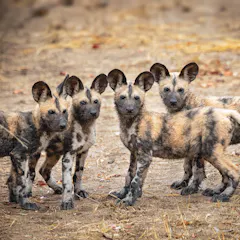
The African wild dog has been left without habitat to naturally disperse and breed. Scientists will set up the first-ever sperm bank to inseminate wild dogs and ensure that the species survives.
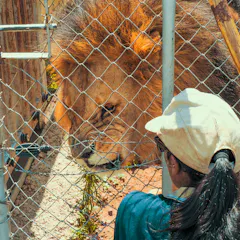
The South African government has finally decided to shut down the captive lion industry, but has not set a deadline for when lion breeding and hunting will end.
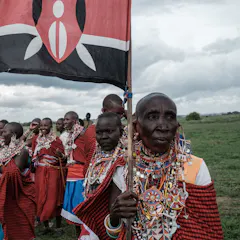
Conservation strategies should promote equitable benefits across communities.
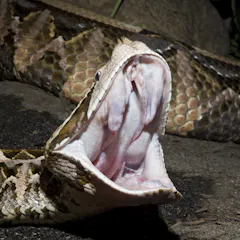
New climate change modelling has found that as the earth heats up, venomous snake populations in Africa are likely to move across borders in search of places to live.
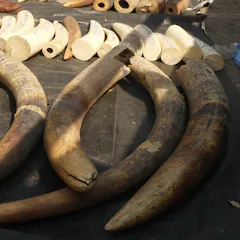
Forest elephants are endangered in Nigeria. Habitat protection, community awareness campaigns, research and stronger regulations could save them from going extinct.
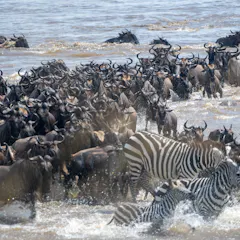
Lessons from the Serengeti herds may help conservationists manage migratory herbivore populations.
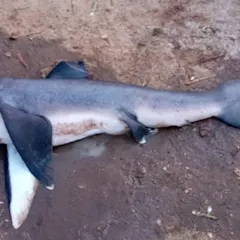
Across the world, fewer than 280 megamouth sharks have ever been seen. The first sighting in east Africa has just come to light.
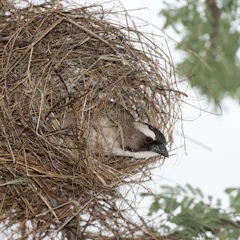
The study shows that bird mothers can adjust egg size depending on their social conditions. This counters the idea that, with more help, mothers lay smaller eggs.
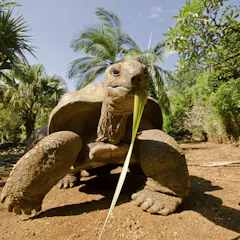
Re-wilding Madagascar with giant tortoises last found on the island 600 years ago could help the island mitigate climate change.

The biggest large mammal population study to date has found that savannah elephant numbers in southern Africa have remained stable for the past 25 years.

Climate change could reduce suitable nesting sites for the wandering albatross on Marion Island.

The Agulhas long-billed lark builds nests on the ground in endangered fynbos vegetation. Here’s how it is surviving.
Top contributors
-

Visiting Research Fellow, Manchester Metropolitan University
-
Visiting Research Fellow, Manchester Metropolitan University
-
Senior Researcher and Statistician, University of Hohenheim
-
Senior research scientist, Stellenbosch University
-
Scientist, South African National Biodiversity Institute
-
Research Associate, Department of Conservation Management, Nelson Mandela University
-
Assistant Professor, University of Greifswald
-
Research Associate, African Centre for Coastal Palaeoscience, Nelson Mandela University
-
PhD Zoology, University of Pretoria
-
Research associate, Stellenbosch University
-
Baobab Ecologist, University of the Witwatersrand
-
Senior scientist, South African National Biodiversity Institute
-
Professor and Chair, Southwestern Environmental Science and Policy, Northern Arizona University
-
Research Fellow at the Centre for Planetary Health and Resilient Conservation Group, Griffith University
-
Postdoctoral associate, Centre national de la recherche scientifique (CNRS); University of the Witwatersrand