
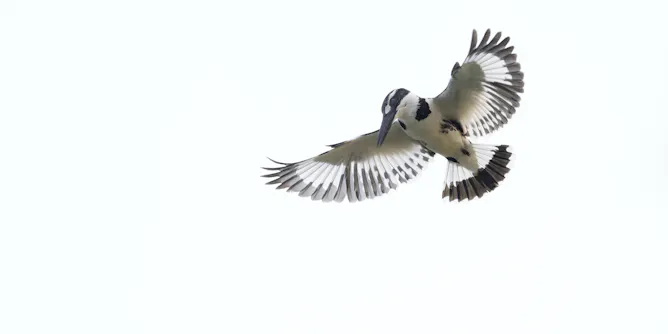
Birds play a wide range of unique cultural roles for the Nuer people, who have three interchangeable names for them.
Articles on Natural world
Displaying 101 - 120 of 153 articles

A review of the impact of parrot farming on conservation of wild parrots shows that consumer demand for the birds must be reduced.
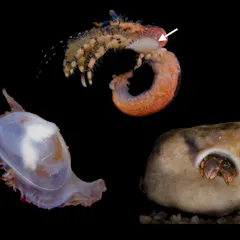
Three tiny new marine species have been discovered in South African waters.
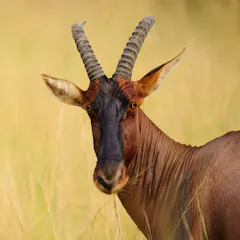
New model can show what’s driving the decline in populations of large mammals.
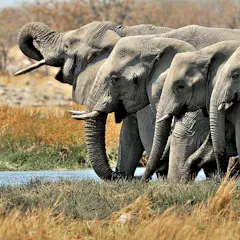
Male elephant society is much richer than previously thought.

Baobabs have been a source of food, fibre and medicine in Africa for centuries.
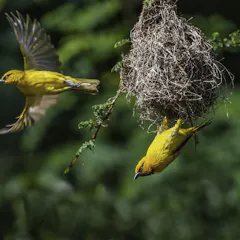
Africa is home to 20% of the world’s bird species, but land-use changes threaten their survival.

A growing number of states are passing laws that call scientific theories into question.
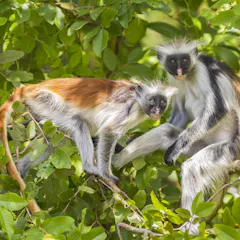
The 17 types of red colobus monkey living in Africa’s forests are among the first large mammals to be killed off by hunters. Protecting the red colobus could therefore protect the entire forest.

Many of the endangered mammal species are solitary. Understanding this way of life may help to protect them.

The giant pangolin had not been documented in Senegal since 1999, and no photographic evidence had been captured since 1967.

Like with most things in life, the use of technology to capture nature comes with pros and cons. How might our phone lens’ be impacting our relationship with the natural world?
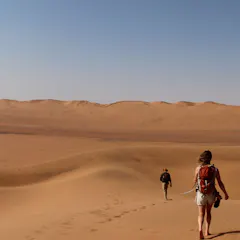
New research provides the foundation for larger, regional-scale analyses of early human adaptive strategies in the Namib Sand Sea, Namibia.

The skate is found in deep waters and it’s not clear how fisheries might threaten the species.

With the help of citizen scientists, South African entomologists can work to keep invasive wasp populations from spreading.
The southern African wildlife economy is socially and environmentally unsustainable.
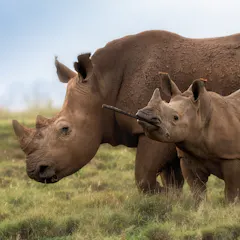
In South Africa, huge stockpiles of rhino horn are kept, even though there’s a global ban on trading it.
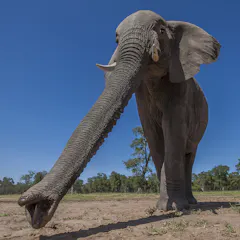
New research has found that the two ‘fingers’ on the tip of an elephant’s trunk exert different forces. The finding will be used to improve the abilities of bio-inspired robots.
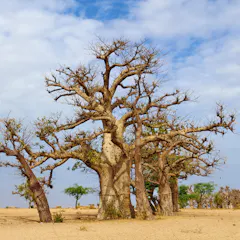
New research has found that the world’s baobab trees all evolved on Madagascar 21 million years ago. Sometime in the last 12 million years, they floated on piles of debris to Australia and Africa.

Dolphins are ruining the catch of fishermen off the coast of Morocco and getting injured in the process.
Top contributors
-

Visiting Research Fellow, Manchester Metropolitan University
-
Visiting Research Fellow, Manchester Metropolitan University
-
Senior Researcher and Statistician, University of Hohenheim
-
Senior research scientist, Stellenbosch University
-
Scientist, South African National Biodiversity Institute
-
Research Associate, Department of Conservation Management, Nelson Mandela University
-
Assistant Professor, University of Greifswald
-
Research Associate, African Centre for Coastal Palaeoscience, Nelson Mandela University
-
PhD Zoology, University of Pretoria
-
Research associate, Stellenbosch University
-
Baobab Ecologist, University of the Witwatersrand
-
Senior scientist, South African National Biodiversity Institute
-
Professor and Chair, Southwestern Environmental Science and Policy, Northern Arizona University
-
Research Fellow at the Centre for Planetary Health and Resilient Conservation Group, Griffith University
-
Postdoctoral associate, Centre national de la recherche scientifique (CNRS); University of the Witwatersrand