
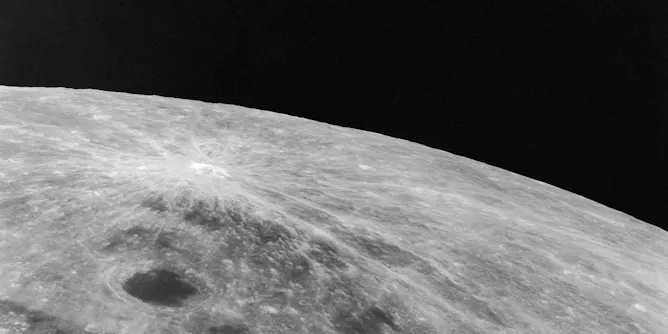
If you try to launch or land a spacecraft anywhere close to another object on the lunar surface, that object will get sandblasted with rocks, dust and sand.
Articles on NASA
Displaying 101 - 120 of 670 articles

Nuclear reactors in space may sound like something out of science fiction, but they are likely to prove important for powering long-term space missions.
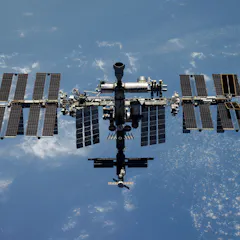
Yes, astronauts have to drink water that used to be pee – but their urine is treated extensively, until it is safer to drink than some tap water on Earth.
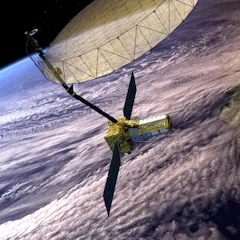
The NISAR satellite will be able to detect centimetre-sized changes on Earth’s surface, providing crucial data for agriculture and climate modelling.
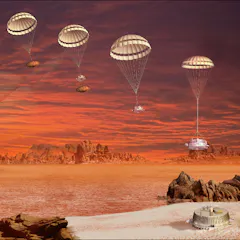
Space exploration would have been poorer without the successes of Esa.
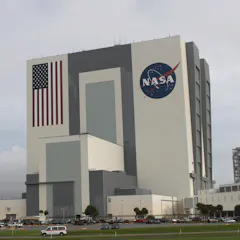
Under the proposed budget, several major projects, such as the Mars Sample Return and the Space Launch System, would face cancellation.
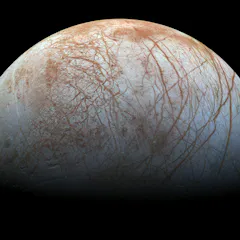
As NASA rolls out more powerful telescopes in the future, scientists will need a way to determine where to point them. A new approach could help.
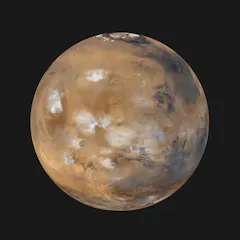
There is growing evidence for the existence of life on other planets.
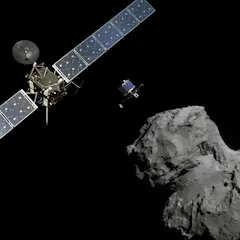
The space agency faces major competition from rising space powers such as China and India.
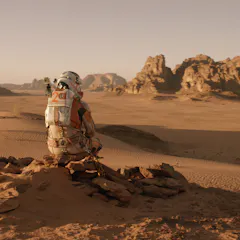
NASA hasn’t landed humans on Mars yet. But thanks to robotic missions, scientists now know more about the planet’s surface than they did when the movie was released.
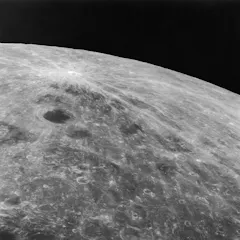
NASA’s learned a lot about the Moon since Apollo. But a perfect landing still requires incredible planning and scientific precision.
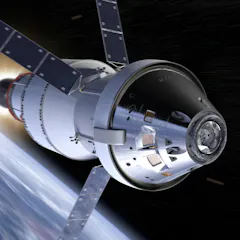
Major science missions could be cancelled, along with vehicles designed to return astronauts to the Moon.
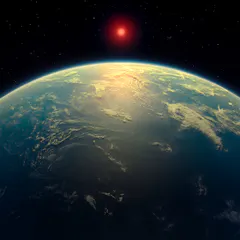
Looking at the history of ‘biosignature’ discoveries shows why they can be problematic.
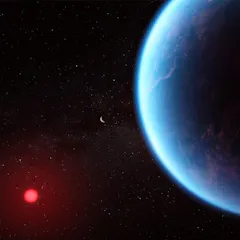
The exoplanet K2-18b could harbor a massive ocean, but scientists will need to study the planet more to see if it’s really likely to host life.
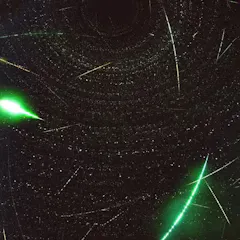
Water-rich meteorites contain key ingredients for life, yet they barely appear in meteorite collections. Recent research using shooting stars may explain why.
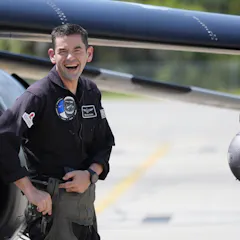
Billionaire CEO Jared Isaacman has worked closely with SpaceX. He expressed an interest in sending missions to both the Moon and Mars if confirmed.
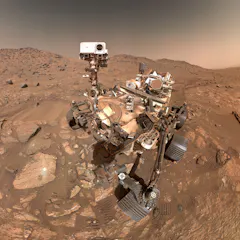
Scientists will have to check whether the samples contain living microbes before they can be safely studied.

A rock from a presumed ancient lakebed contains complex organic molecules.
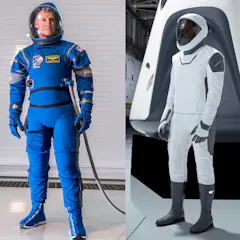
Making spacesuits compatible with different spacecraft could protect astronauts during an emergency evacuation.
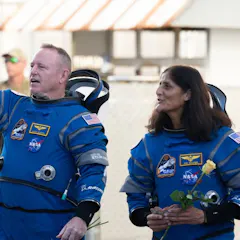
The astronauts were due to spend eight days on the ISS but ended up staying for nine months.
Top contributors
-

Postdoctoral research associate, University of Oxford
-
Professor of Strategy and Security Studies, Air University
-
Senior Lecturer in Physics, Nottingham Trent University
-
Associate Professor in Archaeology and Space Studies, Flinders University
-
Professor of Planetary and Space Sciences, The Open University
-
University Distinguished Professor of Astronomy, University of Arizona
-
Professor (Astrophysics), University of Southern Queensland
-
Kevin Orrman-Rossiter is a Friend of The Conversation.
Sterrenkenner, History & Philosophy of Science, The University of Melbourne
-
Professor in Earth and Planetary Science, Western University
-
Associate Professor of International Affairs, Georgia Institute of Technology
-
Lecturer in Astronomy, Nottingham Trent University
-
Professor of Air and Space Law, University of Mississippi
-
Assistant Professor of Space and International Relations, Johns Hopkins University
-
Professor of Planetary Geosciences, The Open University
-
Senior Instrument Scientist, Australian Nuclear Science and Technology Organisation