

Restoring the basin to health requires more than just more water. Coordinated local efforts to restore rivers and the surrounding land are desperately needed.
Articles on Murray-Darling Basin
Displaying 1 - 20 of 21 articles
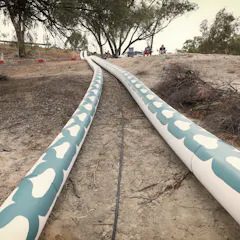
The river’s health has been suffering, with a number of harrowing mass fish deaths events taking place in recent years.
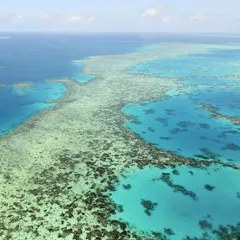
A new study of water quality in Australian rivers reveals surprising changes since the turn of the century: good for the Murray-Darling Basin but bad for the reef.
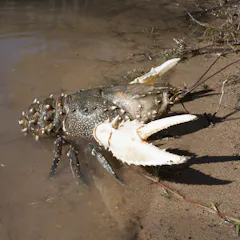
The Murray crayfish disappeared from large parts of its range over the past 40 years. Now a community-driven reintroduction program is bringing the iconic species back.
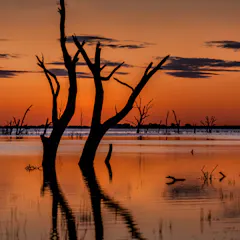
The findings are simply unacceptable for a natural asset so fundamental to Australia’s environmental, cultural and economic wellbeing.

New research shows how river flows in the once-mighty Murrumbidgee have dwindled over time, leaving the floodplain high and dry. But the main culprit is not climate change and we can fix it.

Policy reform is urgently needed to make water use in Australia sustainable, but it won’t be effective unless it’s based on facts.
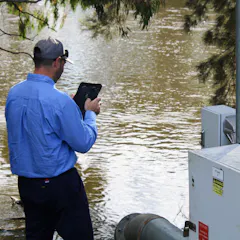
Inconsistent laws and penalties for water theft in the Murray-Darling Basin make compliance and enforcement especially challenging. But it doesn’t have to be this way.
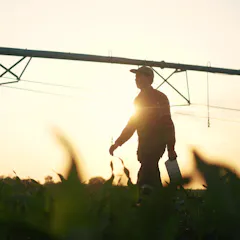
A comprehensive review of research into the economic consequences of controversial water buybacks in the Murray-Darling Basin reveals many studies are of poor quality. Better standards are needed.
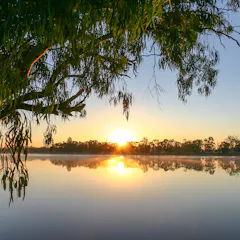
With the support of the Greens, there’s a chance the ‘Restoring Our Rivers’ Bill will pass. Will it be enough to put the Murray-Darling Basin Plan back on track?
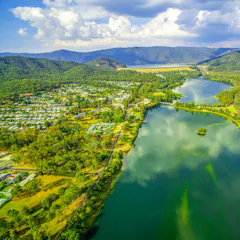
Buying back water from irrigators across the Murray-Darling Basin will not be enough to restore river health because we have big problems getting this ‘environmental water’ to where it’s needed most.
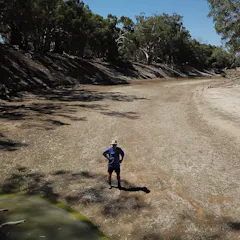
Suicide rates jumped in the Murray Darling Basin following extreme drought and hotter temperatures, a new study shows. The findings highlight the need for action to manage climate change impacts.
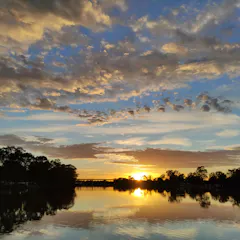
Once again, First Nations in the Murray-Darling Basin have been shortchanged in water reform and shortchanged in the water market. It’s time to listen and actually deliver tangible outcomes.
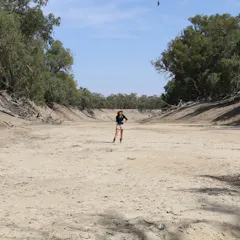
After almost half a century, the United Nations has waded back into the murky world of water policy. But one of the ideas following this year’s international meeting has been shot down.

Australia’s beloved billabongs and waterholes are in danger of filling up with eroded soil from farms, leaving little room for the aquatic animals that depend on these vital drought refuges.
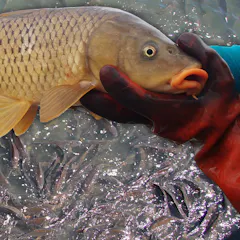
Carp can make riverbeds look like golf balls – denuded and dimpled, devoid of any habitat. Releasing carp herpes virus is a controversial proposition, so let’s weigh up the risks and benefits.
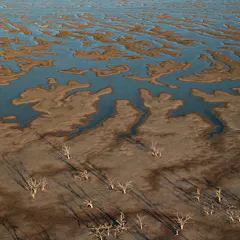
Indigenous engineering and care for Country points to a better way to manage the Baaka.
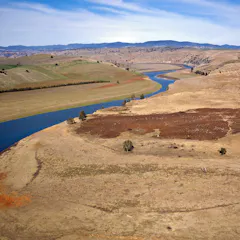
During the warmer months, the number of days when the river ceases to flow will increase. Climate change is to blame.
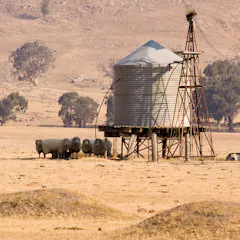
A major new report from the Productivity Commission calls for an overhaul of Australia’s 17-year-old policy on water.
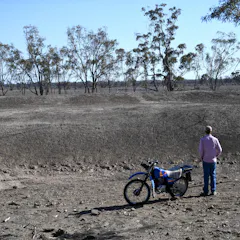
To fully understand why droughts begin, persist and end, we need to answer the question: where does Australia’s rainfall come from? It may seem basic, but the answer isn’t so simple.
Top contributors
-

Matthew Flinders Professor in Water Economics, Flinders University
-
Adjunct Research Fellow, Australian Rivers Institute, Griffith University
-
Professor, Australian Rivers Institute, Griffith University
-
Research Fellow, School of Economics and Public Policy, Adelaide University
-
Australian Laureate Professor of Economics, Crawford School of Public Policy, Australian National University
-
Associate Professor, School of Economics and Public Policy, Adelaide University
-
Associate Professor in Environmental Change, Adelaide University
-
PhD Candidate, Adelaide University
-
Senior Lecturer, School of Engineering and Built Environment, Griffith University
-
Deputy Director, Environment and Production Technology Division, International Food Policy Research Institute (IFPRI)
-
Visiting Fellow, School of Mathematical and Physical Sciences, University of Technology Sydney
-
Director, Wentworth Group of Concerned Scientists & Adjunct Lecturer, UNSW
-
Senior Lecturer in Law, Adelaide University
-
Associate professor, Royal Agricultural University
-
Indigenous knowledge holder, Indigenous Knowledge