

While rain gardens are useful, how and where they are planted can impact how beneficial they are.
Articles on Municipal water
Displaying all articles
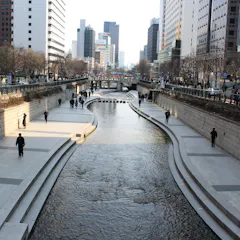
Stream daylighting can help manage stormwater, restore habitats and create greener, more walkable public spaces.
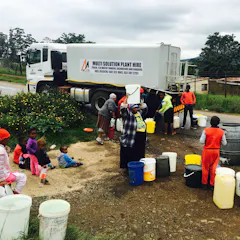
Water tankers are meant for emergencies but are fast becoming the norm for many communities.

The bottled water industry can undermine progress of projects aimed at creating safe-water systems for all, by redirecting attention to a less reliable, less affordable option.
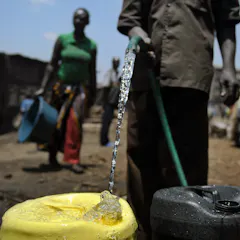
Digital technology is changing the way water is accessed in Ghana. Water ATMs are gaining traction as a means to an end.
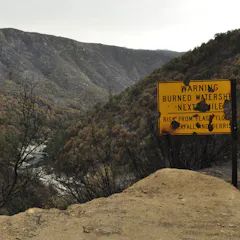
Wildfires reduce the reliability of city water supplies in North America. But active forest management provides a key to the solution.

The prices households pay for drinking water and wastewater services have been rising faster than the rate of inflation.
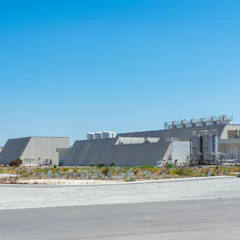
Sydney and Melbourne are bringing desalination plants back on stream and Adelaide plans to increase its plant’s output. Perth depends on desalination. But is it the best way to achieve water security?

Faced with a drought, it’s tempting for cities to reduce the amount of space that needs water. But this is not a good idea.
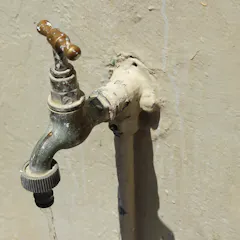
Unless African cities improve water management many will face severe water problems by 2035.
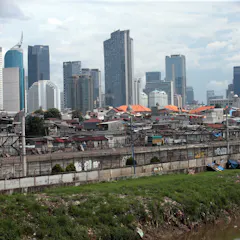
While it is true that the poorest residents of the city are not connected to the piped water network, neither are the richest. Then what causes water inequalities?
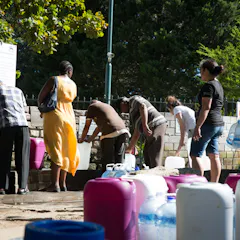
The poor management of South Africa’s water is affecting the entire country.
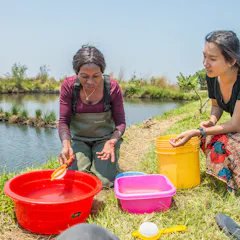
African governments must focus on developing and supporting highly-skilled water professionals.
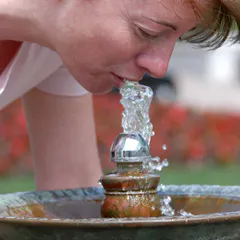
Unlike the U.S., some European countries have stopped using chlorine to disinfect drinking water to avoid changing the taste and potential health problems. Which approach is better?

Treating municipal water, particularly from rivers, is difficult technically and cash-strapped municipalities like Flint don’t always know the latest science.
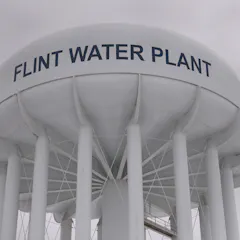
The University of Michigan-Flint puts experts from academia in the same room as Flint community members, an innovative model for educating the community and forming the public health response.

A wake-up call from Flint: the U.S. has made great gains in reducing lead exposure, but the country is still saddled with millions of miles of water-carrying lead pipes.
Top contributors
-

Professor of Integrated Water Systems, University of Sheffield
-
SUNY Distinguished Professor of History, Stony Brook University (The State University of New York)
-
Associate Professor of Environmental Engineering, University of Colorado Boulder
-
Professor of Public Health and Health Sciences, University of Michigan
-
Associate Professor of Civil and Environmental Engineering, University of Michigan
-
Assistant Professor, Oregon State University
-
Associate Professor of the Politics of Urban Water, IHE Delft
-
Former Director of the Institute for Water, Environment and Health (UNU-INWEH), United Nations University
-
Professor and Director of the Institute for Water Research, Rhodes University
-
Assistant Professor Sociology and Social Studies, University of Regina
-
Visiting professor, University of Saskatchewan
-
Postdoctoral fellow in Environmental Geography, University of Alberta
-
Postdoctoral fellow, University of Cape Town
-
Senior Scholar in Environmental & Geographical Science, University of Cape Town
-
Distinguished visiting professor, University of Glasgow