

Public records requested under the Freedom of Information Act have helped shape health policy and keep the government accountable – but recent staff cuts may make this impossible.
Articles on Flint water crisis
Displaying 1 - 20 of 48 articles

Durability and the risk of chemicals being released when pipes heat up are just 2 concerns about plastic pipes.
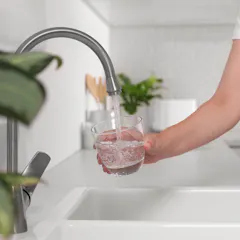
It is difficult and expensive to effectively remove ‘forever chemicals’ from your drinking water at home. And you also don’t want to get rid of the health-giving minerals water contains.
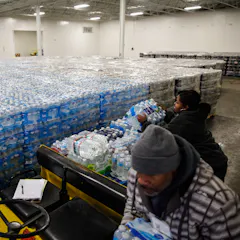
Dependence on bottled water weakens pressure to fix tap-water problems. Who pays the price?

President Biden has proposed spending $45 billion to replace every lead water pipe and service line in the nation. A public health expert explains why he sees this as a worthwhile investment.

New research finds that tap water avoidance is on the rise in the US, especially among minorities. An expert on water and health calls for better public education about water quality and testing.
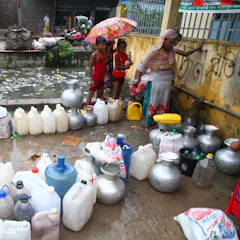
Water is essential for health, economic well-being and social equity, but too many people around the world still don’t have access to clean drinking water and sanitation.
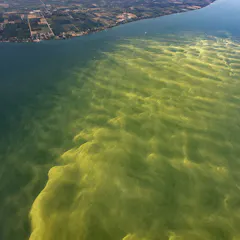
The Great Lakes contain reservoirs of legacy contaminants, mostly in their sediments, that are vulnerable to resuspension.
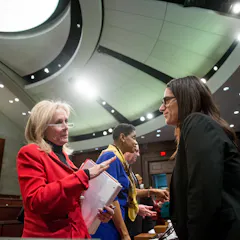
Whistleblowers may stop bad behavior and protect others from harm.

Newark is the latest US city to struggle with high lead levels in drinking water. Ending this public health crisis will require more money and enforcement, plus stricter water testing standards.

Flint’s highest recorded lead levels were typical for water systems that report problems. What’s more, a number of cities haven’t reported their lead issues.

The children who suffered lead poisoning as a result of the Flint water crisis of 2014 are likely to struggle academically and socially as a result, an expert on treating lead-poisoned children argues.

In many municipalities, aging water infrastructure is serving fewer people than it was built to accommodate. Out of sight has meant out of mind – but resulting changes in water quality may affect safety.
Just as America’s highways, sewage systems and water pipes need fixing, so does the growing gap between rich and poor. Trump and the Democrats could use that money to address both.

AI can help make government more efficient – but at what cost? Citizens’ lives could be better or worse, based on how the technology is used.
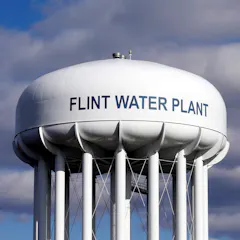
If Elon Musk can help achieve safe drinking water more quickly for every home in Flint, Mich., then he should be lauded. Water is life.
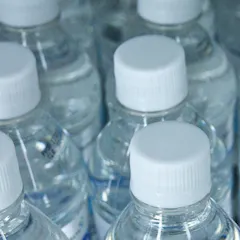
Nestle pays the state a pittance in exchange for its water at a time when public awareness of water issues is rising.

Michigan officials have ended distribution of free bottled water in Flint, but many residents believe the city’s water crisis is not over and have lost all trust in government.

Reduced lead exposure has made us smarter and healthier. Could changes in regulatory agencies across North America endanger this?

Much of the discussion about “Take a Knee” has overlooked the issues of justice and social exclusion, and especially environmental matters. That’s something to think about during the Super Bowl.
Top contributors
-

Lynton K. Caldwell Professor of Public Affairs, Indiana University
-
Professor, Physics and Astronomy, McMaster University
-
Assistant Professor of Climate Adaptation, University of Washington
-
Associate Professor of Public Affairs and Administration, Rutgers University - Newark
-
Assistant Professor of Communication Studies and Faculty Associate at the Institute of Social Research, University of Michigan
-
SUNY Distinguished Professor of History, Stony Brook University (The State University of New York)
-
Assistant Professor of Marketing, Ross School of Business, University of Michigan
-
Associate Professor of Environmental Engineering, University of Colorado Boulder
-
Associate Professor in American and International Politics, University of Birmingham
-
Distinguished Journalist In Residence, Arthur Carter Journalism Institute, Retraction Watch
-
Associate Professor of Family Medicine, University of Michigan
-
Assistant Professor, Hubert Department of Global Health, Rollins School of Public Health, Emory University
-
Vice-President Research & Innovation; professor of chemistry and biology, Faculty of Science, Toronto Metropolitan University
-
Dean, School of Public Affairs, Texas Southern University
-
Assistant Professor of Sociology, Central Michigan University