
Epilepsy affects around 70 million people globally, 80% live in developing countries. A shortage of specialists, equipment and drugs complicates effective treatment and management.
Articles on MRI
Displaying 41 - 60 of 68 articles
Talking therapy or antidepressants? An MRI scan could reveal what would work for you.
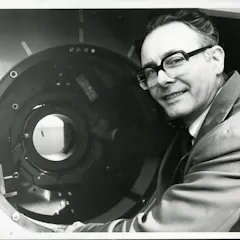
While Peter Mansfield didn’t have the career as a rocket scientist he craved, his contribution to humanity has been immense.

A recent study suggested that the brain becomes accustomed to lying, making people merely puppets of their brains. That’s too simple an explanation – and one that lets liars off the hook.

While AI seems unstoppable, our improved understanding of human brains is levelling the playing field for now.

When you read this text, certain regions in your brain begin working more than others. Advanced imaging allows scientists to map the brain networks responsible for understanding language.
Vast reserves of crucial helium have been found in Tanzania. Here’s how the scientists did it.

Conduct disorder is not just teen rebellion, as some experts claim. Brain scans suggest that it’s a psychiatric disorder.
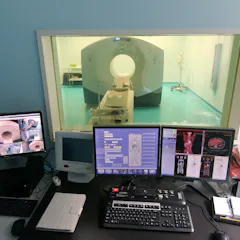
Pairing more powerful computers with increasingly sensitive scanners can yield many benefits in medicine and other fields.
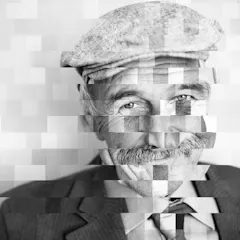
Different parts of our brains process different things, like the facial features, voices and the gait of people we know. But it takes memory to weave them all together into a single picture.

Brain imaging study shows that we forget the context in which a traumatic event take place which could be crucial to avoiding negative loops.

People develop a long-term problem after an episode of back pain if they expect to not recover. Steps by the medical sector to avoid catatrophising back pain by not suggesting scans will help.
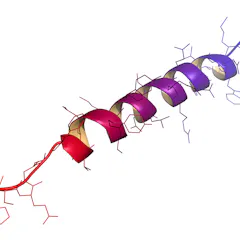
Scientists and engineers have looked to nature for their inspiration for centuries. The field of biomimetics uses ideas from nature to solve complex human challenges. Synthetic biology, a more recent concept…

“Diabetic urine”, the surgeon Herbert Mayo wrote in 1832, “is almost always of a pale straw or greenish colour. Its smell is commonly faint and peculiar, sometimes resembling sweet whey or milk.” The use…

Dogs really are our best friends. A study published today in Current Biology shows not only do dogs and humans read emotions in each other’s “voices”, but both are more attuned to “happy” sounds. And the…
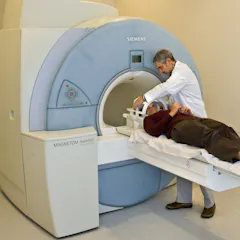
Our short series, the Science of Medical Imaging, examines the technology behind non-invasive methods of creating images of the human body. In this third and final instalment, we look at the basics of…
Researchers at University of Sydney’s Brain and Mind Research Institute (BMRI) have installed a simulator MRI machine to…

Helium is God’s gift to humankind. It’s particularly fantastic for science and medicine and has allowed us to make an enormous number of fundamental advances. We use it for a whole vast array of things…

You may have read last week that a team of researchers has developed, for the first time, a way to detect the contents of people’s dreams. But what can we glean from this research? During the same week…
It’s been referred to, somewhat disparagingly, as blobology, but MRI technology has the potential to improve treatment for epilepsy – in part thanks to developments in computing. Identifying where seizures…
Top contributors
-

Senior Research Fellow, The Perron Institute for Neurological and Translational Science, and Faculty of Health Sciences, Curtin University
-
Associate professor, Florey Institute of Neuroscience and Mental Health
-
Postdoctoral Research Fellow, The University of Queensland
-
Professor of Biomedical Engineering, Case Western Reserve University
-
Bradley Distinguished Professor, Adelaide University
-
Professor of Geoenergy, Carbon Capture and Storage, Durham University
-
Postdoctoral Researcher in Cognitive Neurosciences, The University of Queensland
-
Professor of Surgery and Director of the Virtual Health Hub and the Remote Presence Robotic Program at the University of Saskatchewan, University of Saskatchewan
-
Professorial Research Fellow, University of Sydney
-
Chancellor's Professor of Medicine, Liberal Arts, and Philanthropy, Indiana University
-
Scientia Lecturer, UNSW
-
Postdoctoral research student, KEMRI-Wellcome Trust Research Programme, Kenya Medical Research Institute
-
Professor and Head of the Epilepsy Neuroinformatics Laboratory, Florey Institute of Neuroscience and Mental Health
-
Professor, Monash University
-
Postdoctoral Researcher, The University of Queensland