

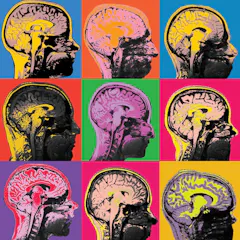
Here’s what these brain ‘holes’ and the scans that found them really mean.
Articles on Brain imaging
Displaying 1 - 20 of 63 articles

Despite the rising burden of stroke across Africa, there is no continent-wide framework or standardised protocol for stroke management.
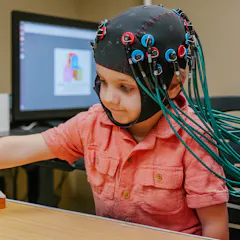
Kids with good executive function tend to grow up to be financially stable, healthy, productive adults. Past attempts to teach these skills have flopped. New brain research on language may change that.
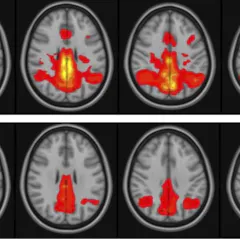
Concussion is considered a ‘mild’ injury, but effects can last a lifetime, especially with multiple impacts. Understanding their long-term effects can help predict who might develop neurodegeneration.

Oral contraceptives modify the menstrual cycle. What’s less well known is that they also reach the brain, particularly the regions important for regulating emotions.
What we ‘see’ in the brain depends on which tool we use to ‘look’ – but each one comes with trade-offs.

More invasive devices have prompted new debates about privacy and freedom. But it’s important to keep in mind that other technologies already sense and shape our thoughts, a neuroethicist argues.

Rhesus monkeys respond to fearful body language in members of their own species, as well as humans and cats.

A new study provides the first glimpse into what happens in children’s brains as they meditate.
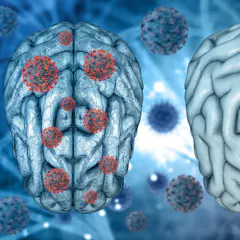
New research offers insights into the brain after COVID-19 that may have implications for our understanding of long COVID-19 and how the disease affects our senses of taste and smell.
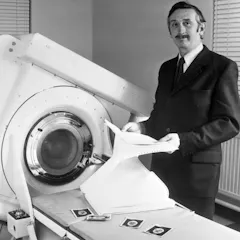
On Oct. 1, 1971, Godfrey Hounsfield’s invention took its first pictures of a human brain, using X-rays and an ingenious algorithm to identify a woman’s tumor from outside of her skull.
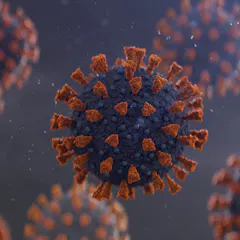
Reduced brain volume in people who have experienced COVID-19 resembles brain changes typically seen in older adults. The implications of these findings are not yet clear.

When it comes to love, science has not yet got it right. And there’s a wonderful reason why.

The lasting impact of neglect.

Despite its huge complexity, your brain directs its neural traffic in relatively straightforward ways when approaching cognitively demanding tasks such as puzzles.
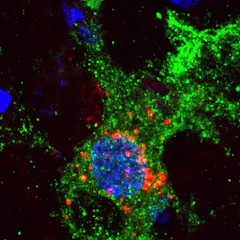
These tiny nanoparticles might provide a new way to see what’s happening in the brain and even deliver treatments to specific cells – if researchers figure out how to use them safely and effectively.

Scientists explain why commercial gene testing should be used with caution.
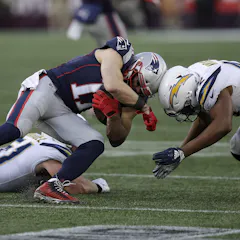
A standard clinical MRI is not sensitive to the distributed and microscopic injuries in a concussed brain. But new discoveries are in the pipeline.
Take a look at some of the amazing neuroscience images out of the Queensland Brain Institute this year.

Caring about someone you have never met, this new brain research suggests, may have a lot in common with caring about the people you love.
Top contributors
-

Senior Research Scientist, University of Oxford
-
Professor in Psychology, UCL
-
Associate Professor, Texas A&M University
-
Scientia Professor & Head of the School of Psychiatry, UNSW
-
PhD Candidate in Neuroscience, Yale University
-
Associate Professor, Department of Psychology, University of Copenhagen
-
Assistant professor, University of Chicago
-
Adjunct Assistant Professor of Neurology at Oregon Health and Sciences University and Affiliate Assistant Professor of Philosophy, University of Washington
-
Science Writer, Queensland Brain Institute, The University of Queensland
-
Scientia Professor of Neuropsychiatry, Centre for Healthy Brain Ageing (CHeBA), School of Psychiatry, UNSW
-
Professor of Electrical & Electronic Engineering, The University of Melbourne
-
Director School of Medicine and Psychology, Australian National University
-
Senior Clinical Lecturer of Geriatric Medicine, University of Edinburgh
-
Professor of Psychiatry and Neuroscience, Wayne State University
-
Lecturer in Philosophy and ARC Future Fellow, Monash University