

Bittersweet experiences aren’t uncommon. Do people ever truly feel both positive and negative at the same exact moment, or do we just switch quickly back and forth?
Articles on fMRI
Displaying 1 - 20 of 37 articles

We now have the technology and knowledge to carry out real-time dream experiments with sleeping participants.
We envisage a future in which sleep is a routine target for reducing or preventing symptoms of mental illness, both in psychiatric settings and people’s homes
Of the risks posed by AI, overtaking human intelligence isn’t an immediate concern.

American scientists have used brain scans and machine learning to reconstruct the meaning of stories that people hear, see, or even imagine.

Rhesus monkeys respond to fearful body language in members of their own species, as well as humans and cats.
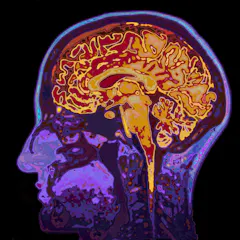
Our new research reveals that how unique a young person’s brain is could alert us to the likelihood of future psychological distress.

The latest findings add to the understanding of how social disadvantage such as poverty and low-quality, unsafe housing can affect early child development.

Cognitive neuroscientists use brain imaging and behavioral economic games to investigate people’s sense of fairness. They find it’s common to take care of yourself before looking out for others.
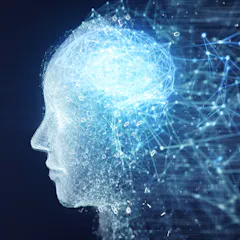
A bioengineer explains how a clearer picture of brain structure and function may fine-tune the ways brain surgery attempts to correct structure and medication tries to correct function.

How does the brain distinguish between the “self” and the “other”? A new study gives a clue.
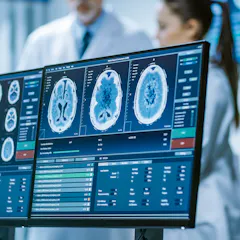
By imagining a unique scenario to answer “yes” or “no” questions, this research could potentially be used to communicate with locked-in patients.

The scientific understanding of our internal experiences is changing and it now seems likely that ‘Christmas cheer’ may be an emotion in itself.

Despite its huge complexity, your brain directs its neural traffic in relatively straightforward ways when approaching cognitively demanding tasks such as puzzles.

What kind of curious are you? Scientists explore different types of curiosity and their home in the brain.

Scientists explain why commercial gene testing should be used with caution.

The process of radicalisation is a complex system that cannot be reduced to the brain, behaviour, or environment. It exists at the intersection of all these elements.
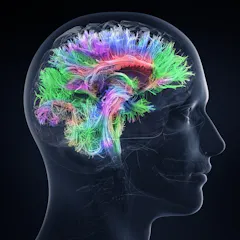
Researchers have identified which part of the brain helps us understand and respond to social interactions.
Creative people seem to possess a unique connection between three brain networks that typically work separately.
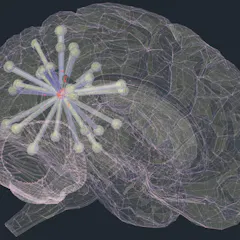
Harmful proteins spread between connected neurons much like flu spreads through a social network. The finding may provide future opportunities for halting Alzheimer’s.
Top contributors
-

Director - Queensland Brain Institute, The University of Queensland
-
PhD Candidate in Neuroscience, Yale University
-
PhD candidate, Neuroscience Research Australia
-
Associate Professor at the Institute for Social Neuroscience in Melbourne, Australia, The University of Melbourne
-
Julius Silver Professor of Neural Science, New York University
-
Research Director, Cyclotron Research, Université de Liège
-
Professor of Clinical Neuropsychology, University of Cambridge
-
Postdoctoral Research Fellow, UNSW
-
Research Fellow, Brunel University of London
-
Assistant professor, University of Chicago
-
Head of Sir Peter Mansfield Imaging Centre, Faculty of Science, University of Nottingham
-
MRC Research Fellow, UCL
-
PhD candidate in Psychiatry, University of Cambridge
-
Associate professor, Adelaide University
-
Associate Professor of Psychology, Penn State