
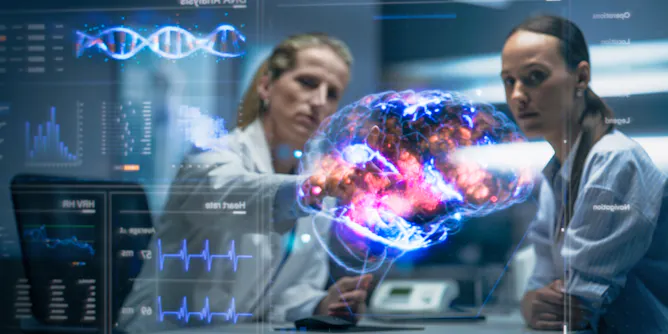
Existing digital models of the human brain risk missing out on what makes you ‘you’.
Articles on Brain scans
Displaying all articles

Here’s what these brain ‘holes’ and the scans that found them really mean.

Within a fraction of a second of seeing another person being touched, our brains figure out who is involved and how it might feel.

Researchers in American scanned the ‘hell out of’ participants brains while they tripped on mushrooms.
Neuroscientists analyzed the brain waves of 32 jazz guitarists as they improvised to chords and rhythms. Their findings suggest 2 key principles support innovative thinking.
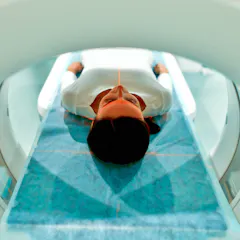
American scientists have used brain scans and machine learning to reconstruct the meaning of stories that people hear, see, or even imagine.

How do you determine whether one brand is similar enough to another to infringe on its trademark? Researchers propose that comparing brain scans could be an option.
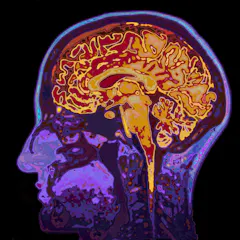
Our new research reveals that how unique a young person’s brain is could alert us to the likelihood of future psychological distress.

The growth and decline of the human brain mapped in an ambitious global project.

Brain regions associated with threat and aversion are activated when we feel lonely and rejected.

The scientific understanding of our internal experiences is changing and it now seems likely that ‘Christmas cheer’ may be an emotion in itself.
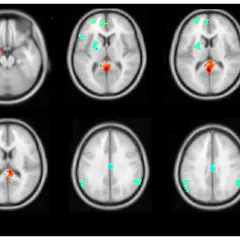
The brain can do a lot, but it is vulnerable, especially to traumatic events. Over the years, researchers have learned the unique ways in which it is damaged by experiencing or witnessing trauma.
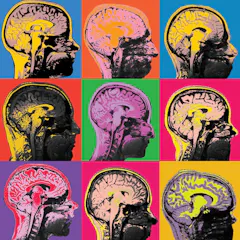
Take a look at some of the amazing neuroscience images out of the Queensland Brain Institute this year.
Top contributors
-

Science Writer, Queensland Brain Institute, The University of Queensland
-
Postdoctoral Researcher, The University of Queensland
-
PhD Student, The University of Queensland
-
Senior Research Fellow, The Perron Institute for Neurological and Translational Science, and Faculty of Health Sciences, Curtin University
-
Postdoctoral Research Fellow, The University of Queensland
-
Associate Professor, Cognitive Psychology, Leiden University
-
Biomedical Engineer and Neuroscientist, University of Sydney
-
Professor of Psychiatry, Wayne State University
-
Postdoctoral Fellow, Lifespan Brain Institute, University of Pennsylvania
-
Professor of Youth Mental Health & Neurobiology, University of the Sunshine Coast
-
Director, Thompson Institute, University of the Sunshine Coast
-
Senior research fellow, University of the Sunshine Coast
-
Professor of Psychological and Brain Sciences, Drexel University
-
PhD Candidate in Psychology & Neuroscience, University of Glasgow
-
Director of Neuroimaging at the Autism Research Centre and Research Associate at the Brain Mapping Unit, University of Cambridge