

An ethicist who studies disagreement and civility assumed she could handle a neighborly dispute – until the neighbor refused to even interact with her.
Articles on Moral psychology
Displaying all articles

The ancient Greek word phronesis means practical wisdom. It’s about choosing the right action at the right time for the right reasons, helping you apply the other virtues correctly.

If de-extinction tech can bring back species, are people more comfortable with them going extinct? A new study tests this idea.

Awkwardness is what happens in social interactions when you suddenly find yourself without a script to guide you through.

Changing the ‘psychological distance’ someone feels toward an issue can shift their attitudes in ways that might help people on opposite sides of an issue see more eye to eye.

A psychological mechanism called ‘motivated reasoning’ helps us justify the ethical burden away.

There are many ways to decide what’s ‘fair’ in a given situation. Which one you prefer may depend on what kind of person you are.

An analysis of billions of words in the Google Books database shows the way society has valued moral principles such as compassion, respect for authority, community values and fairness over time.
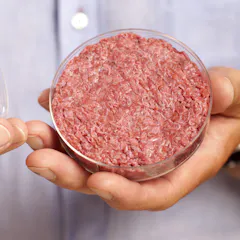
Surveys suggest fewer than half of Americans are looking forward to lab-grown meat. A moral psychologist examines common objections and why for the most part they’re not logical.

In ‘Westworld’s’ land of robots, it’s the people who lack humanity.
It’s a common quirk of human psychology to make the mental leap that the way things are is the way things ought to be. New research into how we explain the world around us sheds light on the phenomenon.
If you want to get away with doing something bad, don’t tell anyone until after you’ve done it.

The morality of which animals we can and can’t eat doesn’t stand up to scrutiny.
Top contributors
-

Director of the Center for Practical Ethics and Professor of Philosophy, University of Mississippi
-
Associate Professor of Psychology, Rose-Hulman Institute of Technology
-
Ph.D. Student in Developmental Psychology, University of Illinois Urbana-Champaign
-
Lecturer in Applied Developmental Psychology, Queen's University Belfast
-
Postdoctoral Research Associate in Psychology, Yale University
-
Lecturer in Social Psychology, Lancaster University
-
Professor of Psychology, The University of Melbourne
-
Associate Professor of Marketing, Tasmanian School of Business and Economics, University of Tasmania
-
Professor of Marketing and Consumer Behaviour, Queensland University of Technology
-
Senior Lecturer, Graduate School of Business and Law, RMIT University
-
PhD Candidate in Psychology, The University of Melbourne
-
PhD Candidate in Social Psychology, The University of Melbourne
-
Lecturer and Head of the Prediction and Decision-Making Lab, The University of Melbourne
-
Professor of Personality Psychology, The University of Melbourne
-
Associate Professor of Psychology, Hamilton College