
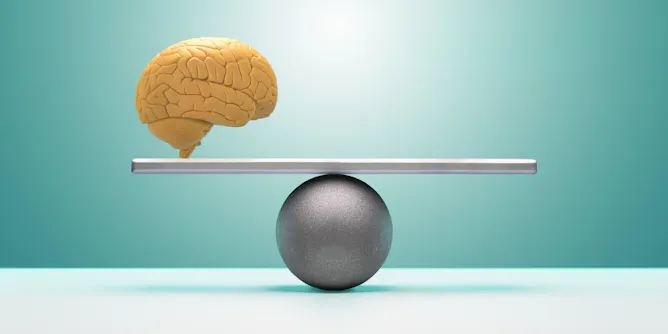
For the Greeks, sophrosyne was an ideal second to none. It’s just as important today, in an age of internet addiction and misinformation – but harder to come by.
Articles on Judgment
Displaying all articles

People and computers perceive the world differently, which can lead AI to make mistakes no human would. Researchers are working on how to bring human and AI vision into alignment.

The ancient Greek word phronesis means practical wisdom. It’s about choosing the right action at the right time for the right reasons, helping you apply the other virtues correctly.

Instant evaluations narrow your perspective and limit your mind’s potential to connect and engage with other aspects of your experiences.
At a time of low trust in government, conflicts of interest can further erode Americans’ confidence in officials.

Youth in a study went from being passive deepfake bystanders to developing a sense of responsibility and readiness to help prevent deepfakes’ spread.

Educating mock jurors about what kinds of statements are appropriate − or not − led to more critical assessments of forensic testimony and improved the quality of their decisions.

Criminalisation of medical judgment may interfere with appropriate medical decision making.

Erroneous calls increase the chances of subsequent calls in favor of the person who was harmed. What drives this behavior, and do people even recognize they’re doing it?

Social psychology researchers found that people commonly exaggerate the presence of certain groups – including ethnic and sexual minorities – because they perceive them as ideologically threatening.

By letting machines recommend movies and decide whom to hire, humans are losing their unpredictable nature – and possibly the ability to make everyday judgments, as well.

Teaching deaf babies sign language improves the success of cochlear implants – and also safeguards their long-term physical and mental health.

New research confirms that people tend to rush to judgment, in spite of believing their own decisions and those of others are carefully based on lots of evidence and data. And that can be good or bad.
Top contributors
-

Senior Research Fellow, Applied Ethics Center, UMass Boston
-
Professor of Psychology, Florida International University
-
Associate Professor, Educational Technology, Université Laval
-
Postdoctoral Researcher at Harris Public Policy, University of Chicago
-
Assistant Professor of Marketing, Cornell University
-
Associate professor, Boise State University
-
Assistant Professor of Psychology, Florida International University
-
Assistant Professor of Industrial/Organizational Psychology, University of Akron
-
Professor of Deaf Education, University of Tennessee
-
District School Administrator and PhD Student in Deaf Education, University of Tennessee
-
Professor of Philosophy and Director of Applied Ethics Center, UMass Boston
-
Doctoral Candidate in Legal Psychology, Florida International University
-
Senior lecturer in law, University of the Free State
-
Associate Professor of Psychology, Florida International University
-
Postdoctoral Researcher of Language and Literacy, University of Tennessee