

Product labelling showing whether food comes mainly from animals or plants can help consumers make more climate-friendly choices.
Articles on Agricultural greenhouse gas emissions
Displaying 1 - 20 of 22 articles
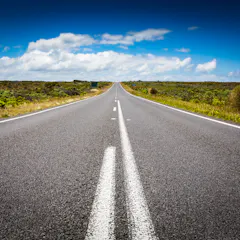
We’re well on the road to net zero by 2050. Now a new report from Australia’s independent Climate Change Authority provides pathways for each sector of the economy. Let’s get on with it.

The free ecoSwitch app takes the guesswork out of sustainable food choices, empowering consumers to take matters into their own hands.
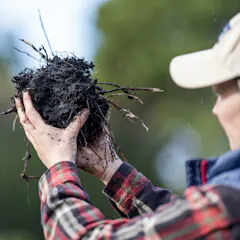
A group of agricultural and soil scientists has serious concerns about the way credits are awarded for soil carbon sequestration in Australia.
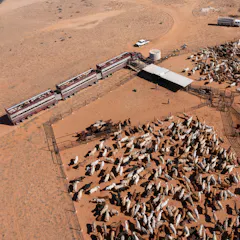
When Peter Singer first published Animal Liberation in 1975, he wasn’t aware of climate change. But the new book, Animal Liberation Now, argues eating plants will reduce greenhouse gas emissions.
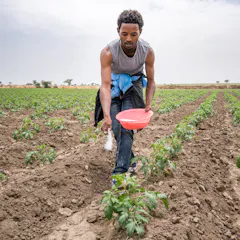
Farmers who use little or no fertiliser can use ecological practices to increase their yields.
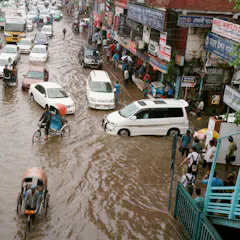
An author of the report explains the damaging effects climate change is already having and why adaptation is essential.

The process that brought you your morning latte could have produced half a kilogram of CO₂.
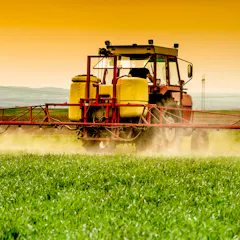
Modern agriculture releases lots of different greenhouse gas emissions, each with complex effects on the global climate.
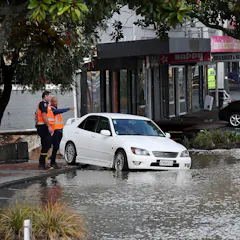
I have criticised this government’s climate policy in the past for being big on promise but short on concrete policies. But this financial disclosure policy has some real teeth.
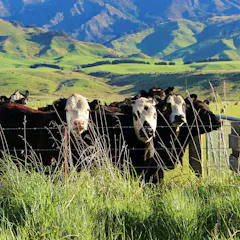
The New Zealand government’s decision to partner the farming sector to encourage voluntary reductions in farm emissions failed to acknowledge that agricultural emissions also affect water quality.
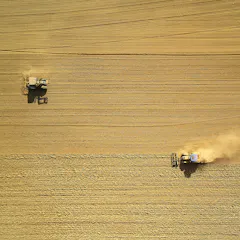
The world has no hope of reaching the goals of the Paris Agreement without seriously reducing emissions from agriculture, forestry and land clearing.
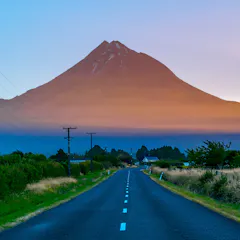
A recent report on the state of New Zealand’s environment painted a bleak picture of species losses and freshwater pollution. Budget 2019 signals a shift, but more in intention than sufficient funding.
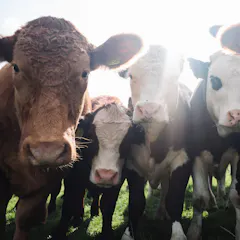
Removing human-related methane from the atmosphere could reduce global warming by 15%.
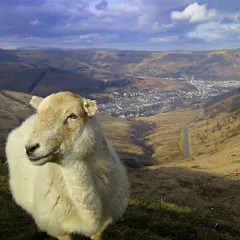
To hit emissions targets, Wales will need to drastically reassess how 90% of its landscape is used.
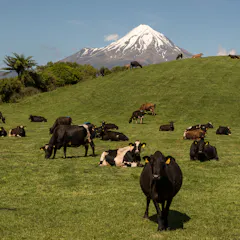
New Zealand’s government has released a bill that sets targets to bring long-lived greenhouse gases to net zero by 2050 and reduce emissions of the shorter-lived methane by 10% within a decade.
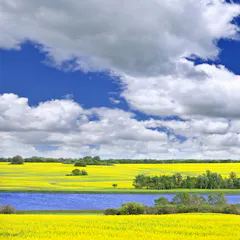
New research finds that farm ponds actually capture nitrous oxide; this finding can be useful in combatting climate change.

The latest report on the state of New Zealand’s environment delivers a forceful official statement on climate change impacts.
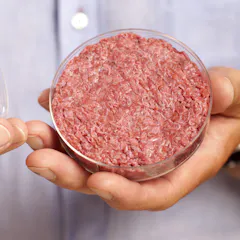
Surveys suggest fewer than half of Americans are looking forward to lab-grown meat. A moral psychologist examines common objections and why for the most part they’re not logical.
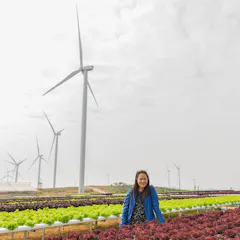
Agriculture needs to cut its greenhouse gas emissions, yet we must also find a way to produce more food if we are to feed 10 billion people by 2050. A “just transition” could help make that happen.
Top contributors
-

Professor in Applied Mathematics, Te Kunenga ki Pūrehuroa – Massey University
-
Dean of Global Business, The Fletcher School, Tufts University
-
Professor of Global Change, Queensland University of Technology
-
Professor, University of New England
-
Adjunct Associate Professor, Queensland University of Technology
-
Professor and Director, Centre for Environmental Economics and Policy, The University of Western Australia
-
Professor of Soil & Landscape Science, Curtin University
-
Lecturer in Environmental Science, University of Regina
-
Professor & Director, Primary Industries Climate Challenges Centre, The University of Melbourne
-
Morgan Foundation Senior Research Fellow in Freshwater Ecology and Environmental Science, Te Herenga Waka — Victoria University of Wellington
-
PhD Candidate in Public Health and Epidemiology, Imperial College London
-
Research Fellow, Queensland University of Technology
-
Director, ANU Institute for Climate, Energy & Disaster Solutions, Australian National University
-
Postdoctoral Researcher in Physics, University of Oxford
-
Senior Lecturer/Researcher of Human Geography and Food Systems, Natural Resources Institute, University of Greenwich