
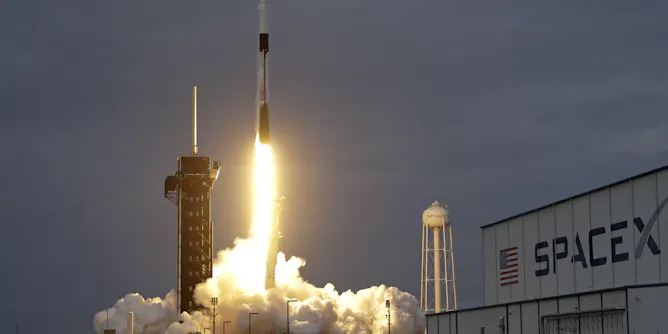
Space exploration is not a waste of resources, but a source of technological and medical advances, a tool for climate monitoring and a source of educational inspiration for youth.
Articles on Moon
Displaying 101 - 120 of 418 articles
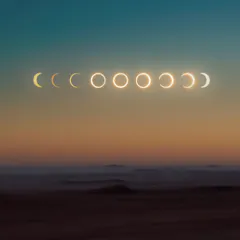
Eclipses have long fascinated and intrigued people, and anticipation of the total solar eclipse on April 8 is no exception. The beauty, history, mythology and science of eclipses justify the hype.
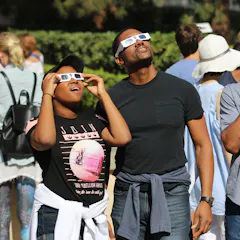
A total solar eclipse is a beautiful phenomenon worth seeing, but worth seeing safely.
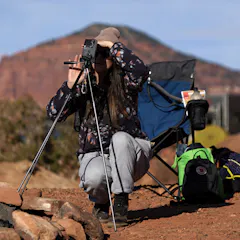
Your phone can’t take a perfectly clear picture of a solar eclipse like a professional camera can, but there are lots of other creative directions you can take to capture the rare moment.
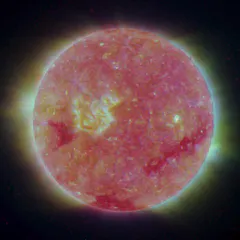
The solar corona can be seen during the solar eclipse on April 8. Astronomers are still trying to figure out the mysteries of the corona, including why it’s so hot.
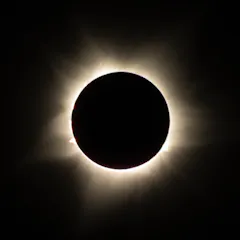
The eclipse will allow scientists to get rare measurements of the Sun’s atmosphere.
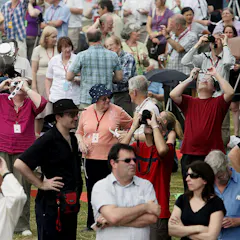
Apart from technical aspects, a successful photograph of the eclipse serves as a lasting reminder of the sense of wonder and the feeling of being part of something larger than ourselves.
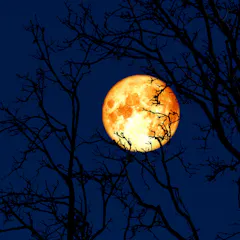
The last full moon of winter can illuminate earthworms in newly-thawed soil.
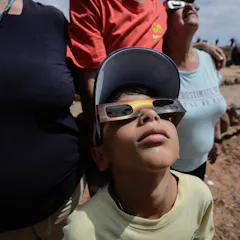
If you have young kids, the solar eclipse on April 8, 2024, represents a rare opportunity to teach them about science.

Eclipses are rare, fantastic celestial events. Here’s how educators can help visually impaired students enjoy eclipses alongside their sighted peers.
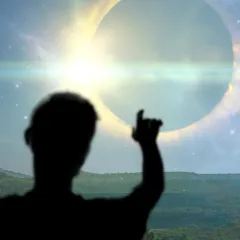
Eclipses have inspired myths, predictions and scientific discoveries. The total solar eclipse occurring on April 8 provides a once-in-a-lifetime opportunity to engage with science and the cosmos.
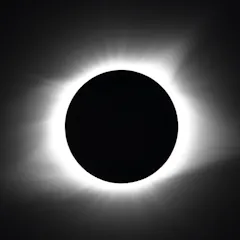
Many people will see a dazzling eclipse this April, but these events are possible only because of the sizes and precise distances between Earth, the Moon and the Sun.
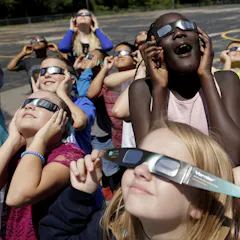
Now’s the time to get your hands on a pair of eclipse glasses in preparation for April’s display of celestial wonder.
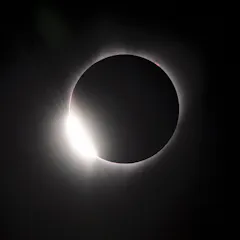
Mentions of total solar eclipses in ancient history help researchers pinpoint precise dates of notable events.
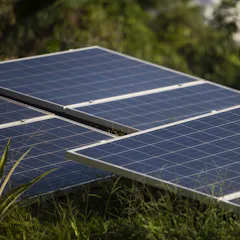
When the Moon blocks the Sun during an eclipse, utility suppliers have to pull power from the grid to make up for gaps in solar energy.
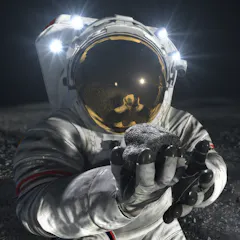
The next generation of spacesuit needs to do more than simply protect an astronaut from the vacuum of space.
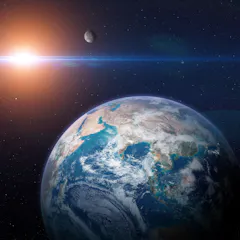
2024 is a leap year, when the shortest month mops up a bit of leftover time. But the extra day also tells us about space – and our place in it.
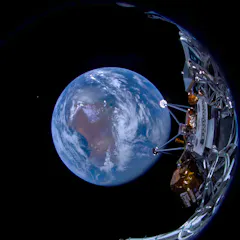
A private company has successfully delivered cargo to the Moon’s surface for the first time. Here’s what that means for future space exploration.
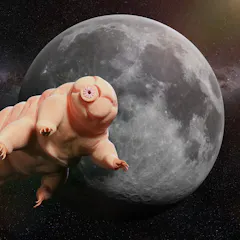
Tardigrades are tiny animals known for their extraordinary survival skills, but are they tough enough to survive a space-probe crash and conditions on the Moon?
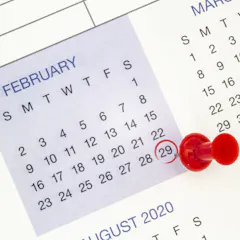
Humans have synced their calendars to the sun and moon for centuries, but every so often, these systems need a little correction.
Top contributors
-

Senior Curator (Astronomy), Museums Victoria Research Institute; The University of Melbourne
-
Professor of Planetary Geosciences, The Open University
-
Associate Professor in Archaeology and Space Studies, Flinders University
-
Professor of Air and Space Law, University of Mississippi
-
Professor (Astrophysics), University of Southern Queensland
-
Senior Lecturer in Physics, Nottingham Trent University
-
Postdoctoral research associate, University of Oxford
-
Professor of Planetary and Space Sciences, The Open University
-
Professor in Earth and Planetary Science, Western University
-
Reader in Astrophysics, Keele University
-
Andrew Dempster is a Friend of The Conversation.
Director, Australian Centre for Space Engineering Research; Professor, School of Electrical Engineering and Telecommunications, UNSW
-
Associate Professor of International Affairs, Georgia Institute of Technology
-
Podcast host, The Conversation
-
Space Plasma Physicist, Imperial College London
-
Professor of Planetary Science and Exploration, The Open University
