
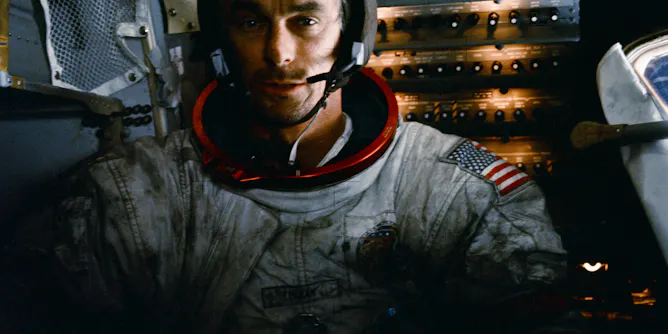
Often eclipsed by Apollo 11, the final manned moonshot left far more than bootprints in the dust. In these troubling times, it also left us with a lasting message of hope.
Articles on Moon
Displaying 341 - 360 of 418 articles
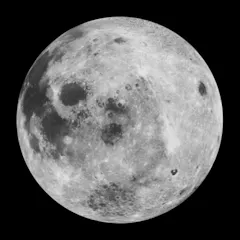
The moon may be slightly older than previously thought, suggests a new study.
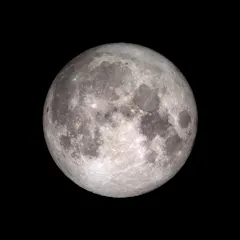
The full moon is stunning – and this month it’ll be larger than normal. Do make it a reason to embrace the darkness and have a look.
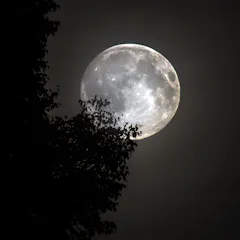
Full moons are good reason to look up – and the one on Nov. 14 is no exception. But here’s why you likely won’t see something shockingly different from other full moons you’ve observed over the years.
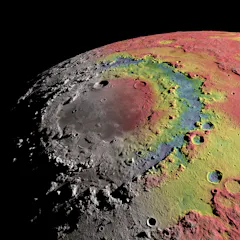
New study suggests a 64km diameter body travelling at 15km per second created the Orientale Basin on the moon.
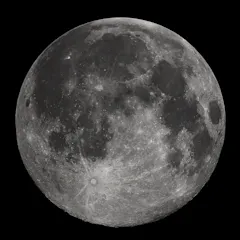
The story of how water got inside the moon could also help us understand the origin of water on Earth.
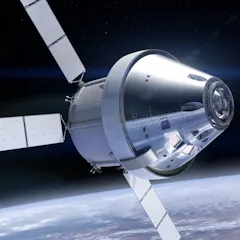
From inflatable space stations to trips to asteroids and maybe even Mars, the next decade of human spaceflight will include many exciting firsts.
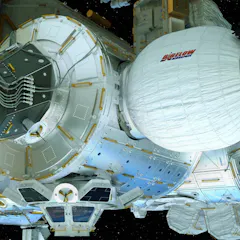
Inflatable space habitats, like the one installed on the International Space Station this week, could see wide application in space and planetary exploration.
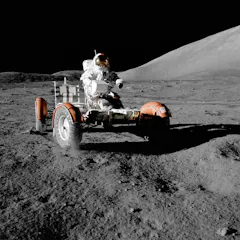
The Last Man on the Moon is much more than a biographical documentary – it is a gripping account of human endeavour.
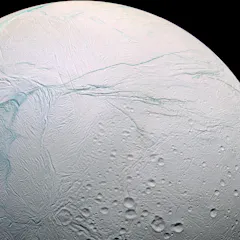
A new theory could change our understanding of the moons in our solar system – and the genesis of life itself.
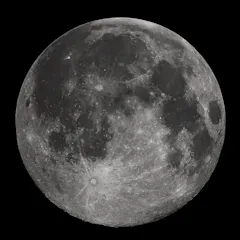
A six degree change in the moon’s tilt could help us understand the origin of water in the inner solar system, and help us mine our staellite for it, too.
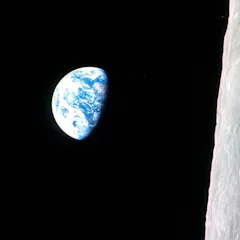
No one nation should be allowed to go it alone and develop a mining industry in space. It needs an international effort and Australia, with a long history in mining, can play its part.
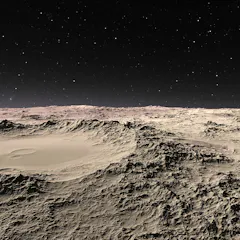
The 50th anniversary of Luna 9’s first soft moon landing reminds us how difficult landing a spacecraft is.
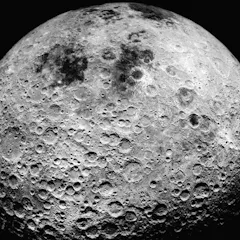
Great discoveries await.
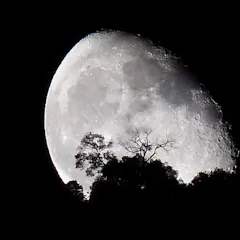
When looking for evidence of some of the universe’s mysterious high energy particles, why not enlist the help of our nearest neighbour: the moon.
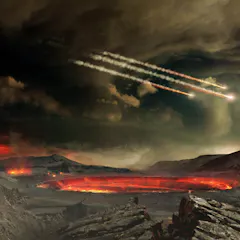
An asteroid will flash by the Earth at the weekend. What do we know about it? And what would happen if a such an object did hit us?
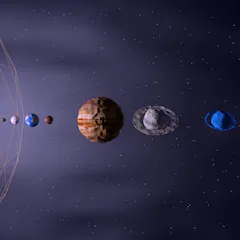
The early solar system was a busy place with plenty of meteorite impacts on the new planets and moons. But finding evidence of such impacts on Earth can be tricky.
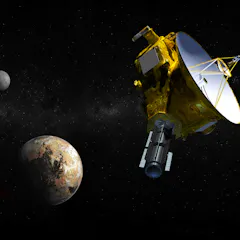
In the long lead-up to our ultimate flyby of Pluto, space science has reconfigured our notions of what it means to be a solar system, a planet, a world.

Exactly half a century ago the US Mariner 4 made the first flyby of Mars. But why are we still doing flybys today?
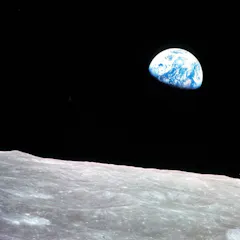
The moon might harbor bits of the Earth that blasted off our planet billions of years ago. These lunar time capsules could hold secrets about conditions here at home back when life was first emerging.
Top contributors
-

Senior Curator (Astronomy), Museums Victoria Research Institute; The University of Melbourne
-
Professor of Planetary Geosciences, The Open University
-
Associate Professor in Archaeology and Space Studies, Flinders University
-
Professor of Air and Space Law, University of Mississippi
-
Professor (Astrophysics), University of Southern Queensland
-
Senior Lecturer in Physics, Nottingham Trent University
-
Postdoctoral research associate, University of Oxford
-
Professor of Planetary and Space Sciences, The Open University
-
Professor in Earth and Planetary Science, Western University
-
Reader in Astrophysics, Keele University
-
Andrew Dempster is a Friend of The Conversation.
Director, Australian Centre for Space Engineering Research; Professor, School of Electrical Engineering and Telecommunications, UNSW
-
Associate Professor of International Affairs, Georgia Institute of Technology
-
Podcast host, The Conversation
-
Space Plasma Physicist, Imperial College London
-
Professor of Planetary Science and Exploration, The Open University
