
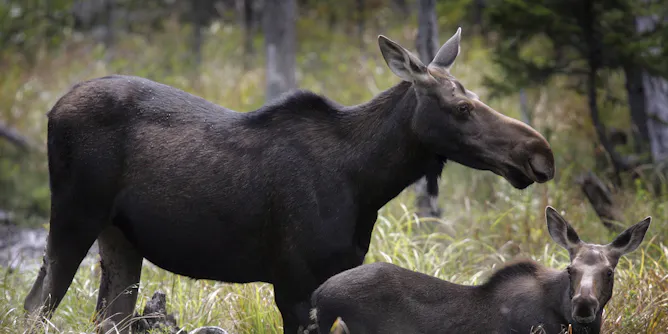
White-tailed deer host these brain worms, but they don’t actually get the disease, which makes it harder for biologists to monitor its prevalence.
Articles on Deer
Displaying all articles
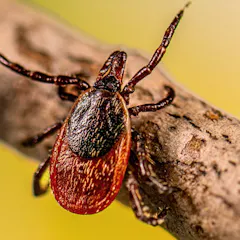
Changes to forests, and how close people and their livestock live to them, have changed tick habitats and the risks humans face of Lyme disease and other illnesses.

A new archaeological study finds early evidence of white-tailed deer declines in the 17th century, likely driven by the commodification of deerskins under colonial capitalism.
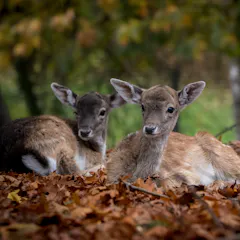
Research reveals that fallow deer have an unexpected appetite for brambles, a plant often seen as a woodland nuisance.
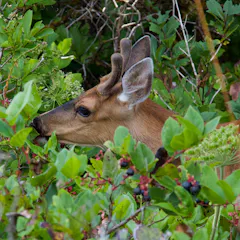
A government program in British Columbia discovered the presence of chronic wasting disease in deer. Now, managing the spread of the disease is a priority.
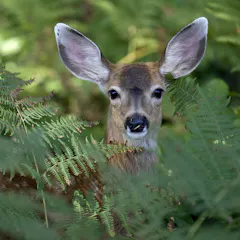
B.C. has operated a surveillance program for over 20 years to detect chronic wasting disease, a fatal condition with no cure or vaccine. The disease has now been detected in deer in the province.

Native trees have been found at new heights in the Scottish Highlands, demonstrating how mountain woodland could recover from deforestation – benefiting humans, wildlife and climate issues.
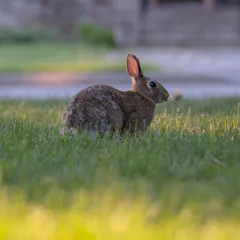
Here’s what determines if a problematic wild animal is saveable or cullable.
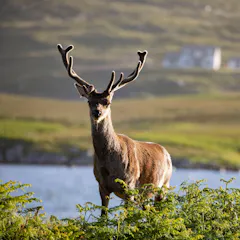
There are arguments over the future of red deer on the Scottish island of South Uist but archaeological expertise can help people live alongside wild animals.
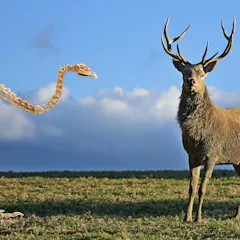
Claims that introduced deer perform the same ecological function as ancient moa are outdated and wrong. Deer destroy forests, and large-scale culling is still the best solution.

Wildfires are remaking western US forests. Decisions about managing forests that have burned should factor in how fires change animal behavior and interactions between predators and prey.
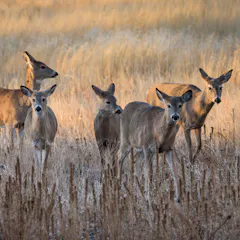
A deadly neurological infection, chronic wasting disease, has been detected in deer, elk and moose in 30 states and four Canadian provinces. Human risk is low, but hunters need to take precautions.
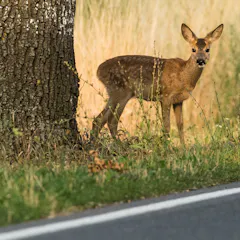
Dusk is a dangerous time of day for hitting wildlife on the road, and the one-hour time change means more drivers are out while deer are at their most active and visibility is dropping.
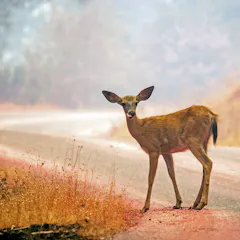
Avoiding hitting deer on the road is as much about when you drive as where. An animal behavior expert explains why.
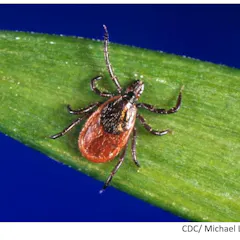
How bad are ticks this year? An expert explains why tick-borne diseases are on the rise.
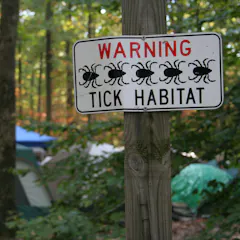
Researchers are testing an antibody shot to protect people from Lyme disease-causing bacteria.
Debates centred on the role of recreational hunting in supporting nature conservation and local people’s livelihoods are among the most polarising in conservation today.
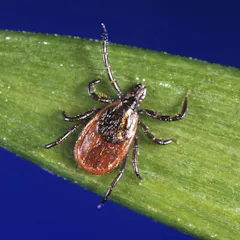
Researchers are developing a seasonal shot that blocks Lyme disease-causing bacteria from a tick.
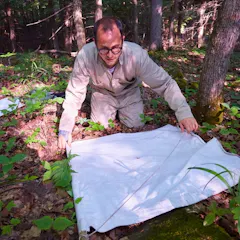
A tick expert explains his work trying to understand why the abundance of the parasites vary so much from location to location and year to year.
Top contributors
-

Professor of Medicine and Executive Vice Chancellor for MassBiologics, UMass Chan Medical School
-
Postdoctoral Fellow, Faculty of Health Sciences, Simon Fraser University
-
Assistant Professor, Faculty of Health Sciences; Senior Scientist, Pacific Institute on Pathogens, Pandemics and Society, Simon Fraser University
-
Professor of Biology, Clarkson University
-
UMass Chan Medical School
-
Assistant professor, University of Turku
-
PhD student, University of Helsinki
-
Matthew Flinders Professor of Global Ecology and Node Leader in the ARC Centre of Excellence for Indigenous and Environmental Histories and Futures, Flinders University
-
Assistant Professor in Biology, Middlebury College
-
PhD Researcher in Plant Ecology and Conservation, University of Stirling
-
Research Scientist, University of Washington
-
Associate Professor of Environmental Communication, Stockholm University
-
Postdoctoral researcher, University of Helsinki
-
PhD Student, University of Helsinki
-
Associate Professor in Conservation Geography, University of Helsinki