
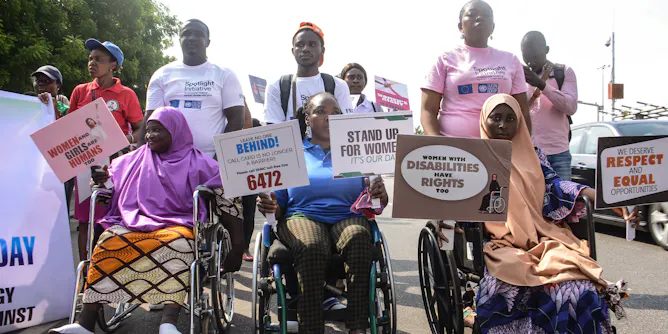
Tailored interventions are crucial for improving equitable access to maternal healthcare for women with disabilities.
Articles on Maternal deaths
Displaying 1 - 20 of 38 articles

The late postpartum period has the highest risk for maternal deaths, yet the standard of postpartum care in the US ends at approximately six weeks after birth.

Early identification of abnormal heart rate and blood pressure is crucial to prevent maternal deaths from postpartum haemorrhage and maternal sepsis.
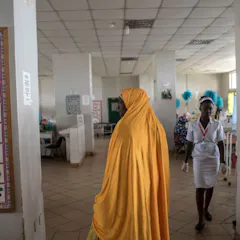
There are four practical policy shifts that the Nigerian government could take to improve the use of maternity services.
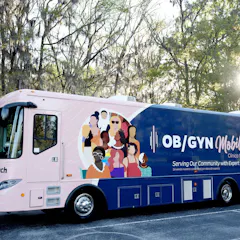
Mobile health clinics are a practical but underused solution to the growing number of maternity care deserts in the US.
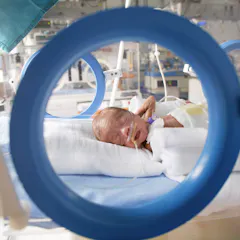
Rates of preterm births, maternal deaths and other adverse birth outcomes are abysmal across the US, but there are clear strategies that could help the nation reverse course.
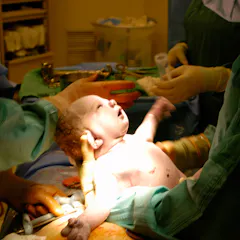
In England, the national caesarean rate is now 42%. Which is way higher than many other wealthy countries.

Families in Ghana still pay for maternal health services despite the country’s policy of free care.

Pregnant women in urban areas of Nigeria are more at risk than rural women of not getting emergency obstetric care. Digital technology can help.

Maternal mortality in the UK is the highest for decades - as a barometer for a nation’s health, this is a statistic we cannot ignore

Planned early delivery is a key component of reducing child and maternal mortality.

Black women died during or soon after pregnancy at higher rates than any other racial group in every year from 1999 to 2019. American Indian and Alaska Native women had the greatest increase in risk during this period.

A March of Dimes report gave the US a grade of D+ for maternal and infant health care, highlighting that the national preterm birth rate hit 10.5% in 2021, a record 15-year high.
The last decade has seen no measurable change in global preterm birth rates in any region of the world.

Kenya’s experienced fast population growth and urbanisation - this has brought about some big challenges.

A recent report found that black women are four times more likely to die while pregnant or just after childbirth, compared with white women.

Many of the preventable pregnancy-related deaths documented by the CDC are directly attributable to failures and barriers in the maternal care system.

If maternal mortality is an important indicator of how a health system is performing, this is damning news for the NHS.
The factors associated with death in mother and baby included low education in the mother, lack of antenatal care, referral from another facility.

Treating a potentially deadly pregnancy complication gets caught up in the abortion debate. A nurse-midwife explains why it shouldn’t.
Top contributors
-

Professor of Maternal and Child Population Health, University of Oxford
-
Medical Doctor, Epidemiologist and Biostatistician, University of the Witwatersrand
-
Senior lecturer, York St John University
-
Professor of Global Surgery, University of Cape Town
-
Professor of Midwifery, Associate Dean Research and HDR, Midwifery Discipline Leader, Western Sydney University
-
Professor of Obstetrics & Gynaecology, Griffith University
-
Co-Chair, Humanities, Medicine and Sciences Programme, University of Malta
-
Research scientist, African Population and Health Research Center
-
Professor of Obstetrics and Gynecology, Thomas Jefferson University
-
Executive Director at the Centre for Health, Human rights and Development and lecturer, Uganda Christian University
-
Assistant Professor of Family Medicine, L’Université d’Ottawa/University of Ottawa
-
Professor in Psychiatry and Behavioral Sciences and Obstetrics and Gynecology, Northwestern University
-
Medical Anthropology PhD candidate, University of Edinburgh
-
Public Health Researcher at the Institute for Health Metrics and Evaluation, University of Washington
-
Research Assistant Professor of Maternal and Child Health, Texas A&M University