
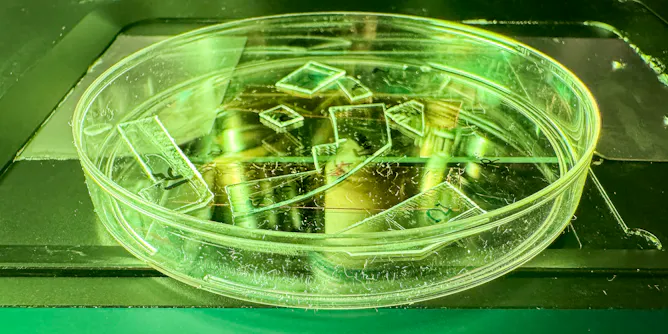
The textured acrylic plastic surface, inspired by insect wings, could help prevent the spread of major viruses.
Articles on material science
Displaying 1 - 20 of 26 articles

The standard advice is to replace your runners after 500–800 kilometres. But science shows it could be more or less – here are the three signs to look out for.
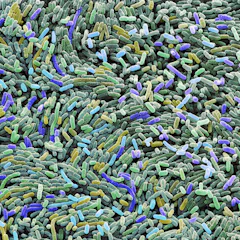
The walls of your house could someday be built with living bacteria. Synthetic biologists are engineering microbes into living materials that are cheap and sustainable.
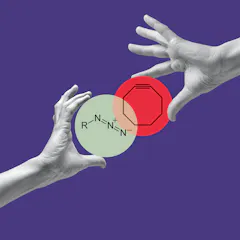
Click and bioorthogonal chemistry has enabled researchers to closely study how molecules work in their natural state in living organisms, with applications that span from cancer treatment to polymers.
Twisted laser light may help launch a revolution in technology.

While pills are more practical than injections or infusions, digestion in the stomach prevents many drugs from being taken orally. Better drug design could change this.

Many small animals make their teeth and claws from a smooth blend of proteins and heavy elements. These materials can form very sharp tools that make it possible to cut tough substances using tiny muscles.

Researchers are turning microbes into microscopic construction crews by altering their DNA to make them produce building materials. The work could lead to more sustainable buildings.
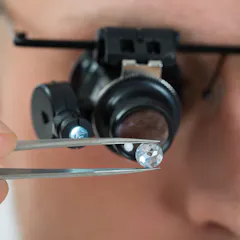
The world’s biggest diamond company is to sell synthetic gemstones for the first time.

Microscopically engineering surfaces could stop water leaving behind rings of residue as it dries.
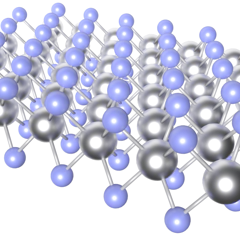
New materials just one atom thick could help make graphene even more useful.
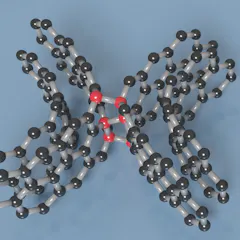
Compressed glassy carbon could be used to make better bulletproof vests or new types of electronics.
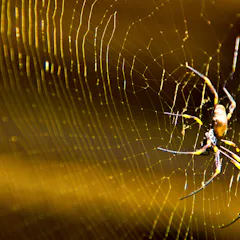
Spider silk is strong stuff and could be used to manufacture ultra tough ropes and cables, and better sutures in medicine. If only we could find a way to make the stuff.

This special dampening material could also protect buildings from earthquakes.
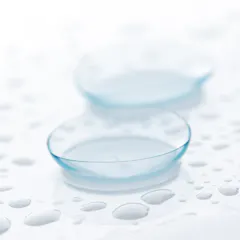
Plan to develop long-lasting supercapacitors would provide a faster, safer alternative to lithium batteries.
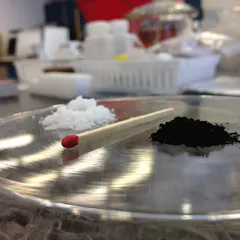
Much of the current research in quantum computing involves work at close to absolute zero. A simple breakthough with an everyday material could see them work at more acceptable temperatures.

From the kitchen sink to the laundry and garage – nanotechnology has already made its way into the average household.
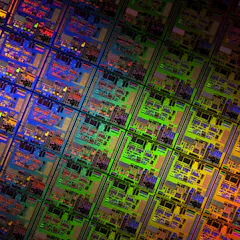
Silicon isn’t the perfect semiconductor, it’s just the one we’re using. How can we ensure our electronics keep get getting faster in the face of silicon’s natural physical limits?
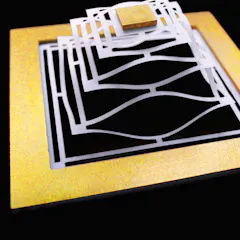
Who says scientists aren’t artistic? A team of researchers have done some amazing kirigami work, an ancient Japanese paper art, using graphene.

László Moholy-Nagy used industrial plastics in his paintings. But for decades, the type of plastic had been misidentified.
Top contributors
-

Reader in Theoretical and Computational Condensed Matter Physics, University of Edinburgh
-
Research Fellow, University of Sydney
-
Professor of Smart Materials and Structures, Sheffield Hallam University
-
Professor of Smart Materials & Structures, University of Bristol
-
Principle Research Scientist Materials Science and Engineering, CSIRO
-
Research Associate in Physical Sciences, Flinders University
-
Senior Lecturer in Evolutionary Biology, UNSW
-
Professor of Chemistry and Nanomaterials, Durham University
-
Associate Professor of Photon Science and of Applied Physics, Stanford University
-
Professor of Semiconductor Materials, University of Sheffield
-
Professor of Materials Physics, Aberystwyth University
-
Lecturer, University of Bristol
-
Postdoctoral Fellow at the Center for Scientific Studies in the Arts, Northwestern University
-
Office of the Chief Executive (OCE) Science Leader, and Head of the Virtual Nanoscience Laboratory, CSIRO
-
PhD Candidate, Queen's University Belfast