
Chemists have been working on new approaches to reducing waste and finding new functions for existing materials.
Articles on Polymers
Displaying 1 - 20 of 30 articles
From beetles to sustainable packaging – one failure in the lab led to a new line of promising research.
A physicist explains that the short answer is both … and neither.

To deal with microplastic pollution, it helps agencies to know what kind of plastic they’ve got on their hands.
Addressing the harmful chemical processes that accompany blunt force trauma to the brain can reduce the risk of long-term disability.
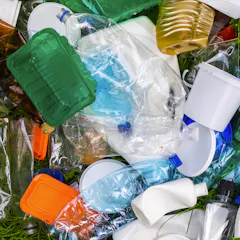
A team of scientists has developed a method for creating a new class of plastic materials that are potentially more recyclable than single-use plastics.
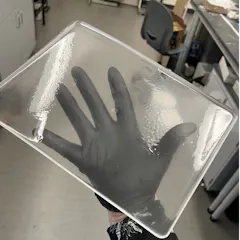
Researchers have developed a method for producing strong plastic materials by tweaking the chemical structure of superglue.

While pills are more practical than injections or infusions, digestion in the stomach prevents many drugs from being taken orally. Better drug design could change this.

Plastic is made from oil and natural gas, which started out as fossilized plant and animal material. But buried deep underground for millions of years, those materials changed in important ways.

A biomedical engineer explains how human-made materials inserted in the body hold hope to repair painful injuries more efficiently than bone grafts.
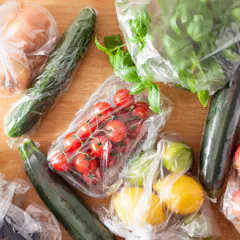
The film is similar to other plastics, but it can be composted at home.

De-icing salts help us get around in winter, but they corrode cars, crack roads and contaminate rivers and lakes. Scientists are working to develop better options by imitating natural antifreezes.

Researchers are turning microbes into microscopic construction crews by altering their DNA to make them produce building materials. The work could lead to more sustainable buildings.
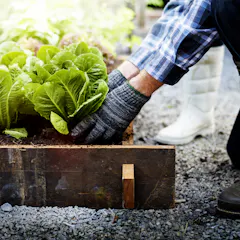
Water crystals help drought-proof plants. But these tiny polymers are leaving gardeners concerned.

Right now, you’re living in a kind of industrial revolution – where biotechnology, information technology, manufacturing and automation all come together to form synthetic biology.
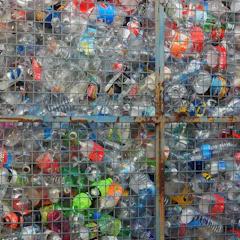
Research is yielding strategies for making plastics greener and more sustainable. But without support as they scale up, new versions will struggle to compete with well-established synthetic plastics.

You know you’ve hit it big when your designs find their way into millions of kitchens – and the Museum of Modern Art.

Silicon is cheap and a good semiconductor, but it’s bulky and rigid. Using organic polymers as semiconductors could yield solar panels with the physical characteristics of plastics.
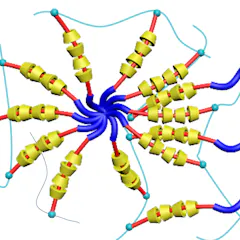
Research on molecular machines won last year’s Nobel Prize in chemistry. Now scientists have figured out a way to get these tiny molecules to join forces and collaborate on real work on a macro scale.
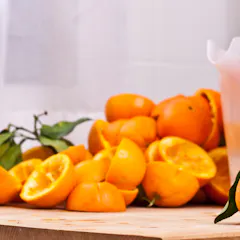
The orange juice industry throws away a half of the fruit needed to make juice. Could this be used as an alternative to chemicals derived from crude oil?
Top contributors
-

PhD candidate, Deakin University
-
CO2Chem Network Manager, University of Sheffield
-
Director, Synthetic Biology Future Science Platform, CSIRO
-
Professor of Nanoengineering, University of California, San Diego
-
Post doctoral researcher in Chemistry at the Centre for Sustainable Chemical Technologies, University of Bath
-
Professor of Chemistry, Rensselaer Polytechnic Institute
-
Communication Advisor, CSIRO
-
Professor in Molecular Sciences, The University of Western Australia
-
Associate professor, Heriot-Watt University
-
Professorial Fellow in Engineering, The University of Melbourne
-
Professor of English & Distinguished Teaching Scholar, University of Florida
-
Professor of Innovation Studies, Swinburne University of Technology
-
PhD Candidate in Materials Science and Engineering, Colorado State University
-
Professor of Materials Science and Engineering, Boise State University
-
Assistant Professor of Chemistry, Dartmouth College