

Tiny seafloor creatures play a vital role in coastal ecosystems. New research suggests microplastics may now be interfering with that balance.
Articles on Marine sediments
Displaying all articles

Anna Turns sets sail from Plymouth Sound to explore the significance of blue carbon in marine habitats around the UK.
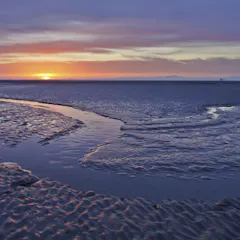
A new map collating important data could be used to introduce more robust protections for blue carbon in UK waters.
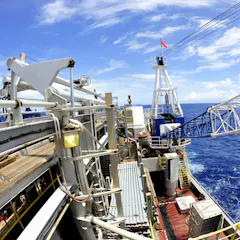
The National Science Foundation says that the JOIDES Resolution has become too costly to fund. But scientists say its $72 million annual budget pales compared with discoveries the ship has enabled.
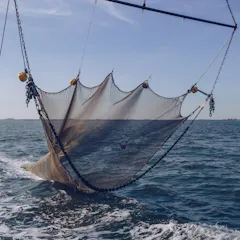
Most of the carbon disturbed by trawls is unreactive and difficult to convert to CO₂.

Evidence in Earth’s natural archives, from tree rings to seafloor sediments, points to one trend. Some climate models suggest another.
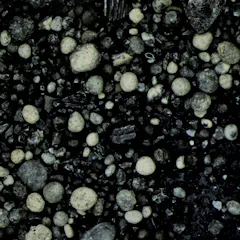
Studying these deposits gives scientists information about how past environments change. That, in turn, gives us informed estimates on how climates and environments will change in the near future.

A paleooceanographer describes her ninth sea expedition, this time retrieving cylindrical ‘cores’ of the sediment and rock that’s as much as two miles down at the ocean floor.
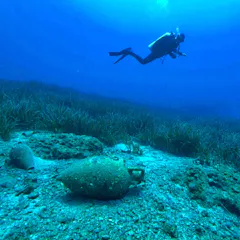
The sediments that accumulate beneath seagrass meadows can act as secure vaults for shipwrecks and other precious artefacts, by stopping water and oxygen from damaging the delicate timbers.
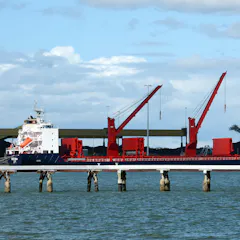
Coal dust and oil can spread toxic chemicals hundreds of kilometres out to sea. But Australia’s monitoring guidelines do not meet the standards used in countries such as the United States.
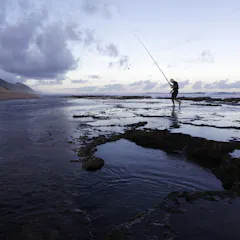
Marine sediments provide evidence of climate variability in South Africa going back 270,000 years. These changes correspond with changes in the archaeological record of the country.
Top contributors
-

Harold T. Stearns Professor of Earth Science, Wesleyan University
-
Senior Researcher, National Museum of Denmark
-
Researcher, Institute of Oceanography, Hellenic Centre for Marine Research
-
Marine Scientist, James Cook University
-
Postdoctoral Fellow, Uni Research
-
Principal Researcher, Coastal Ecology, Centro de Estudios Avanzados de Blanes (CEAB-CSIC)
-
Distinguished Professor of Marine Science, King Abdullah University of Science and Technology
-
Senior Lecturer, North-West University
-
Postdoctoral Research Associate in Climate Science, University of Arizona
-
Professor of Earth and Environmental Sciences, Northern Arizona University
-
Professor of Marine Biology, Bangor University
-
Researcher in Ecology, Scottish Association for Marine Science
-
Research Fellow, Institute of Marine Science, University of Auckland, Waipapa Taumata Rau
-
Professor, Marine Ecology, Aarhus University
-
Professor of Marine Science, University of Auckland, Waipapa Taumata Rau