

Anopheles mosquitoes transmit malaria.
Articles on Malaria in Africa
Displaying all articles
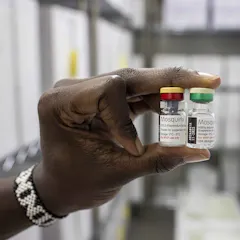
Malaria is one of the world’s oldest and deadliest diseases. So why has it taken so long to get a vaccine?
CC BY-NC-ND7.19 MB (download)
Communication about malaria areas and treatments is crucial so that people are aware of risks.
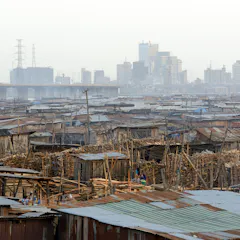
If we learn from COVID-19, there are three key areas to tackle to make cities safer from outbreaks of future infectious diseases.

We modelled surface water across Africa to show which parts of the continent are climatically-suitable for malaria – and how this will change.
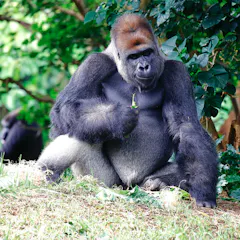
Malaria can be transmitted from humans to gorillas, with devastating effects.
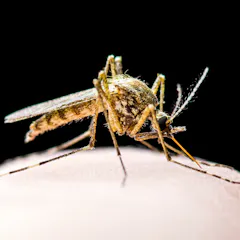
A novel mosquito repellent has been found to have a longer lifespan than those commercially available.
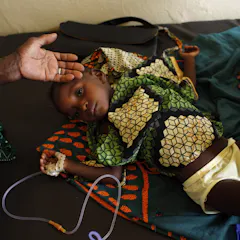
After an exceptional period of success in global malaria control, the progress has stalled. New strategies are needed to suit a variety of transmission patterns.
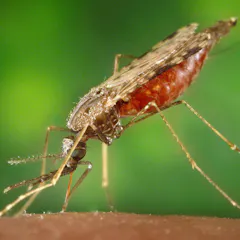
The history of malaria prevalence in Africa is a long term cycle of highs and lows. However, there’s been little change in the high transmission belt that covers parts of West and Central Africa.
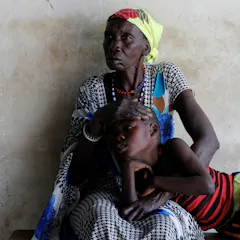
Stronger malaria prevention like a vaccine is urgently needed for effective response in endemic regions.

Eliminating malaria in Africa has been held back by a range of factors, including a lack of funds and drug and insecticide resistance challenges.
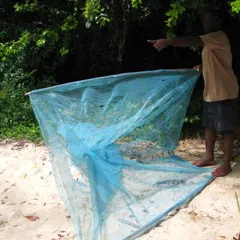
The simple use of a net intended to curb malaria by fishers has become a classic conservation problem.
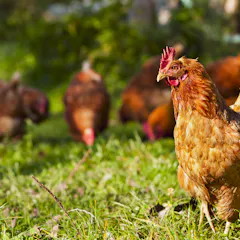
Anopheles arabiensis is the world’s most common, malaria-carrying mosquito. Now it’s emerged that chickens emit an odour that can repel the deadly insects.
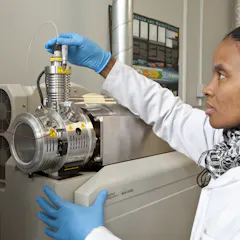
Scientists have discovered a second new compound that could eventually be developed into a medicine to help eradicate malaria.
Top contributors
-

Chief Research Officer, Malaria Branch Chief in the KEMRI, CDC and London School of Tropical Medicine Collaborative Program, Kenya Medical Research Institute
-
Scientist, Royal Botanic Garden Edinburgh
-
Postdoctoral research fellow, Stockholm University
-
Country Director I-TECH Kenya, University of Washington
-
Professor of Malaria Epidemiology, Centre for Tropical Medicine & Global Health, Nuffield Department of Medicine,, University of Oxford
-
Professor in the Department of Plant Protection Biology, Swedish University of Agricultural Sciences
-
Project Manager, Cambridge Africa, Anglia Ruskin University
-
Honorary Research Associate in BioSciences, The University of Melbourne
-
Professor of Organic Chemistry, Neville Isdell Chair in African-centric Drug Discovery & Development, and Director of the Holistic Drug Discovery and Development (H3D) Centre, University of Cape Town
-
Professor of Pediatrics, Medicine, Epidemiology and Public Health at the Center for Vaccine Development and Global Health, University of Maryland
-
Research fellow, University of Southern Queensland
-
Professor of Water Science & Heath, University of Leeds
-
Professor of Physical Geography, University of the Witwatersrand
-
Assistant professor, University of Notre Dame
-
Global Professor in Water & Planetary Health, University of Lincoln