
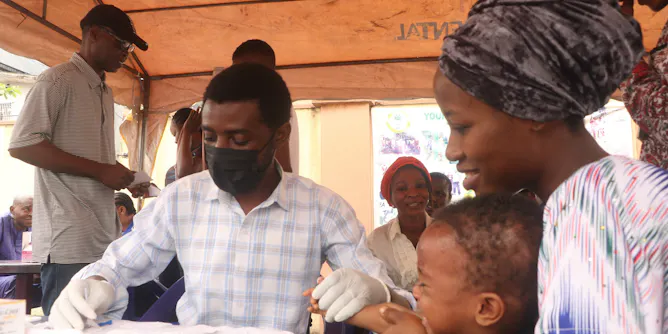
A recently approved drug for malaria treatment offers hope to millions of children who suffer from the disease in Africa.
Articles on malaria nets
Displaying all articles

Anopheles mosquitoes transmit malaria.

The fight against malaria faces many obstacles, including funding cuts. But it remains far cheaper to prevent the disease than to treat it.
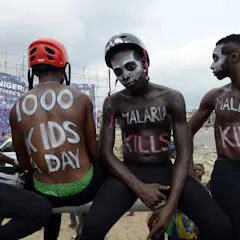
Nigeria must do more to reduce its high malaria burden.
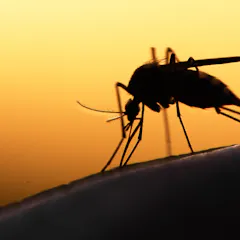
This mosquito spreads very fast to new areas and can adapt to various climatic conditions, unlike the non-invasive malaria vectors.

Like the coronavirus causing the current pandemic, both the malaria parasite and mosquito vector are developing ways to avoid control.
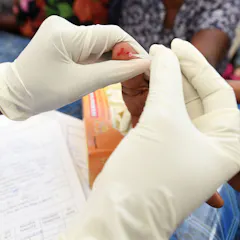
Nigeria must invest more in research and incorporate World Health Organisation-recommended interventions to eliminate malaria.
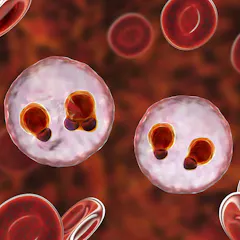
Genetic diversity of a parasite population might help us watch for drug-resistant parasites.

The fight against malaria needs scientific innovation. But community buy-in is just as important.
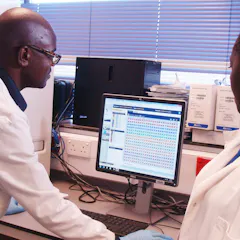
Progress in malaria control has stalled. Research towards an effective vaccine is underway.
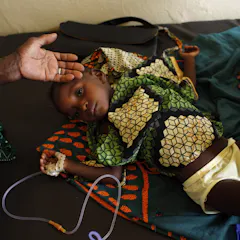
After an exceptional period of success in global malaria control, the progress has stalled. New strategies are needed to suit a variety of transmission patterns.

Eliminating malaria in Africa has been held back by a range of factors, including a lack of funds and drug and insecticide resistance challenges.

How do you teach empathy? Can it be in a way that foregrounds ancient, indigenous knowledge and practices? Design thinking might hold the answers.
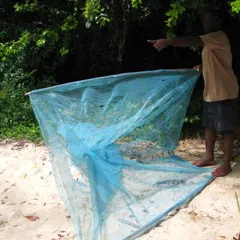
The simple use of a net intended to curb malaria by fishers has become a classic conservation problem.
Top contributors
-

Professor in Molecular Parasitology and Genetics, Federal University, Oye Ekiti
-
Principal Medical Scientist and Head of Laboratory for Antimalarial Resistance Monitoring and Malaria Operational Research, National Institute for Communicable Diseases
-
Co-Director, Institute of Infection, Chair, Immunology & Vaccinology, Imperial College London
-
Project Manager, Cambridge Africa, Anglia Ruskin University
-
Postdoctoral research fellow, Stockholm University
-
Head, Malaria Research and Training Center, Université des sciences, des techniques et des technologies de Bamako
-
Human Centred Design Consultant: Honorary Research Associate, University of Cape Town
-
Professor, University of Ibadan
-
Professor of Pharmacology, University of Ibadan
-
Medical Entomologist at the School of Biological Sciences, University of Nairobi
-
UP ISMC: Project Manager and Coordinator, University of Pretoria
-
Director: UP Institute for Sustainable Malaria Control, University of Pretoria
-
Medical scientist, National Institute for Communicable Diseases
-
Country Director I-TECH Kenya, University of Washington
-
Senior lecturer, Biochemistry, North-West University