
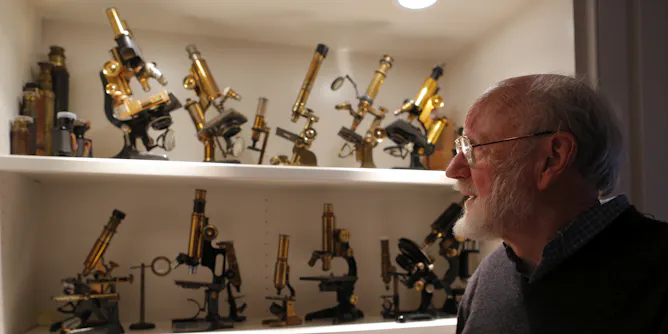
Scientists William C Campbell, Satoshi Ōmura and Tu Youyou have been rewarded for their unglamorous but vital work on parasites that has improved the lives of millions.
Articles on Malaria
Displaying 241 - 260 of 290 articles
Health has secured its place as one of the 17 Sustainable Development Goals. But without clear mechanisms to report, finance or engage other sectors, could more end up as less?

As the World Health Organisation disbands the Roll Back Malaria secretariat, the focus is on the new malaria programme and whether it will have the same successes.
The UK’s recent heatwave is perfect for mosquito breeding but something far more dangerous may be coming.

The federal government’s recent White Paper on developing northern Australia has disturbing echoes of the 1890s, a time when unbridled capitalism and indentured labour developed the North.

Ebola has been blamed for a surge in untreated malaria cases in west Africa that could have led to an excess numbers of deaths from malaria, greater than the total caused by the Ebola virus.
Investment in insect-borne disease field trials is being wasted by poor study design.
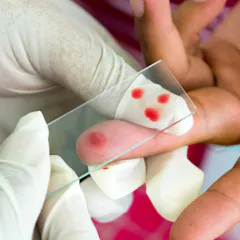
A new drug that stops the malaria parasite in its tracks, and could be delivered in a single dose, has researchers excited about treatment prospects for the disease.
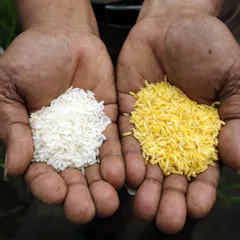
Science has had a crucial role in helping to meet the targets of the Millennium Development Goals. But there’s much more to do.
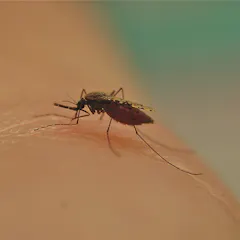
Many tropical diseases such as malaria, Chagas disease and dengue are transmitted to humans via mosquitoes and other carriers known as vectors. These vector-borne diseases continue to have a major impact…
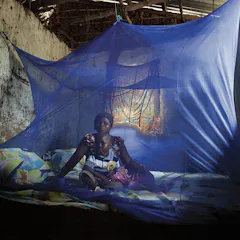
In January, the New York Times highlighted how insecticide treated nets meant to protect people from mosquitoes and malaria are now being used to haul fish in Africa. Among those using these nets to catch…
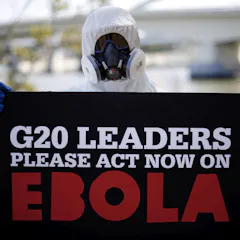
Some experts worry that the Ebola crisis is diverting attention and resources away from neglected diseases with a substantially larger disease incidence.
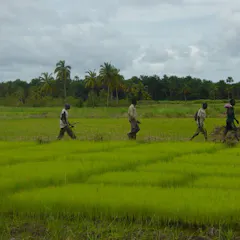
Malaria is frequently cited as one of the biggest killers of young children in Africa. Yet rarely, do we hear about its impact on working-age adults and the economic impact of the disease. While malaria-related…
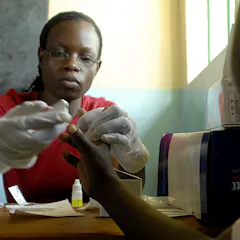
Remote diagnostics is an emerging field that allows healthcare workers to perform tests on patient samples in the field and to get results interpreted by medical experts remotely. This is a groundbreaking…
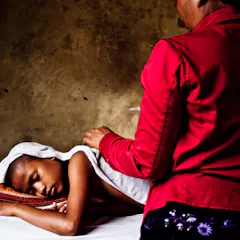
A new drug for malaria could be developed after a way has been found to kill the parasite that causes the disease. Malaria remains one of the world’s top three single-cause infectious diseases and is caused…
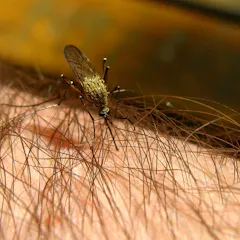
Every year malaria kills more than 600,000, which is a little less than the population of Bhutan. There are some simple solutions to control the disease, but keeping the numbers of mosquitoes with malarial…

Football fever may not be the only thing spreading when hundreds of thousands of sports fans converge on Brazil for the FIFA World Cup this June and July. Mass events such as the Olympic and Commonwealth…
A step in the transition from free-living species to parasite has been identified in insect guts. A research team led by…
Scientists in France have found how the genes of the malaria parasite adapt to become resistant to artemisinin, one of the most effective remaining antimalarial drugs. Their discovery exposes a serious…
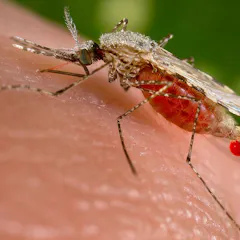
Controlling malaria is a war being waged on many fronts. Mosquito nets and coils repel mosquitoes from their human feast; vaccines protect us from the inside and environmental measures clear the stagnant…
Top contributors
-

Principal Medical Scientist and Head of Laboratory for Antimalarial Resistance Monitoring and Malaria Operational Research, National Institute for Communicable Diseases
-
Medical scientist, National Institute for Communicable Diseases
-
Medical Entomologist at the School of Biological Sciences, University of Nairobi
-
UP ISMC: Project Manager and Coordinator, University of Pretoria
-
Director: UP Institute for Sustainable Malaria Control, University of Pretoria
-
Chief Research Officer, Kenya Medical Research Institute
-
Director of the Jenner Institute, University of Oxford
-
Director of Science, Ifakara Health Institute
-
Project Manager, Cambridge Africa, Anglia Ruskin University
-
Professor of Molecular Parasitology and Medicine, St George's, University of London
-
Clinical Associate Professor, School of Medical Science & Sydney Infectious Diseases Institute; Principal Hospital Scientist, University of Sydney
-
Board Certified Internal Medicine Physician and Public Health Scientist, MidMichigan Health, University of Michigan
-
Director and CEO, Burnet Institute
-
Co-Director, Institute of Infection, Chair, Immunology & Vaccinology, Imperial College London
-
Scientist, International Centre of Insect Physiology and Ecology