

The need for more child-care and elder-care spots is growing, but the COVID-19 pandemic proves that for-profit facilities are not the answer.
Articles on Long-term care
Displaying 41 - 60 of 63 articles

In the absence of guidelines or training regarding sexual expression in long-term care homes, most staff are ‘just winging it’ on potentially sensitive issues.

The need to transfer 2,500 COVID-19 patients around Ontario, and bring in extra doctors from other provinces, exposes two fallacies about Canada’s health-care system.

The COVID-19 pandemic has highlighted the scarcity of resources in long-term care. But it has also revealed how staff are undervalued.
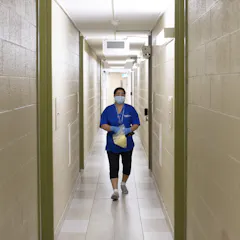
One of the factors that has made COVID-19 so catastrophic in long-term care homes was lack of paid sick leave for low-wage workers.

Canadians are living longer, but are they living well? The challenges to aging well go beyond the problems in long-term care. Substantial change to Canada’s support service systems is long overdue.

Provinces shouldn’t prevent Canadians from seeking compensation if an essential service provider’s unreasonable acts cause COVID-19 infection.

Naturally occurring retirement communities, or NORCs, are unplanned communities that have a high proportion of older residents. They may be critical to finding housing solutions for aging Canadians.

Personal support workers are crucial but under-appreciated in the health-care system. They are often subjected to racism, and they struggle to make ends meet while caring for our most vulnerable.
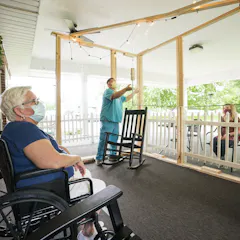
A new approach is making a big difference in Virginia.

The stigma that dehumanizes people living with dementia is reflected in the toll of COVID-19 in long-term care. Reforming long-term care must challenge this stigma with a new ethic of care.

COVID-19 public health messages often classify ‘elderly neighbours’ as in need of aid, and overlook the substantial contributions, achievements and resources of older people.

COVID-19 has shown that what’s known as financialization in seniors housing has intensified the profit-seeking approach of private owners, with harmful outcomes for residents and workers alike.

Every year, about 70 per cent of long-term care residents have at least one fall, and half of those result in injury. Wearable gear and changes to living spaces aim to prevent falls and limit injury.

People living in long-term care facilities have been disproportionately affected by COVID-19 in Canada. A new report analyzing long-term care around the world assesses Canada’s pandemic performance.
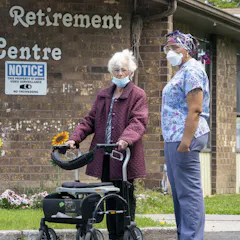
If Canadians want to know what the privatization of health care looks like, long-term care is a cautionary tale.
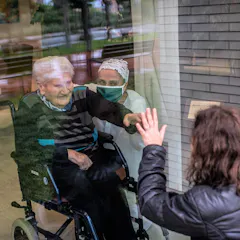
Nearly half the states have reduced liability for health care providers at a time when nursing home regulation is declining and families can’t visit loved ones for fear of spreading the coronavirus.
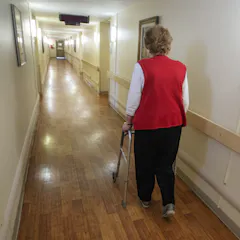
A research project may offer insight into how factors like laundry, food and art may be good places to start in addressing problems in long-term care homes.

Preventing people from dying alone in a pandemic takes ingenuity and money, but it’s the right thing to do.
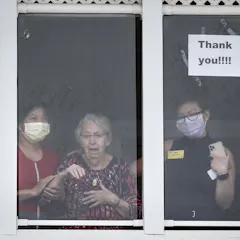
Nursing homes and long term care in Canada are predominantly staffed by immigrant women, migrants and refugees — mostly women of colour.
Top contributors
-

Professor of Gerontology, UMass Boston
-
Distinguished Research Professor of Sociology, York University, Canada
-
Senior Research Fellow and Lecturer of Gerontology, UMass Boston
-
Professeure titulaire en Sciences Economiques, Université du Québec à Montréal (UQAM)
-
Doctoral Candidate, Aging, Health and Well-being, University of Waterloo
-
Schlegel Research Chair in Geriatric Medicine, Associate Professor, University of Waterloo
-
Assistant Professor, Economics, Carleton University
-
Research director (CNRS), Toulouse School of Economics – École d'Économie de Toulouse
-
Assistant Professor, Department of Finance, HEC Montréal
-
Associate Professor, Family Medicine, Queen's University, Ontario
-
Associate professor, Department of Recreation and Leisure Studies, Brock University
-
Associate Professor | Schlegel Chair in Clinical Epidemiology & Aging | Canada Research Chair in Integrated Care for Seniors, McMaster University
-
Assistant Professor, Economics, University of Groningen
-
Masters Student, Social Work, Research Assistant, University of Waterloo
-
Associate Professor, King's University College at Western University, Western University