

The demands of caregiving can reverberate through family relationships, exposing old disagreements about expectations and responsibilities.
Articles on Long-term care
Displaying 1 - 20 of 63 articles

Canada’ aging population is a marker of national success, not a crisis. The question is whether we will seize this moment to build the strongest aging society in the world.

When a home healthcare aide doesn’t show up, the consequences are immediate and can be dire.

Long-term care is not strictly a medical service; it’s also a home and social environment. To ensure Canadians can age with dignity, we need ways to assess dignity in our health systems.

Continuous tracking using real-time location systems is becoming increasingly common in hospitals and long-term care homes, raising questions about ethics and data use.
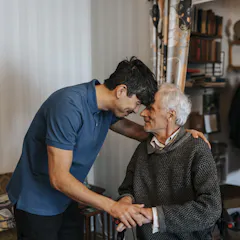
Addressing the financial and personal aspects of aging proactively helps to ensure that you will receive the care you need – and want – as you age.

The long-term care system is under pressure — both from an aging population and from a workforce in crisis. More humane, sustainable models of care are critical.

When people over 65 lose Medicaid coverage, they stop seeing their doctors for preventive care due to high costs. This in turn leads to worse health outcomes and higher health care costs.

Why Canada needs to put seniors’ care back on the agenda, not only in this election but also in its aftermath.

Her proposal is aimed at easing the burden for family caregivers. She says that negotiating lower drug prices for Medicare could cover the cost of this expansion of benefits for older Americans.

Low-income individuals face a double penalty: they are both more likely to need long-term care and they are less financially equipped to bear the associated costs.

With the proper help, resources and coping strategies, caregivers can navigate challenges and provide meaningful support to their relatives from afar.

What happens in November 2024 could influence other states weighing their own options.

Most caregiving work is done by women. However, many contend with trying to balance their caregiving responsibilities with their own well-being and aspirations.

Not only is the health sector feminized, but women — particularly racialized women — are more likely to be in jobs at the low end of the pay scale, but that require prolonged contact with patients.

Gays, lesbians and other sexual minorities can face significant economic challenges with age.

Publicly funded primary and home care should be accessible to all older adults, regardless of where they live.

While both nursing homes and home care impose financial burdens, their differing structures can influence how older Canadians save money.
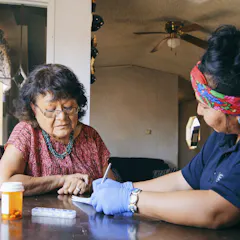
Increasing the number of older people with both Medicaid and Medicare would mean fewer of them would be forced to skimp on the care and treatment they need.

Long-term care workers experienced mental health challenges and moral distress during the pandemic. Research shows why workplace standards and support for workers are crucial to the future of LTC.
Top contributors
-

Professor of Gerontology, UMass Boston
-
Distinguished Research Professor of Sociology, York University, Canada
-
Senior Research Fellow and Lecturer of Gerontology, UMass Boston
-
Professeure titulaire en Sciences Economiques, Université du Québec à Montréal (UQAM)
-
Doctoral Candidate, Aging, Health and Well-being, University of Waterloo
-
Schlegel Research Chair in Geriatric Medicine, Associate Professor, University of Waterloo
-
Assistant Professor, Economics, Carleton University
-
Research director (CNRS), Toulouse School of Economics – École d'Économie de Toulouse
-
Assistant Professor, Department of Finance, HEC Montréal
-
Associate Professor, Family Medicine, Queen's University, Ontario
-
Associate professor, Department of Recreation and Leisure Studies, Brock University
-
Associate Professor | Schlegel Chair in Clinical Epidemiology & Aging | Canada Research Chair in Integrated Care for Seniors, McMaster University
-
Assistant Professor, Economics, University of Groningen
-
Masters Student, Social Work, Research Assistant, University of Waterloo
-
Associate Professor, King's University College at Western University, Western University