
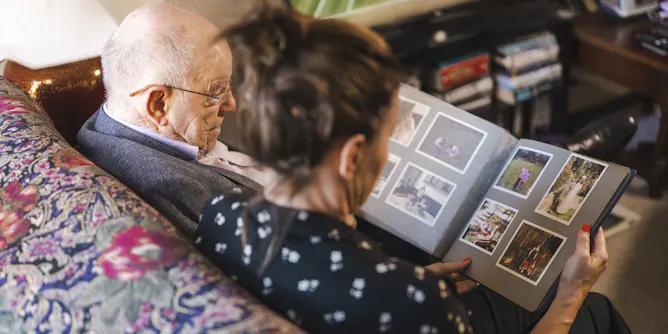
The demands of caregiving can reverberate through family relationships, exposing old disagreements about expectations and responsibilities.
Articles on Caregiving
Displaying 1 - 20 of 127 articles

Our latest study takes a closer look at the emotional lives of humpback whales.

Caregivers said their priorities were pension increases, a dedicated allowance, food security and basic infrastructure.
People living with Alzheimer’s as well as their caregivers benefit from culturally informed care.

Alberta’s move to shift disability recipients onto a lower-paying, employment-focused benefit assumes people can make up the difference through work, savings or family. Research suggests few can.

An eight-country study assessed whether parenting programmes that were developed through research also work when offered at a wider scale in real-life conditions.

‘Fix-it’ medical approaches often go against people’s wishes near the end of life, creating unnecessary and preventable suffering.

As religious affiliation declines, the rituals and guidance it once provided around dying have disappeared for many people. Death doulas fill that gap.

Mothers still bear the majority of care work and fathers are still largely excluded or pushed to take unpaid leave.

Comedic portrayals of incompetent dads can distort public understanding of fathers’ essential and real-life contributions to children’s development.

Pennsylvania’s proposed paid leave may not be enough for sandwich generation caregivers, who are raising children and supporting aging parents.

The COVID-19 pandemic exposed and intensified an already disproportionate burden of caregiving, emotional labour and financial inequality by women — a burden that remains largely invisible.

Cinema has helped normalize caregiving as a moral, non-negotiable family duty. But in diasporas, these inherited expectations are often too difficult to sustain.
As devices get smarter, families and communities bear a heavier burden of technology caregiving for older adults.

Caregivers in Botswana are being asked to do more with less.
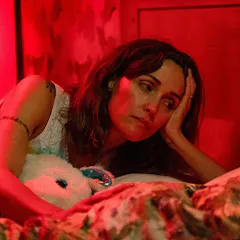
‘If I Had Legs I’d Kick You’ offers a rare, realistic and necessary portrayal of caregiving when mothers are positioned as the shock absorbers of systems unwilling to provide help.
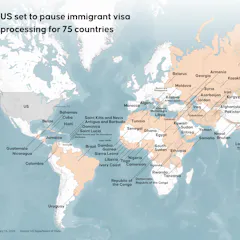
Family reunification is often framed as a cost, but evidence shows it functions as social infrastructure that supports work, well-being and economic stability.

Debating whether to step back from a career to take on caregiving responsibilities can be a tough decision – not just financially or emotionally but ethically as well.

Trust, care and belonging are the foundation for families thriving.

A diverse team of researchers, concerned that the global elder care crisis cannot be addressed by the market or the state alone, are seeking creative solutions.
Top contributors
-

Doctoral Candidate, Aging, Health and Well-being, University of Waterloo
-
Professor of Sociology, University of Cape Town
-
Assistant Professor, Faculty of Health Sciences, Simon Fraser University
-
SARChI: Human Capabilities, Social Cohesion and the Family, University of the Western Cape
-
Professor, Faculty of Science, McMaster University
-
Assistant Professor, Arthur Labatt Family School of Nursing, Faculty of Health Sciences, Western University
-
Professor, Department of Anthropology, University of Toronto
-
Research fellow, Stellenbosch University
-
Professor, Canada Research Chair in Determinants of Child Development, Owerko Centre at the Alberta Children’s Hospital Research Institute, University of Calgary
-
Gerontologist, University of Waterloo
-
Professor of Sociology, University of Lincoln
-
Professor and Canada Research Chair in Person Centred Interventions for Older Adults with Multimorbidity and their Caregivers, School of Nursing, McMaster University
-
Professor and Co-Director, Research on Aging, Policies and Practice, University of Alberta
-
Professor of Public Administration and Policy, American University School of Public Affairs
-
Professor of Sociology and Founding Director of The Future of Work Lab, Podcast at MissPerceived, The University of Melbourne