
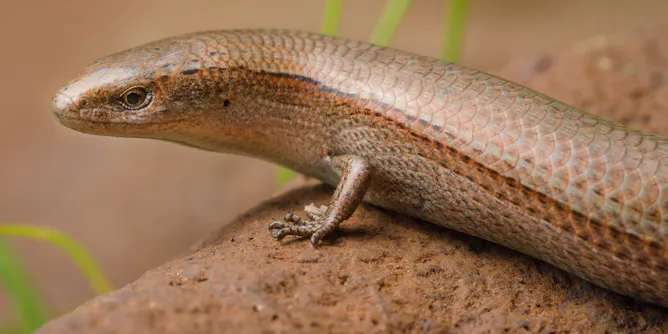
Australia is famous for its lizards and snakes. But we found at least 127 species are threatened – almost twice as many as previously thought.
Articles on Lizards
Displaying 1 - 20 of 68 articles
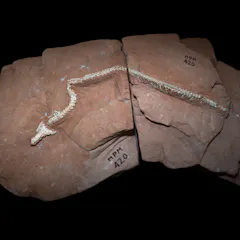
Snakes lost their limbs millions of years ago to become undulating, scaly tubes of muscles. Scientists are finally figuring out why.
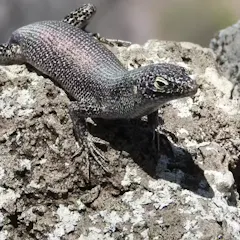
The Noronha skink arrived on the island millions of years ago from Africa, likely on floating masses of vegetation carried by ocean currents.
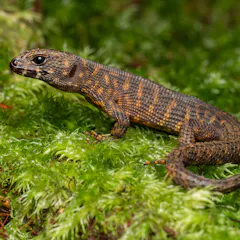
A new study finds the incredible diversity of lizards in Australia relates to a major upheaval in the continent’s climate more than 20 million years ago.

Captive reptiles such as beaded dragons will often scramble incessantly against the barriers of their enclosures. How can we get them to stop?
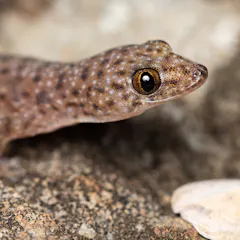
Biologists think tropical animals can’t really adapt when the environment changes – a new study challenges that view.

Australia’s huge diversity of reptiles could be at risk from new fungal diseases.
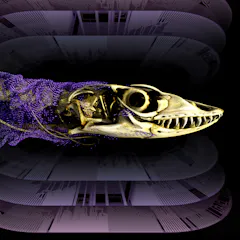
Reptile armour has a wild backstory.

We know very little about reptiles compared to other species, and it affects our attitudes to their welfare.

Isolating the impacts of climate change is hard. But a new study shows how ancient fossils can help.
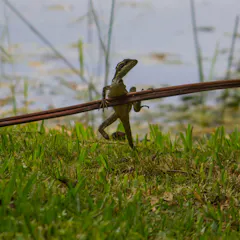
Most lizards probably don’t survive devastating injuries. But a new study documents 122 cases of limb loss across 58 species – these exceptions shine a new light on natural selection.
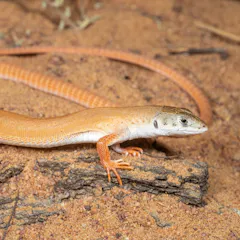
Researchers in South Africa have rediscovered a lost lizard, uncovered new localities of species and found that some are in danger of extinction.

Fever isn’t necessarily a bad thing − it’s actually a useful response to infections.
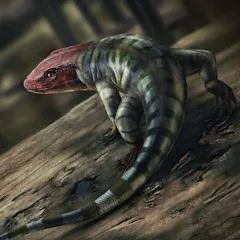
Where did the ancestors of all reptiles, birds and mammals emerge? A newly discovered fossil slab from Australia throws the entire timeline into question.
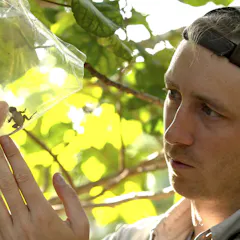
A decade of fieldwork is revealing how one of biology’s fundamental principles works in real time.

The first comprehensive overview of trade in Australian reptiles and frogs worldwide shows more species should be listed for monitoring under the international convention on wildlife trade.
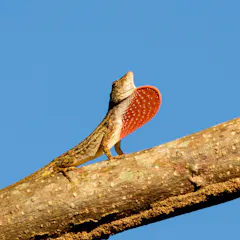
New research documents how drones were used to track the temperatures of the Bay Islands anole lizard on the Honduran island of Utila.

Not all reparations involve money. Returning unique scientific resources is also a way of showing respect and righting past harms.
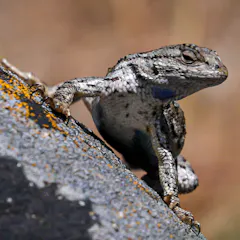
From dark dragonflies becoming paler to plants flowering earlier, some species are slowly evolving with the climate. Evolutionary biologists explain why few will evolve fast enough.
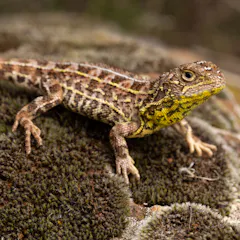
The successful quest to find a species last seen more than 50 years ago has added to the urgency of protecting the vanishing grassland habitat of a lizard that had been feared extinct.
Top contributors
-

Assistant Professor of Ecology and Evolution, Georgia Institute of Technology
-
Senior Curator, Terrestrial Vertebrates, Museums Victoria Research Institute
-
Senior Research Scientist, South Australian Museum; Flinders University
-
Research Officer Herpetology, Museums Victoria Research Institute
-
PhD Student, Biological Sciences, Brock University
-
Professor in Ecology and Conservation, Monash University
-
Director of the Gothenburg Global Biodiversity Centre, University of Gothenburg
-
Research Associate in Evolutionary Biology, Adelaide University
-
Lecturer, Lúrio University
-
Post-doctoral fellow, Australian Landscape Trust, Calperum Station, James Cook University
-
Professor in Zoology, James Cook University
-
Senior Lecturer, Evolutionary Biology, University of Sydney
-
Associate Professor in the School of Humanities and Communication Arts, Western Sydney University
-
Associate Professor, School of Arts and Media, UNSW
-
Associate professor in Vertebrate Palaeontology, University of the Witwatersrand