

Recent survey evidence suggests that most Canadians have positive opinions of wolves and rural Canadians in particular have strongly positive feelings on wolves and their protection.
Articles on Livestock
Displaying 61 - 80 of 226 articles

Climate change threatens longer and more severe droughts. What will it mean for our diets?
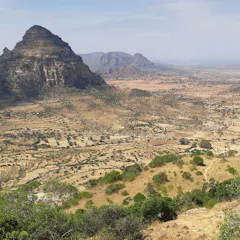
Even though the Tigray war front moved past Dabba Selama several times, the community suffered less than other nearby villages.
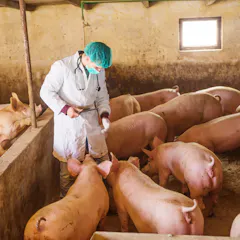
While mRNA vaccines are designed to last longer in the body than mRNA molecules typically would, they are also tested to ensure they are eliminated from livestock long before milking or slaughter.
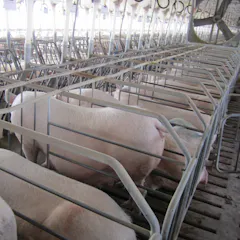
The Supreme Court has upheld a controversial California law requiring pork sold in-state to be humanely raised, no matter where it’s produced. Pork producers say it could drive up food prices.

Shepherding livestock may be more effective protection than killing predators.
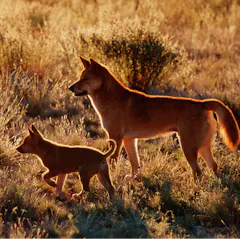
For more than 200 years, European farmers have killed dingoes to protect livestock. But living alongside dingoes benefits nature - and actually helps graziers

Growing meat in vats could help us prepare for climate change - and curb the environmental damage done by traditional meat. But only if we can scale it up.
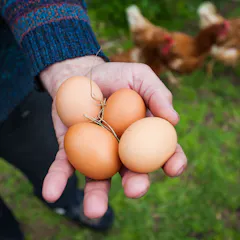
Though preferable to battery farms, free-range eggs are not as safe and ethical as customers think.
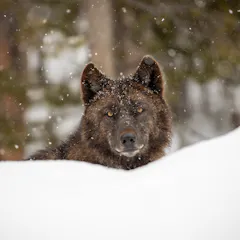
Less than a century ago, Colorado hunted, trapped and poisoned all the wolves within its borders. Today it’s restoring them – a change that reflects a profound shift in human thinking.
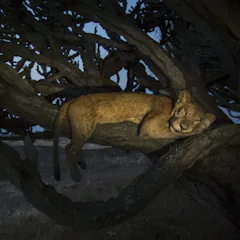
Developing countries suffer the most in the conflict between large carnivores and humans. We need better financial incentives for these communities to make sure these iconic predators are protected.
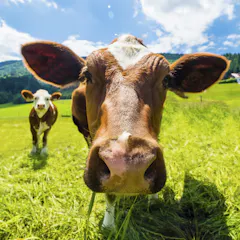
New Zealand is considering a plan to tax methane from cows. But while cows and cars both emit greenhouse gases, they don’t have the same impact over time.
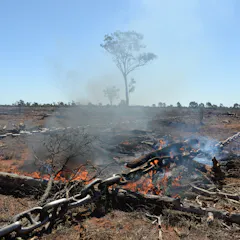
Queensland is still clearing large tracts of land to run more cattle. This comes at a huge cost to our native animals and plants.
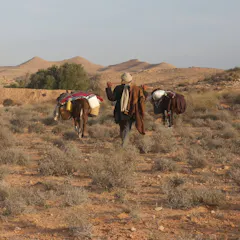
Pastoral communities should be included in conservation initiatives – but the ecology of pastoral lands has long been misunderstood.
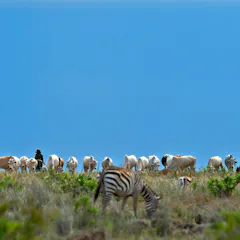
Conservation that places less emphasis on who may or may not use a piece of land could result in better outcomes for people and wildlife.

Tangible solutions would reduce livestock methane emissions, while also improving productivity and livelihoods.

Changing habitat ranges, competition for food and water, and biological effects of climate change all pose threats to wildlife.
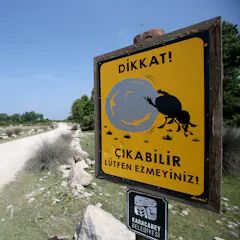
Everyone is feeling the heat these days – even species that develop underground.
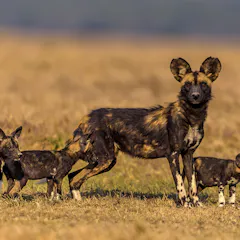
African wild dogs are adapting to rising temperatures using a cue that no longer accurately predicts the best conditions for reproduction.

Despite the impact of flooding on food security, it is not recognised as a threat by policymakers.
Top contributors
-

Specialist, CGIAR
-
Professor of Veterinary Infectious Diseases, University of Liverpool and International Livestock Research Institute, Kenya, University of Liverpool
-
Adjunct Professor in Animal Welfare, Curtin University
-
Professor in Wildlife Ecology and Conservation, School of Life & Environmental Sciences, Deakin University
-
Fellow, Zoological Society of London
-
Senior Fellow, Department of Agricultural Economics, Stellenbosch University
-
Associate professor, UNSW
-
Senior Researcher and Statistician, University of Hohenheim
-
Barrister, Victorian Bar and Honorary Fellow, Melbourne Law School, The University of Melbourne
-
Professor of Sustainability, Curtin University
-
Assistant Professor of Applied Environmental Health , University of Maryland
-
Senior lecturer, UNSW
-
Professor, Dept of Food, Agricultural and Resource Economics, University of Guelph
-
Chief Research Scientist, Food Systems and the Environment, CSIRO
-
Postdoctoral research fellow, The University of Melbourne