

How has the UK’s health changed since 2001?
Articles on Life expectancy
Displaying 1 - 20 of 115 articles

Dementia is now the leading cause of death, overtaking heart disease. The Conversation’s experts explain how Australians’ health has changed – both good and bad.

Canada’ aging population is a marker of national success, not a crisis. The question is whether we will seize this moment to build the strongest aging society in the world.

Sometimes they hear they’re supposed to stay active and engaged. Other times they’re vilified for holding on to power too long. It’s all made ‘knowing when it’s time’ a whole lot harder.

Analysis of mortality data spanning 450 regions in Europe is categorical: longevity across the continent is a two-tier affair.

A study of 38,000 adults identified blood protein signatures linked to higher mortality risk. They cannot predict death, but they could help guide earlier care.

Even after poverty is taken into account, Māori and Pacific people have a shorter life expectancy and higher cancer rates compared with people from other ethnic groups.

Data collected during and after the pandemic continue to be analysed. Excess mortality figures reveal a significant and varied loss of life expectancy in Europe.

New research shows that Americans’ personal wealth is not enough to compensate for factors that affect how long people live, such as health behaviors, education or social support.

The study shows rates for smoking, obesity and chronic conditions such as heart disease are comparatively higher in rural areas, leading to shorter life expectancy.

Children placed in state care from 1950 to 1999 have had significantly shorter average life expectancies than the wider population, this new analysis shows.

A new book outlines the ways in which austerity has been the biggest driver of shorter life expectancy in Britain.

For healthy aging, it’s crucial to distinguish between lifespan and healthspan: the amount of time for which a person is healthy within their lifespan. Maintaining muscle is key to a longer healthspan.

Australia has been known for having among the highest life expectancies in the world. But our new research shows that may only be true for older people, with those born after 1970 faring much worse.

For decades it seemed as if nothing could change the trajectory of population growth. But a huge change is looming.

Nearly 20% of House and Senate members are 70 or older, and only 6% are under 40. What explains Congress’ advanced age?

If you start to plan for your retirement now, your future self will thank you for it.
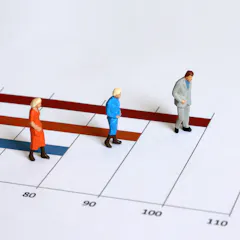
Studying lifespan and mortality trends reveals that people are increasingly dying at similar ages.

Detailed data on the ages at which people die can give good indications of a person’s remaining life span.

The historical correlation between economic prosperity and increased life expectancy might suggest that growth is generally a good thing. However, other evidence points to the downside of growth.
Top contributors
-

Halford Mackinder Professor of Geography, University of Oxford
-
Professor of Economics, emeritus, Stony Brook University (The State University of New York)
-
Director of the International Laboratory of Demography and Human Capital, Russian Presidential Academy of National Economy and Public Administration
-
Extraordinary Professor, Global Health, Stellenbosch University; South African Medical Research Council
-
Professor of Biogerontology, University of Brighton
-
Démographe et économiste, spécialiste des inégalités territoriales, Ined (Institut national d'études démographiques)
-
Docteur, spécialiste des méthodes de prévision (mortalité, longévité, etc.), Ined (Institut national d'études démographiques)
-
Senior Research Associate, International Centre for Future Health Systems, UNSW, UNSW
-
DPhil, Geography and the Environment, University of Oxford
-
Professor of Social Science and Public Policy, Hong Kong University of Science and Technology
-
Dean of the Faculty of Social, Human and Mathematical Sciences, University of Southampton
-
Associate Professor, Centre for Health Policy, The University of Melbourne
-
Brass Blacker Associate Professor of Demography at LSHTM and Marie Sklodowska-Curie Fellow at Leverhulme Centre for Demographic Science, University of Oxford
-
AXA Professor of Epidemiology of Ageing, Newcastle University
-
Associate Professor of Family Medicine, Charles R. Drew University of Medicine and Science