
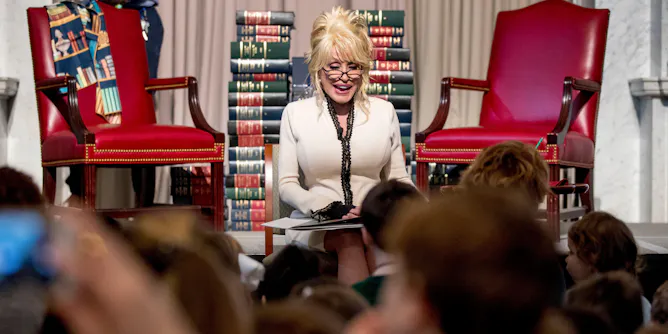
Parton’s generous scheme has provided millions of free books to children around the world, helping to foster a love of reading that can set youngsters up for life.
Articles on Learning to read
Displaying 1 - 20 of 38 articles
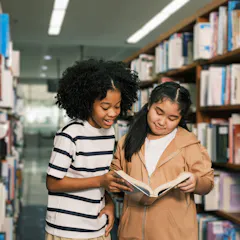
Children receive support from their partner throughout the session, with their teacher monitoring the interactions in the class.
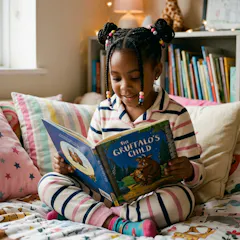
Books matter because they expose children to a broader and richer vocabulary than everyday conversation.
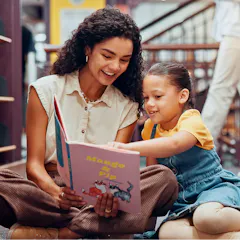
Adults encourage children to assume a progressively more active role in storytelling.
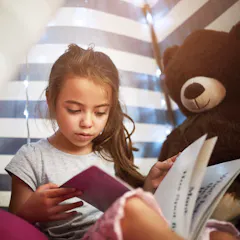
Without enough resources to follow up on screening results, teachers, parents, and children may be left feeling frustrated and unsupported.
Compared with today’s structured literacy and standardised testing, the 1953 reading syllabus was a remarkably non-prescriptive blueprint for both teachers and pupils.

Reading aloud to kids helps their vocabulary and comprehension. These are skills we continue to build all through our lives.

US schools are going all in on phonics, but research shows that approach won’t work for every child. A blended literacy strategy can get more students reading.
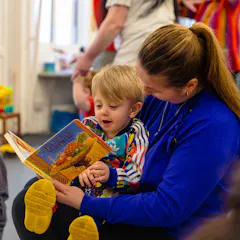
Library reading sessions tend to be attended by families who already engage with books at home
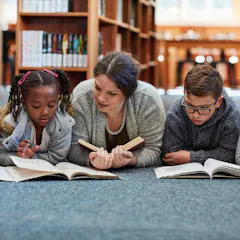
Ask children about what they read that isn’t in books - magazines, recipes, messages from friends.

Literary researchers like me aren’t surprised that reading for pleasure is at an all time low among kids
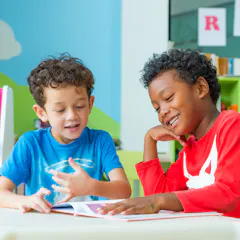
Reading and writing should be taught together again.
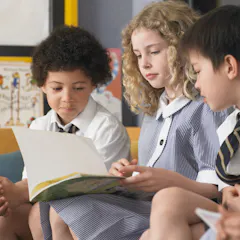
There are alternatives to England’s focus on synthetic phonics, which teaches children to decode words by learning the relationship between letters and sounds.
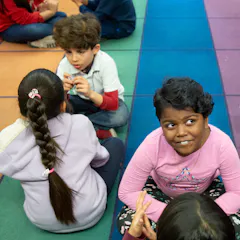
A key way to support mental health and well-being is to support strong reading instruction especially early in children’s education.

NAPLAN results alarmingly show almost one in three Australian children don’t meet the expected standard in Year 3.

There is growing evidence suggesting difficulties with reading and mental health may be related in some children.

A report from the Saskatchewan Human Rights Commission outlines government and school responsibilities for educating students with disabilities and calls for changes in reading instruction.
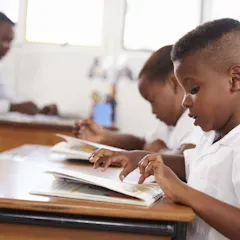
Reading fluency and expanding vocabulary are the bridge from decoding to comprehension. Weaknesses in any of these building blocks will limit a child’s ability to read for meaning.

Having a vast and deep vocabulary affords precision and nuance in making meaning of the world, and this is key to children becoming proficient readers.

Take turns in conversation and make rhymes.
Top contributors
-

Head of Department, Early Years Education, Edge Hill University
-
Associate Professor in Language, Literacy and TESL, University of Canberra
-
Associate Professor, Werklund School of Education, University of Calgary
-
Professor of Language and Literacy Development, University of Reading
-
Professor, Werklund School of Education, University of Calgary
-
Sessional Tutor, Charles Sturt University
-
Principal Fellow, Faculty of Education, University of Wollongong
-
Emeritus Professor of Education, Macquarie University
-
PhD Candidate, Sessional Academic, Edith Cowan University
-
Honorary Fellow, Macquarie University
-
Associate Clinical Professor of Psychology, Harvard University
-
Professor of Early Childhood and Primary Education, UCL
-
Professor, Canada Research Chair in Determinants of Child Development, Owerko Centre at the Alberta Children’s Hospital Research Institute, University of Calgary
-
Professor, Department of Education, Concordia University
-
Adjunct assistant professor, University of Canberra