

There is not only one way to learn to read, as people who are deaf, blind or dyslexic demonstrate.
Articles on Dyslexia
Displaying 1 - 20 of 49 articles

Listening to stories can remove the ‘decoding’ process that dyslexia sufferers struggle with.

Books matter because they expose children to a broader and richer vocabulary than everyday conversation.

Research reveals a clear preference for how neurodivergent adults want to be described, though not everyone agrees.

Dyslexia laws are now nearly universal across the US. But the data shows that passing a law is not the same as improving how children learn to read.

The Manitoba Human Rights Commission released the first phase of their report exploring students’ rights to access evidence-based reading interventions in Manitoba’s public education system.

Without enough resources to follow up on screening results, teachers, parents, and children may be left feeling frustrated and unsupported.

This common condition affects children’s spoken language development, but similarity to other disorders makes it hard to detect.

When talking about a child’s diagnosis of dyslexia, mothers rely on metaphors. A closer look at these metaphors reveals much about how schools can better help them.

Dyslexia isn’t just a learning difficulty – it can be a cognitive strength.

Understanding and supporting employees with dyslexia is crucial not only for the individual success of employees, but for workplaces to be more effective.

Neurodivergent employees can have specific needs. Inclusion in the workplace means businesses and employers need to consider differences that may not be visible to outsiders.

A report from the Saskatchewan Human Rights Commission outlines government and school responsibilities for educating students with disabilities and calls for changes in reading instruction.

Establishing an inclusive and accommodating work environment for people with dyslexia can foster a diverse workforce and improve productivity, innovation and performance.

The claims made by the creators of the app – which highlights parts of words to supposedly enhance users’ reading abilities – are dubious.

Direct instruction matters in learning to read, but reading can’t happen unless children are supported in making connections to what they know and their experiences.

While only about 20% of people would qualify for a formal diagnosis of a mental disorder, more than 60% express symptoms of those disorders – and those symptoms can lead to cognitive difficulties.
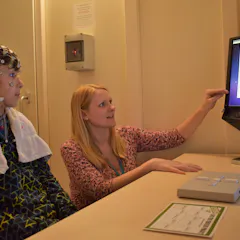
Children with dyslexia seem to find it more difficult to judge the direction of moving dots - this could explain why reading is also more challenging.

These children are not getting the help they need to thrive at school and at home.
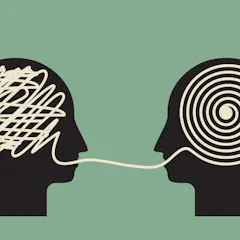
Despite progress in promoting workplace diversity, prejudices keep the employment prospects for neurodiverse individuals shockingly low.
Top contributors
-

Assistant Professor in Educational Inclusion, University of Birmingham
-
Associate Professor, Tarleton State University
-
Professor of Psychology in Education, University of Birmingham
-
Deputy Director, ARC Centre of Excellence in Cognition and its Disorders, Macquarie University
-
Emeritus Professor of Education, Macquarie University
-
PhD Candidate in Business Administration and Management, Concordia University
-
Senior Lecturer in Childhood, Youth and Education, Manchester Metropolitan University
-
Professor of Education and Principal of Collingwood College, Durham University
-
Executive Officer / Educational and Developmental Psychologist; Adjunct Research Fellow, Curtin University
-
Professor, UNSW
-
Postdoctoral Research Fellow, Macquarie University
-
Reader in Communication and Deafness, City St George's, University of London
-
Professor, Faculty of Education and Arts, Australian Catholic University
-
Postdoctoral Research Fellow, Macquarie University
-
Associate Professor, UCL