
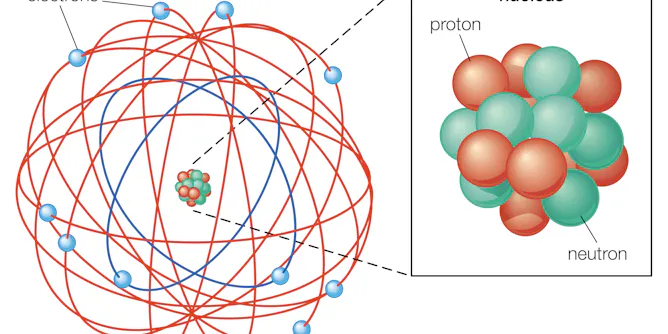
The electron is the tiniest particle. Then there are neutrinos, which are as small but may weigh more.
Articles on Electrons
Displaying 1 - 20 of 31 articles

Almost everything on Earth is made up of atoms, but where do these fundamental building blocks come from?

Lightning can be used to probe Earth’s dynamic Van Allen radiation belts, directly connecting terrestrial weather and space weather.

Attosecond science allows the extremely fast movements of electron particles to be observed. This emerging field brings both opportunity and controversy.

Another day, another zap. Understanding the physics of static electricity can help you not get static shocks quite so often.
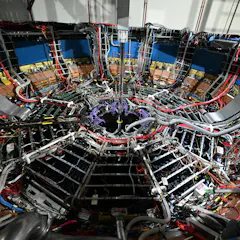
Measurements of 16 ‘antihyperhydrogen’ nuclei may help resolve mysteries of the universe’s exotic matter.
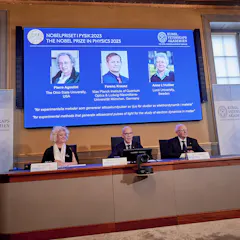
The discussions in the committee are always open, frank and sometimes emotional, but never hostile.
The 2023 Nobel Prize in physics recognized researchers studying electron movement in real time − this work could revolutionize electronics, laser imaging and more.

Three scientists won the 2023 Nobel Prize in physics for their work developing methods to shoot laser pulses that only last an attosecond, or a mind-bogglingly tiny fraction of a second.
A researcher explains developments in using light rather than electrons to transmit information securely and quickly, even over long distances.
Studying the brief and tiny quantum effects that drive living systems could one day lead to new approaches to treatments and technologies.
Examining microscopic quantum objects is exceedingly tricky, because their properties are connected to each other. But there could be a new method to measure them as accurately as possible.
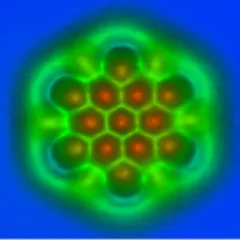
A physicist explains how atoms arrange themselves into molecules – and how scientists are able to image these tiny bits of matter that make up everything around you.

One species of eel can discharge 860 volts of electricity – that’s 200-fold higher than the top voltage of a single lithium-ion battery.
The laws and principles of chemistry seem pretty set in stone. But as a chemist explains, the field is always evolving, including such fundamental principles as what is a chemical bond.

Manipulating electron spin has heralded everything from iPods to the latest laptops. Stand by for the next paradigm shift.
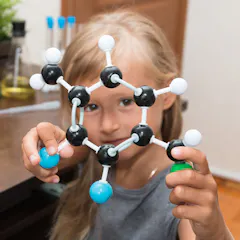
Everything you can touch is made of molecules – but feelings, sound and light are something different.

Layering substances like graphene in new ways could help us to build quantum computers or transmit electricity over long distances.
A particle physicist explains just what this keystone theory includes. After 50 years, it’s the best we’ve got to answer what everything in the universe is made of and how it all holds together.

The reason you feel things as solid is all to do with electrons.
Top contributors
-

Professor of Physics, University of the Witwatersrand
-
Teaching Assistant in Physics, City College of New York
-
Visiting assistant professor, James Madison University
-
Assistant Professor of Physics, University of Maryland, Baltimore County
-
Postgrad student and freelance writer, The University of Melbourne
-
Glenn Starkman is a Friend of The Conversation.
Distinguished University Professor of Physics, Case Western Reserve University
-
Research Professor and Director of the International Institute for Accelerator Applications, University of Huddersfield
-
Associate Professor of Photonics and Quantum Sciences, Heriot-Watt University
-
Chair in Emerging Technologies, Heriot-Watt University
-
Postdoctoral Associate in Physics, City College of New York
-
Senior Lecturer in Physics, Lancaster University
-
Associate Professor of Physics, University of Cincinnati
-
Professor of molecular physics, Stockholm University
-
Assistant Professor of Physics and Astronomy, Purdue University
-
Research Associate, Quantum Science & Technology, Australian National University