
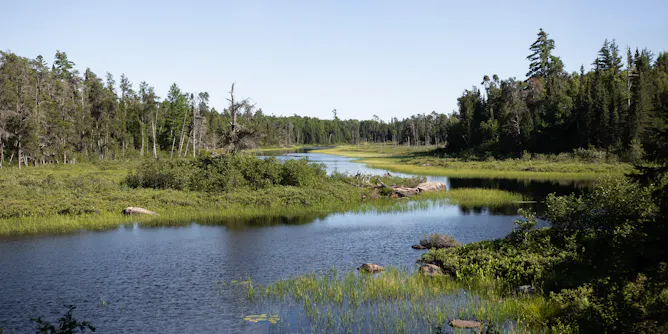
Conservation or copper? A proposed mine in northern Minnesota pits industrial jobs against a thriving outdoor economy.
Articles on Lakes
Displaying 61 - 80 of 86 articles
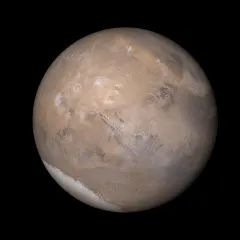
New findings boost chances of finding life on Mars, but there are better candidates in the solar system.

As fewer chicks survive, the eerie call of the loon could become more elusive in Ontario.
The water that replenishes groundwater, rivers and lakes is under threat from climate change, pollution and aging infrastructure.

Hundreds of thousands of lakes, rivers and streams in the Arctic exist only because of the permafrost that lies beneath them. The warming Arctic threatens to change that.
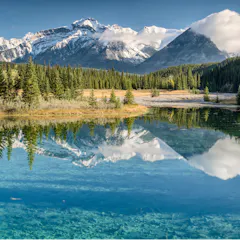
Lakes are the final resting place for many of the Earth’s plants – and these organic graveyards are about to get a whole lot busier.

Why did Earth’s climate rapidly cool 12,800 years ago? Evidence is mounting that a comet or asteroid collision is to blame, with new support coming from the bottom of a South Carolina lake.
Scientists are left with two conclusions. Either Nessie is an eel, or she never existed at all.
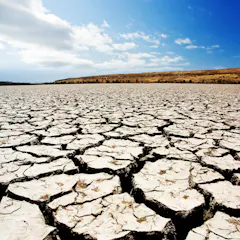
Freshwater fish are suffering as drought becomes more common and severe. Whether they survive will depend on how governments manage rivers and lakes, and on taking action against climate change.
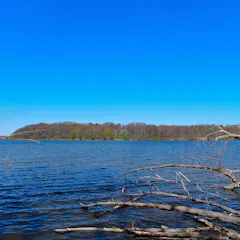
It’s cheaper to prevent biological invasions than to react after they happen. But it’s hard to detect invaders while there are still just a few of them. Knowing when and where to look can help.

Populations of freshwater species are in a state of deep decline. But we know why and we can reverse the trend.
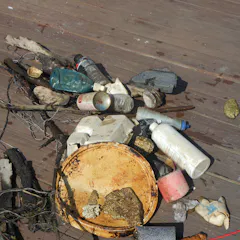
Roughly 10,000 tons of plastic enter the Great Lakes every year, and scientists want to know where it ends up. There are some parallels to ocean plastics, but also important differences.

A recent study shows plankton that have adapted to road salt have disrupted circadian rhythms. This finding suggests that environmental pollutants could also affect human circadian clocks.
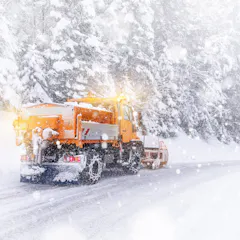
With frigid temperatures and snow in the forecast, slippery roads can’t be far behind. Salt keeps roads safe, but it’s harmful to aquatic environments.
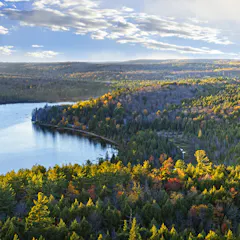
Canadians love to paddle on them and camp beside them, but our boreal lakes offer more than just peace and beauty. They could provide clues to how life on Earth began.
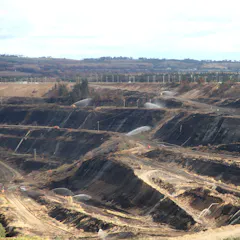
What do you do with a giant pit mine once it closes? One option for the Hazelwood mine is creating a recreational lake – but there are economic and environmental issues to consider.

Floods are often seen as a force of destruction. But as river ecologists, we find it hard not to rejoice at the flooding.
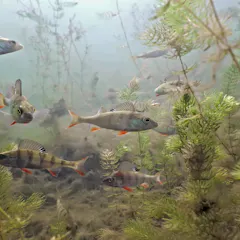
Scientists are pioneering a new way of monitoring water species, using techniques more familiar to fans of crime scene TV shows.

Lakes contain most of the fresh water on Earth’s surface. Recent research at Lake Tahoe in the Sierra Nevada mountains shows that climate change could alter lake chemistry, threatening these sources.
Freshwater covers only 0.5% of the Earth’s surface but is home to 10% of the world’s lifeforms.
Top contributors
-
 Beatrix Beisner is a Friend of The Conversation.
Professor, Aquatic ecology; Groupe de recherche interuniversitaire en limnologie (GRIL), Université du Québec à Montréal (UQAM)
-
Reader and NERC Independent Research Fellow, Bangor University
-
Canada Research Professor, Conservation Physiology, Carleton University
-
Professeur Écologie Aquatique, Université du Québec en Abitibi-Témiscamingue (UQAT)
-
Instructor, Ecology and Evolutionary Biology, Carleton University
-
Professor of Biology, McGill University
-
Postdoctoral Research Associate, University of Wisconsin-Madison
-
Professor of Environmental Change, UCL
-
Professor and York University Research Chair in Global Change Biology; Director of the United Nations Institute for Training and Research Global Water Academy, York University, Canada
-
Chair of the Department of Science, Technology, and Society, Rochester Institute of Technology
-
Professor and Canada Research Chair, Trent University; University of Cambridge
-
Professeure agrégée, Sciences biologiques, Université du Québec à Montréal (UQAM)
-
Assistant Professor of Biological Sciences, Rensselaer Polytechnic Institute
-
Research Fellow in Freshwater Science, Edith Cowan University
-
Professor, Environmental Geochemistry, University of Waterloo