
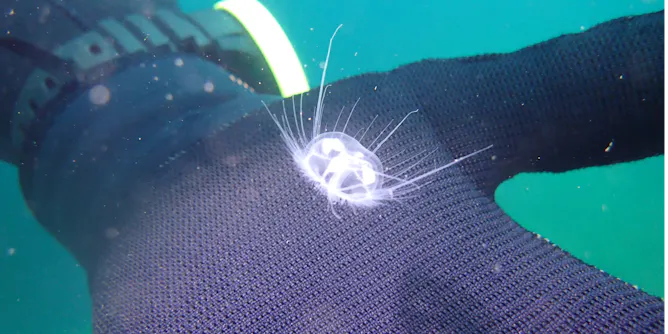
Freshwater jellyfish are growing in abundance in Canadian lakes and rivers. The reasons are complex but climate change is the primary culprit.
Articles on Our lakes: their secrets and challenges
Displaying all articles

A lake or river is not an isolated entity but one of the most visible facets of a much larger, and more dynamic, watershed. The health of these entire systems should be an utmost priority.

The invasive spiny water flea is spreading fast across Canada. Awareness is key to curtailing its growth.

The spectacular landscapes and pristine waters of the north shore of Lake Superior, which once provided inspiration for the Group of Seven, are now vulnerable to algal blooms.
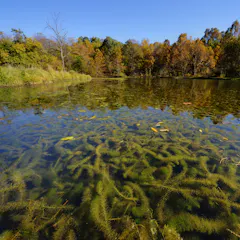
Freshwater ecosystems in Canada, and around the world, are more fragile than they look and vulnerable to invasive species. Canada’s lakes and rivers require constant vigilance to protect from invasion.
New techniques monitor the health of lakes in real time by analyzing their microbiome to anticipate and respond to environmental threats such as cyanobacteria.
Zooplankton are microscopic in size, but crucial for regulating aquatic ecosystems and moving nutrients up the food chain. This is affected by human activities including pollution and climate change.
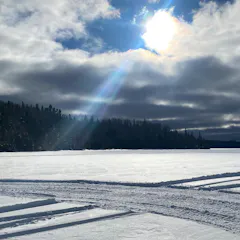
Canadians are no strangers to cold winters, when everything in nature appears to be frozen solid. However, under the ice cover of lakes, many animals remain active during the winter.
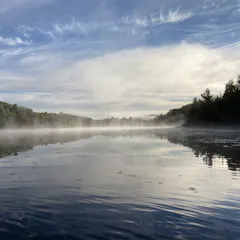
Many wild fish in Québec have parasites. Is this necessarily a bad thing? How can we limit the proliferation and spread of specific harmful parasites?

In Canada, groundwater is generally abundant and lakes are ubiquitous. But the exchanges between groundwater and lakes are complex and often invisible.
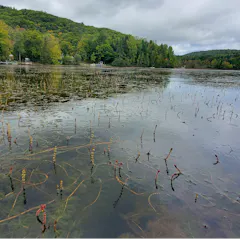
The fight against Eurasian watermilfoil, an invasive aquatic plant in North American lakes, can be long and expensive, so must be carefully planned.

The growing environmental and health risks posed by microplastics can only be addressed by reducing the amount of plastic produced and ensuring that all of it is recycled.

At first glance, duckweed may seem innocuous and even a little too common to be of any interest. But it’s an excellent source of protein.
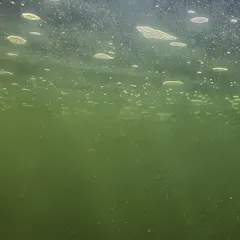
Some plant plankton engage in predatory behaviour and consume bacteria. This can contribute to climate change as these plankton stop photosynthesis in warmer temperatures.
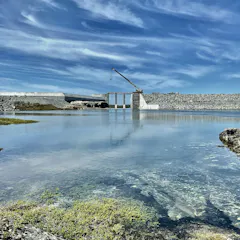
The energy transition requires the development of new infrastructure, which can have adverse effects on the environment and on certain communities.
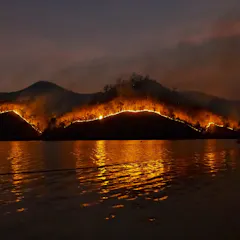
The record-breaking and destructive forest fires of the summer of 2023 made headlines. But how did they affect the millions of lakes in the burned catchment areas?
Top contributors
-
 Beatrix Beisner is a Friend of The Conversation.
Professor, Aquatic ecology; Groupe de recherche interuniversitaire en limnologie (GRIL), Université du Québec à Montréal (UQAM)
-
Professeur Écologie Aquatique, Université du Québec en Abitibi-Témiscamingue (UQAT)
-
Professeur titulaire, écologie des espèces envahissantes, Université Laval
-
Limnologiste, biogéochimiste aquatique, cycle du carbone, Université de Montréal
-
Knowledge Mobilization Specialist, Water Institute, University of Waterloo
-
Professeure au département des sciences de la Terre et de l'atmosphère, Université du Québec à Montréal (UQAM)
-
Candidat au doctorat au Département des sciences de la Terre et de l'atmosphère, Université du Québec à Montréal (UQAM)
-
Research Biogeochemist, University of Waterloo
-
Professeur en sciences et technologies des aliments, Université Laval
-
Doctorant en Science des Aliments, Université Laval
-
Professeur agrégé, département des sciences biologiques, Université du Québec à Montréal (UQAM)
-
Professeur en limnologie, Université de Montréal
-
Research Associate Professor, Department of Earth & Environmental Sciences, University of Waterloo
-
Professor of Biogeochemistry and Canada Excellence Research Chair Laureate in Ecohydrology, University of Waterloo
-
Biologiste M.Sc., Département de sciences biologiques, Université de Montréal