
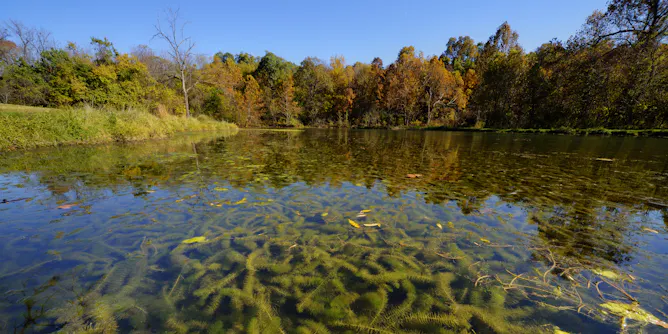
Freshwater ecosystems in Canada, and around the world, are more fragile than they look and vulnerable to invasive species. Canada’s lakes and rivers require constant vigilance to protect from invasion.
Articles on Lakes
Displaying 21 - 40 of 86 articles
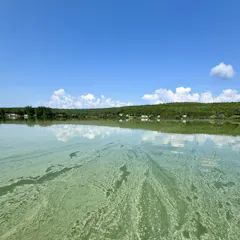
New techniques monitor the health of lakes in real time by analyzing their microbiome to anticipate and respond to environmental threats such as cyanobacteria.
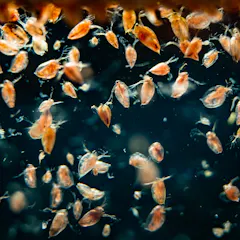
Zooplankton are microscopic in size, but crucial for regulating aquatic ecosystems and moving nutrients up the food chain. This is affected by human activities including pollution and climate change.
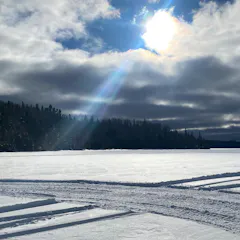
Canadians are no strangers to cold winters, when everything in nature appears to be frozen solid. However, under the ice cover of lakes, many animals remain active during the winter.
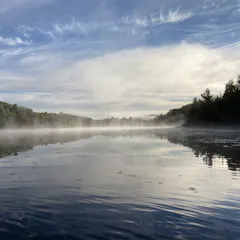
Many wild fish in Québec have parasites. Is this necessarily a bad thing? How can we limit the proliferation and spread of specific harmful parasites?

In Canada, groundwater is generally abundant and lakes are ubiquitous. But the exchanges between groundwater and lakes are complex and often invisible.
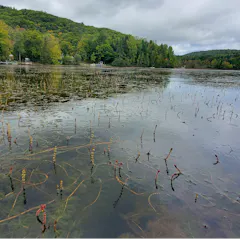
The fight against Eurasian watermilfoil, an invasive aquatic plant in North American lakes, can be long and expensive, so must be carefully planned.

The changes that were mapped represent the shift from a lake to the contemporary shallow wetland at the site.

At first glance, duckweed may seem innocuous and even a little too common to be of any interest. But it’s an excellent source of protein.
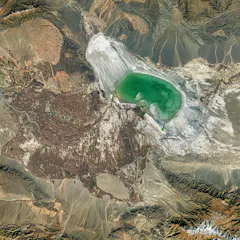
The water levels of saline lakes depend on a delicate balance between water inputs and outputs. This means they can provide an early warning of disruptions to our water resources.
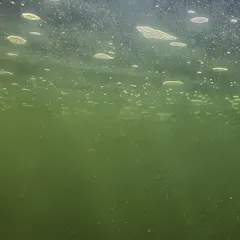
Some plant plankton engage in predatory behaviour and consume bacteria. This can contribute to climate change as these plankton stop photosynthesis in warmer temperatures.
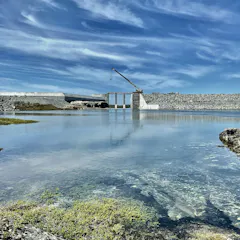
The energy transition requires the development of new infrastructure, which can have adverse effects on the environment and on certain communities.
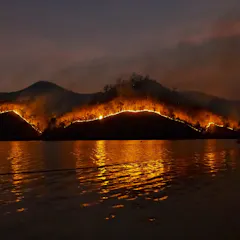
The record-breaking and destructive forest fires of the summer of 2023 made headlines. But how did they affect the millions of lakes in the burned catchment areas?

The recent rejection of the start of the Anthropocene epoch reminds us of the paramount importance of preserving what remains of our current Holocene.
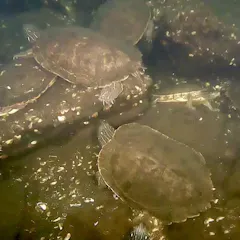
A phenomenon observed in a small group of organisms cannot always be generalized across a species — contrary to popular belief, overwintering turtles don’t breathe through their butts.

Increasing awareness of the dangers ‘forever chemical’ road salts pose to our fresh water systems highlights the urgent importance of finding new approaches to de-icing our roads.
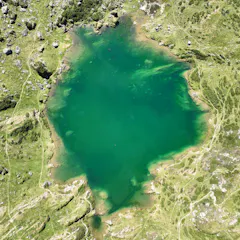
Many mountain lakes in the Pyrenees have turned green, a phenomenon that is a warning about the multiple pressures on ecosystems.

The largest lake in the UK and Ireland has been blighted by toxic blue-green algae.

According to a new UN report, invasive species do more than US$423 billion in damage worldwide every year. Four articles explore examples, from mollusks to poisonous fish.
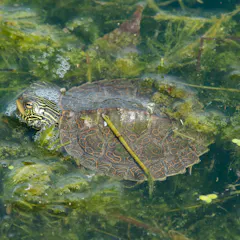
Freshwater turtles in Canada survive the cold, harsh winters by remaining under ice and conserving their energy. Northern map turtles however, move around constantly beneath the ice.
Top contributors
-
 Beatrix Beisner is a Friend of The Conversation.
Professor, Aquatic ecology; Groupe de recherche interuniversitaire en limnologie (GRIL), Université du Québec à Montréal (UQAM)
-
Reader and NERC Independent Research Fellow, Bangor University
-
Canada Research Professor, Conservation Physiology, Carleton University
-
Professeur Écologie Aquatique, Université du Québec en Abitibi-Témiscamingue (UQAT)
-
Instructor, Ecology and Evolutionary Biology, Carleton University
-
Professor of Biology, McGill University
-
Postdoctoral Research Associate, University of Wisconsin-Madison
-
Professor of Environmental Change, UCL
-
Professor and York University Research Chair in Global Change Biology; Director of the United Nations Institute for Training and Research Global Water Academy, York University, Canada
-
Chair of the Department of Science, Technology, and Society, Rochester Institute of Technology
-
Professor and Canada Research Chair, Trent University; University of Cambridge
-
Professeure agrégée, Sciences biologiques, Université du Québec à Montréal (UQAM)
-
Assistant Professor of Biological Sciences, Rensselaer Polytechnic Institute
-
Research Fellow in Freshwater Science, Edith Cowan University
-
Professor, Environmental Geochemistry, University of Waterloo