
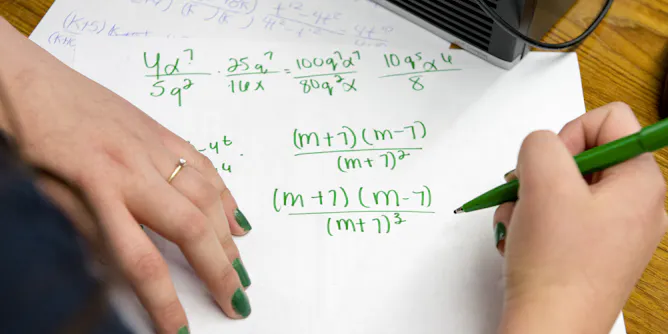
Three education experts explain why students aren’t learning the basics.
Articles on Kindergarten
Displaying 41 - 60 of 61 articles
Kindergarten enrollment dropped 16% this year, according to an NPR survey of 60 school districts across 20 states.
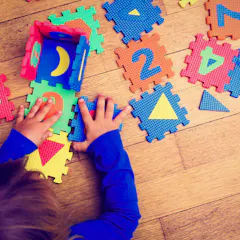
On top of teaching them how to recognize numbers and count to 10, make sure they’re playing with puzzles.
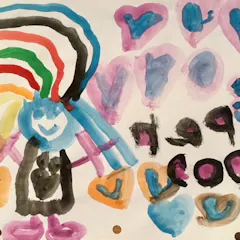
Kindergarten educators are like detectives who investigate alongside their students and who use students’ creations to gain insight into their development and interests.
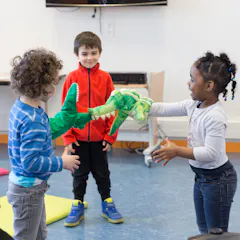
Student assessments help children develop self-regulation skills, but teachers don’t have the time when class sizes are large.

The very short list of winners, and a growing list of losers, in Doug Ford’s Ontario does not bode well for the government’s political future – or the province.

Awe-filled learning unfolds as a kindergarten class, accompanied by educators, investigates snow and water with tools, toboggans and more.
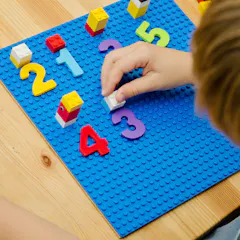
Through games and household tasks, parents can help their children learn basic math skills like counting, geometry and algebraic thinking.

There are a number of questions parents should be asking to determine what age is best to send their child to school.
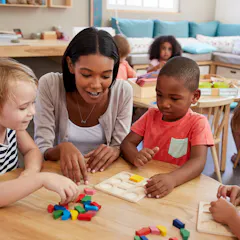
Schools across Canada should ‘grow down’ and offer two years of full-day preschool, according to a new report. This would allow mothers to work, improve child outcomes and reduce income inequality.

Parents can teach very young children to “skip count” at the kitchen table, and it will set them up to be successful math learners throughout their secondary and post-secondary education.
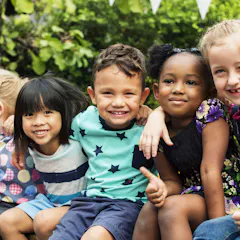
Ontario’s investment in a unique two-year, full-day and play-based kindergarten program is paying off. Could similar results happen elsewhere?

The new British Columbia government wants the province to shed its status as a laggard on education funding and poverty reduction. If it succeeds, B.C. will be a safer place to live.

Even kids who have attended daycare can find the first days of kindergarten stressful. The good news is that parents can take practical steps this summer, to prepare for the fall transition.
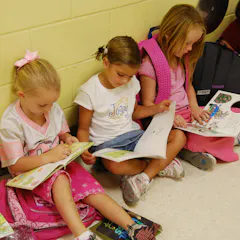
Children who aren’t ready for school tend to lag behind their peers in later grades. Parents and teachers can help.
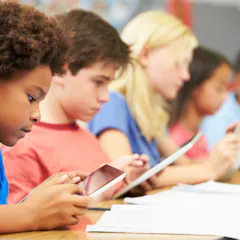
About two out of seven children are likely bored in their classrooms, as they aren’t learning much that is new. Should these children skip grades? What’s the evidence on grade-skipping?
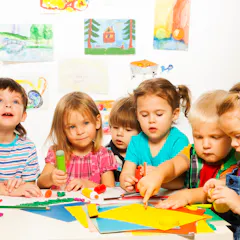
Parents are sending their children to private pre-school programs as a way to ensure they are ready to start school. But are these effective?

Researchers have found large achievement gaps in science in kindergarten. However, these can change significantly in subsequent years.

Kindergarteners are under tremendous pressure – doing as many as 15 academic activities in a day, with a shorter recess time. What is the long-term impact?
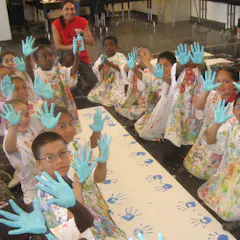
Want kids to improve fluency in English language? Try dance and drama as teaching tools.
Top contributors
-

Professor, Department of Pediatrics, University of British Columbia
-
Fellow in Early Childhood Policy, Atkinson Centre, Ontario Institute for Studies in Education, University of Toronto
-
Research Associate, Offord Centre for Child Studies, McMaster University
-
Associate Professor, Early Childhood Education, Queen's University, Ontario
-
Research Associate, Department of Psychiatry and Behavioural Neurosciences, McMaster University
-
Professor, Special Education, Memorial University of Newfoundland
-
Professor, Werklund School of Education, University of Calgary
-
Professor, Ontario Institute for Studies in Education, University of Toronto
-
Associate Professor, Faculty of Education, Queen's University, Ontario
-
Assistant Professor of Pediatrics, The University of Texas Medical Branch
-
Associate Lecturer in Education , Southern Cross University
-
Associate Professor, Department of Educational Studies, University of British Columbia
-
Doctoral Student in Applied Developmental Psychology, University of Maryland, Baltimore County
-
Professor of Applied Developmental Psychology, University of Maryland, Baltimore County
-
Senior Lecturer and researcher in Education, University of Technology Sydney