
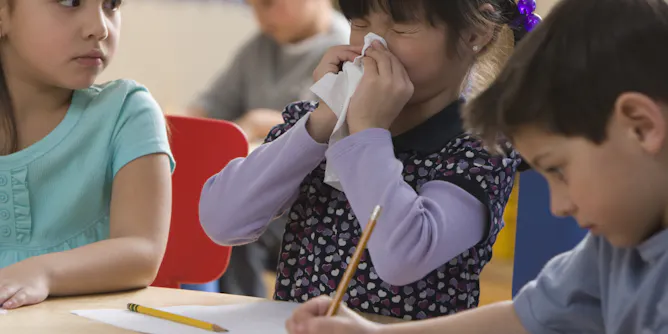
Keeping children home from school if they have COVID-19 protects family and school community members at high risk of serious illness.
Articles on Back to school
Displaying 1 - 20 of 118 articles
Parents might often worry about academic performance. While that is important, it is also vital that children feel a sense of belonging at school.

Researchers surveyed more than 1,500 students at a large Canadian university to better understand the relationship between cannabis use and diet quality.
A children’s writer explains how ‘Where the Wild Things Are,’ ‘The Rabbit Listened’ and other stories can help prepare kindergarten students for this next phase of life.

Some parents may dread what’s coming – getting overtired, half-asleep kids out the door on time.

The ranking of ‘asthma capitals’ in the US is released each September, the peak time of year for asthma attacks and hospitalizations.

According to the American Academy of Pediatrics, evidence continues to support the COVID-19 vaccine’s use in young and higher-risk children and adolescents.

Many neurodiverse children face misunderstanding and exclusion at school. Shifting to neuro-inclusive classrooms can help all children feel seen and supported.
Abrupt policy changes and confusing public messaging have injected confusion in back-to-school vaccine protocols.
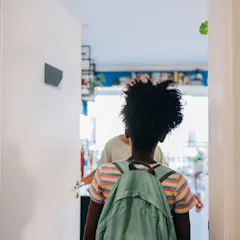
Kids have a lot to say. Sometimes they just need a little help to feel confident speaking up.
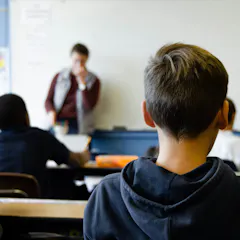
Heading back to school can be a stressful time for kids and adults. Here are five evidence-based books that can help you cope with anxiety and stress.

If you are a parent of a school student, you may have received a form seeking permission to use your child’s image on school social media accounts. Should you sign?
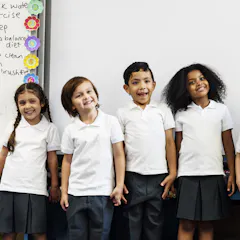
If your child is in a different class or has changed schools, they may be missing certain friends or confused if old friends are behaving differently.
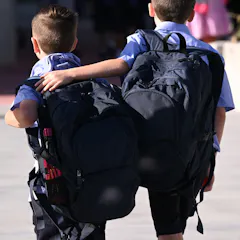
Let your child know it is OK to start small. You don’t have to make ten best friends all at once.

The new school year doesn’t automatically mean a child should get a smartphone. But if they do, there are 3 vital conversations you need to have first.
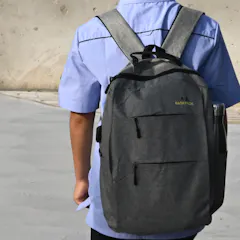
If your child is spending lots of time in sick bay or has extreme difficulty getting ready for school, they could be signs of school refusal.

The start of the school year can be an anxious time. But parents can help if they talk to their kids, validate their concerns and get back into a routine.
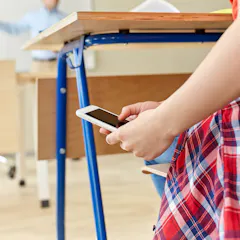
It simply cannot be left up to individual teachers to enforce cellphone restrictions in schools without significant support from school administrators and work to bring parents on board.

In Canada, where fewer than 10 per cent of kids regularly eat school-provided meals, parents, especially mothers, are left to juggle school lunches, often under major pressure.
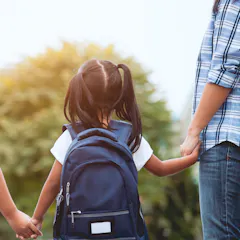
Both parents and school communities can play important roles helping autistic children to thrive.
Top contributors
-

Adjunct Professor of Geography, Simon Fraser University
-
Professor, Faculty of Education, Memorial University of Newfoundland
-
Associate Professor of Global Health and Epidemiology, University of Washington
-
Director of Research and Instruction, Middlebury College
-
Assistant Professor of Pediatrics, University of Colorado Anschutz
-
Professor of learning technologies, University of Minnesota
-
Assistant Professor, Psychology, University of Waterloo
-
Lecturer, Centre for Positive Psychology and Health, RCSI University of Medicine and Health Sciences
-
Senior Associate Director, The Ohio State University
-
Emeritus Professor, Faculty of Education, Stellenbosch University
-
Professor, Faculty of Education, Memorial University of Newfoundland
-
Professor of Clinical Psychology, UNSW
-
Professor of Law, Georgia State University
-
Associate Professor of Psychology, Vanderbilt University
-
Professor of Education, University of Florida