
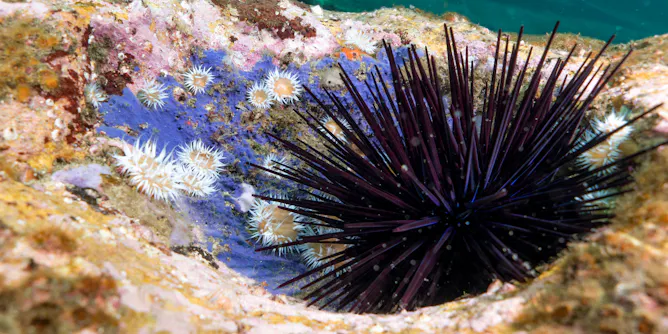
Sea urchins eat kelp – but new research shows their diets and relationships with kelp forests are more complex than commonly thought.
Articles on kelp forests
Displaying all articles
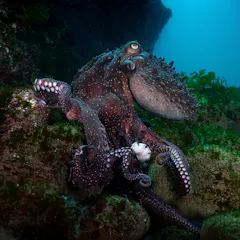
Sewage spills are often seen as short-term public health crises. But the ecological impacts can be lasting, especially if combined with marine heatwaves and storms.

The recovery of kelp forests brought many fish species back. But fish stocks in the reserve remain far below those present before commercial fishing took off.

The loss of one iconic species, sunflower sea stars, unleashed a voracious eater of seagrass habitats and upended the coastal ecosystem. But the response has opened new business opportunities.
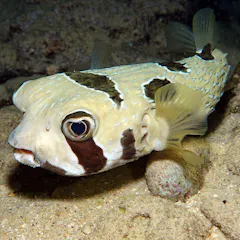
Tracking these shifts is crucial for understanding how climate change is transforming our oceans.
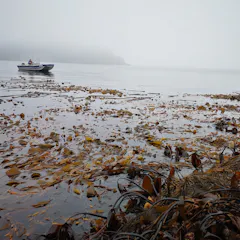
Highly productive kelp forests are being touted as a natural climate solution, but do we know enough to count them as such?
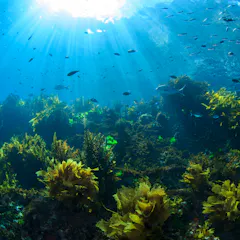
Seagrass meadows, mangroves and kelp forests are carbon sinks. Restoring or protecting them addresses both biodiversity loss and the climate crisis.
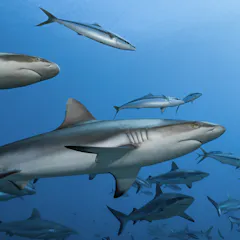
A broad review of shark research shows that sharks play critical roles in keeping ocean ecosystems such as coral reefs and seagrass beds healthy.
Underwater rivers ferry large volumes of seaweed from shallow seas into the deep, where its carbon is stored naturally
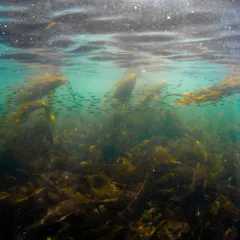
Kelp forests around the world, and in Canada, are under threat. New research sheds further light on the health, and resilience, of these crucial ecosystems.

Controlling invasive sea urchins is expensive. Why not make it profitable by fishing for them and selling their roe as a delicacy?

New Zealand’s kelp forests provide food and shelter for many marine species of commercial and cultural value. But they are at risk from warming oceans, run-off from land and marine invaders.

We cannot afford to ignore kelp – these vibrant underwater forests have sustained people and ecosystems for centuries, and continue to do so today.
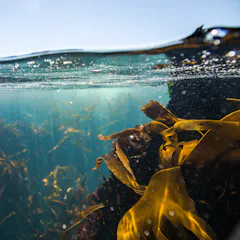
When we stopped whaling, the whales recovered. But our vital kelp forests won’t return without our help
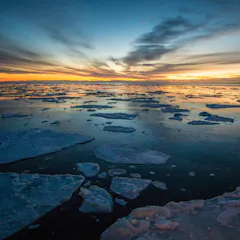
A transcript of episode 5 of The Conversation Weekly podcast, including stories on the Arctic Ocean and new archaeological finds in Tanzania’s Olduvai Gorge.
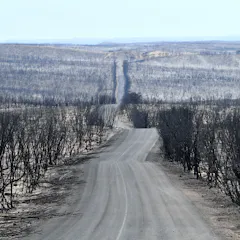
Humanity is destroying Earth’s ability to support complex life. But coming to grips with the magnitude of the problem is hard, even for experts.
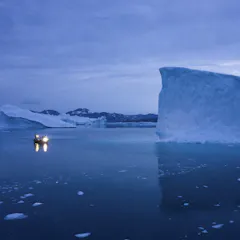
The Arctic has been a remote place for much of its history. But climate change is bringing global problems and opportunities to its door.
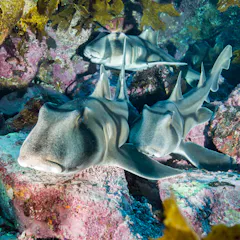
Even within a species, animals will suffer climate change differently. For sharks, it pays to live in warmer waters.
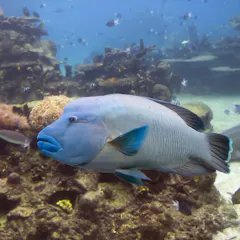
Analysis of last summer’s heatwave shows it killed farmed salmon and decimated kelp forests, as well as shifting grape harvests and fish spawning times forward by several weeks.
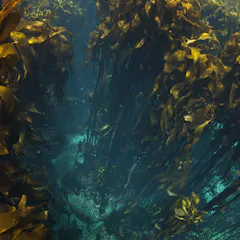
Climate change affects kelp forests all over the world differently. In southern Africa, they seem to be thriving which should be good news. The marine life relying on kelp, are however struggling.
Top contributors
-

ARC Future Fellow in Marine Ecology, The University of Western Australia
-
Vice Dean for Research, Arctic and Marine Biology, University of Tromsø
-
Postdoctoral research fellow, UNSW
-
Professor of Marine Science, University of Auckland, Waipapa Taumata Rau
-
Lecturer in Marine Biology, Te Herenga Waka — Victoria University of Wellington
-
Professor of Biology, Department of Biology, University of Victoria
-
Professor of Marine Botany, The University of Western Australia
-
Research Scientist/Adjunct University Professor, Université du Québec à Rimouski (UQAR)
-
President, Center for Conservation Biology, Bing Professor of Population Studies, Stanford University
-
Adjunct Research Fellow, Te Herenga Waka — Victoria University of Wellington
-
Professor in marine ecology, UNSW
-
Professor of Anthropology and Archaeology, University of Calgary
-
Research Fellow in Ecology, The University of Western Australia
-
Research fellow, Oceanography, The University of Western Australia
-
Director of Humanities Research Centre and Senior in the Department of Archaeology and Heritage Studies, University of Dar es Salaam