
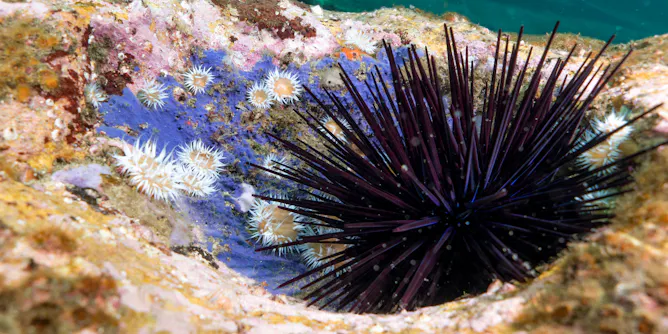
Sea urchins eat kelp – but new research shows their diets and relationships with kelp forests are more complex than commonly thought.
Articles on Kelp
Displaying 1 - 20 of 28 articles
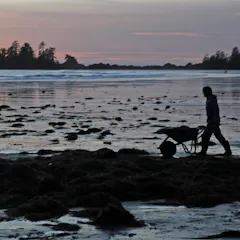
Seaweed aquaculture is attracting attention, but improved oversight is needed to prevent ecological impacts.
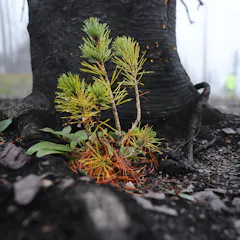
The dead remains of foundation species can boost or deter how well future generations are able to grow and thrive.

The loss of one iconic species, sunflower sea stars, unleashed a voracious eater of seagrass habitats and upended the coastal ecosystem. But the response has opened new business opportunities.
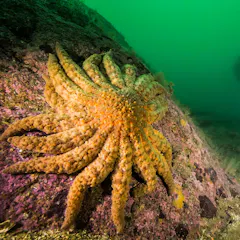
Sea stars are vital to ocean ecosystems; however, a pathogen has been killing them in large numbers, rendering some species critically endangered.

Sharks easily consumed large, spiky sea urchins – sometimes in just a few gulps. See it for yourself, in our new Footage from the Field Series.
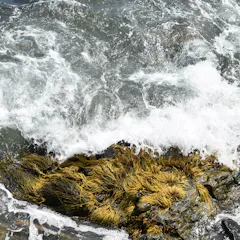
Underwater rivers ferry large volumes of seaweed from shallow seas into the deep, where its carbon is stored naturally
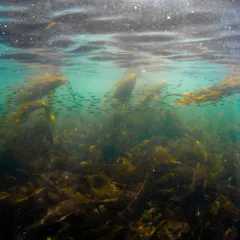
Kelp forests around the world, and in Canada, are under threat. New research sheds further light on the health, and resilience, of these crucial ecosystems.
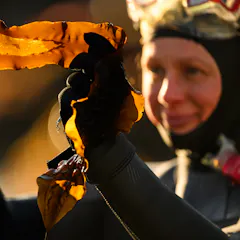
Kelp seaweed spores are being grown on small rocks and waste scallop shells as part of a trial exploring how to regenerate the UK’s coastal kelp forests.

To fight global warming we will soon have to try to remove carbon dioxide from the skies or find ways to reflect the Sun’s heat. Such radical paths must be examined, but risky experiments avoided.

Controlling invasive sea urchins is expensive. Why not make it profitable by fishing for them and selling their roe as a delicacy?
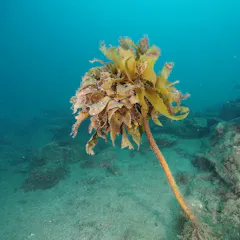
New findings suggest animal-mediated plant reproduction might have originated in the ocean.

We cannot afford to ignore kelp – these vibrant underwater forests have sustained people and ecosystems for centuries, and continue to do so today.
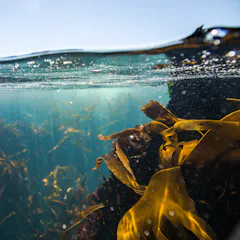
When we stopped whaling, the whales recovered. But our vital kelp forests won’t return without our help
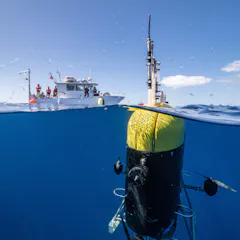
The ocean twilight zone could store vast amounts of carbon captured from the atmosphere, but first we need a 4D monitoring system to ensure ramping up carbon storage does no harm.
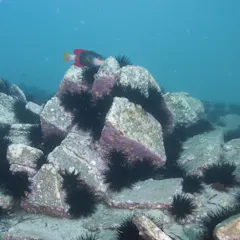
A solution for managing the growing populations of long-spined sea urchins may not be clear at the moment, but there is a path forward.
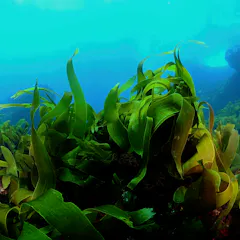
Our ocean forests of seaweed are enormous. But these quick-growing, life-supporting forests are already vanishing.
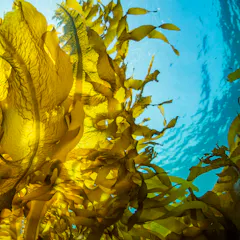
Seaweed was thought to be a vital tool in the fight to slow climate change. But it turns out seaweed ecosystems may be a natural source of carbon dioxide – and not a sink.
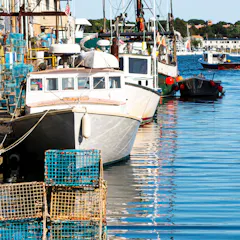
The indirect losses from one heatwave in Western Australia caused A$4.14 billion per year worth of damage.

Making biofuels from crops grown on land poses trade-offs between food and fuel. A new study looks offshore.
Top contributors
-

Professor of Marine Botany, The University of Western Australia
-
ARC Future Fellow in Marine Ecology, The University of Western Australia
-
Postdoctoral research fellow, UNSW
-
Vice Dean for Research, Arctic and Marine Biology, University of Tromsø
-
Professor of Anthropology and Archaeology, University of Calgary
-
Professor in marine ecology, UNSW
-
Research Fellow in Ecology, The University of Western Australia
-
Research Fellow in Marine Ecology, Marine Biological Association
-
Director of Humanities Research Centre and Senior in the Department of Archaeology and Heritage Studies, University of Dar es Salaam
-
Lecturer, College of Humanities, University of Dar es Salaam
-
Research Affiliate in Marine Ecology, University of Newcastle; University of Tokyo
-
Chief Research Scientist - Environment, CSIRO
-
Adjunct Professor, Southern Cross University and Associate Professor, School of Biological Sciences, The University of Western Australia
-
Senior Lecturer in Climate and Fluid Physics, Australian National University
-
Professor of Biology and a marine plant biologist, University of Cape Town