
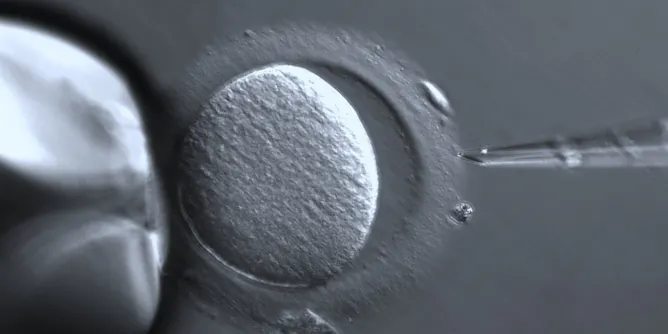
Medical tourism for assisted reproductive technologies raises a host of legal and ethical questions.
Articles on IVF
Displaying 121 - 140 of 173 articles

Our recent audit of success rates provided on the websites of IVF clinics’ in Australia and New Zealand identified some common traps in the way these figures are presented.

While most people might think age only affects female fertility, there is growing evidence sperm quality decreases as men age.

In pregnancy, immune cells help the uterus tolerate and nurture the embryo despite it carrying foreign genes from the father. In most women, suppressing immunity will likely cause more harm than good.

Fertility treatment in older age might be tougher, but that doesn’t mean it shouldn’t be done.

Researchers from Kyushu University, Japan, are the first to turn mice stem cells into mature eggs that can be fertilised.
Early studies suggest a process called advanced in-vitro maturation may be able to treat infertility without women needing to inject themselves with high doses of hormones for several weeks.

Why can we choose some things and not others?

Assisted reproductive technology is a highly profitable global industry, with fertility clinics increasingly being regarded as an attractive investment option.

Most women will have been made aware they have a ticking biological clock. But most probably don’t know it’s because women are born with a limited supply of eggs, and eventually they will run out.
Government support for infertility treatment is approximately A$240 million a year. The question of whether it’s worth it is a complex one.
Confronted with skyrocketing IVF costs at home, North American couples are packing their bags, making an overseas trip and returning home with a special souvenir.
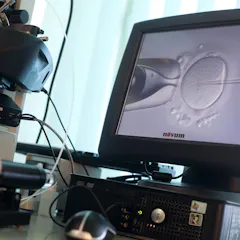
In a world first, Victoria plans to retrospectively open the records of formerly anonymous sperm donors to all donor-conceived people. A system of contact vetoes aims to manage the privacy concerns.

Their flimsy chances rely on the eggs and sperm from the remaining three elderly animals, combined with frozen DNA from dead rhino.

Should people who need subsidised medical assistance to conceive have to show the state they will be good parents? These ethicists think they do.

Should people who need subsidised medical assistance to conceive have to show the state they will be good parents? This ethicist argues such checks are discriminatory.

The practice of offering egg freezing perks to employees is becoming increasingly more common. Facebook and Apple are in on the act, as too are some of our local IVF clinics.

The risk of harm in sex selection stems from the fact that parents don’t desire any child, they want a child of a particular sex, who is to remain within the limits of binary gender roles.

The National Health and Medical Research Council call for public submissions on whether sex selection should be allowed without a medical reason recognises changing social attitudes.
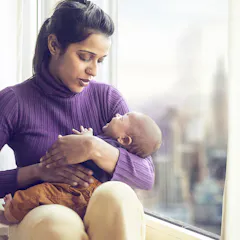
Thanks to IVF and donor conception, infertile couples, single women and lesbian couples now have a better chance of starting families. But while common, it’s rarely openly discussed.
Top contributors
-

Adjunct Senior Research Fellow, Global and Women's Health, School of Public Health & Preventive Medicine, Monash University
-
Dean and Professor, Law School, La Trobe University
-
Senior Lecturer, School of Social Sciences and Humanities, Loughborough University
-
Emeritus Professor of Reproductive and Periconceptual Medicine, The Robinson Research Institute, Adelaide University
-
Associate Professor of Law (Health Law), Deakin University
-
Clinical Associate Professor, Faculty of Medicine, Dentistry & Health Sciences, The University of Melbourne
-
Monash University
-
ARC Industry Fellow, Monash Bioethics Centre, Monash University
-
Professor - Emerging Technologies (Stem Cells) at The University of Melbourne and Group Leader - Stem Cell Ethics & Policy at the Murdoch Children's Research Institute, The University of Melbourne
-
Lecturer in the School of Applied Sciences, Edinburgh Napier University
-
Professor and Group Leader, Reproductive Epidemiology, Murdoch Children's Research Institute
-
Professor of Bioethics, Monash University
-
Reader in History and Deputy Dean of Humanities (Research), University of Essex
-
Professor, Director of the National Perinatal Epidemiology and Statistics Unit, UNSW
-
Research Fellow in Biomedical Ethics, The University of Melbourne